
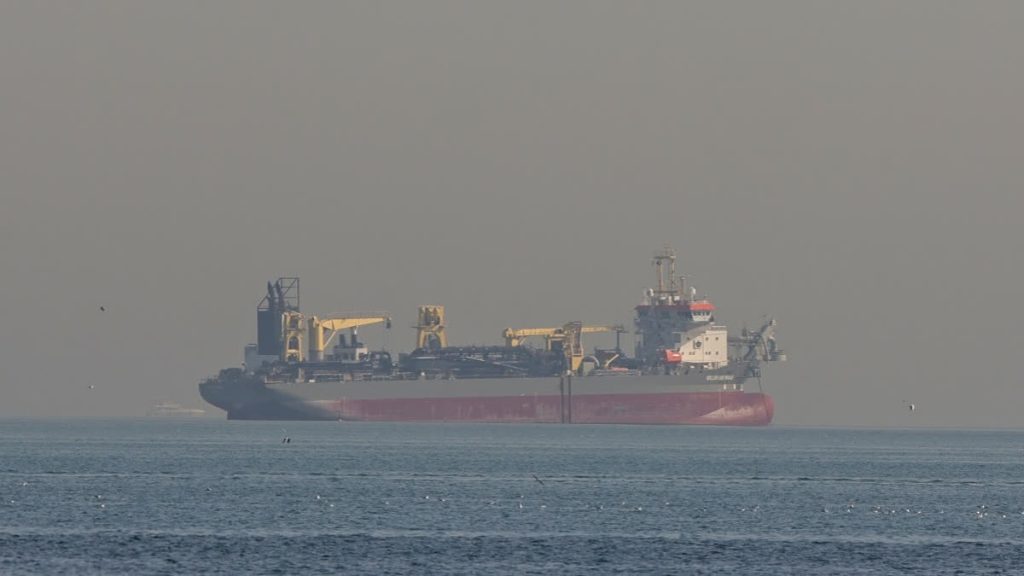
New Delhi: An Indian-flagged crude oil tanker that sailed safely from the UAE’s Fujairah port despite an attack on the terminal is scheduled to reach India Tuesday, a senior official said, emphasising that New Delhi is working to ensure the safe passage of remaining Indian-flagged vessels in the region.
The vessel, Jag Laadki, carrying about 80,800 tonnes of Murban crude from the UAE, and all 22 Indian seafarers onboard are reported safe, said Rajesh Kumar Sinha, Special Secretary in Ministry of Ports, Shipping and Waterways Monday.
Jag Laadki is the fourth out of the 28 Indian ship that were stuck in the war-hit Strait of Hormuz for last two weeks.
Currently, 22 Indian-flagged vessels with 611 seafarers remain in the western Persian Gulf. Two LPG carriers started their journey March 13 and crossed the Strait of Hormuz early March 14.
The first ship, Shivalik reached Mundra Port in Gujarat where advance paperwork and priority discharge was arranged, he said, adding the other vessel, Nanda Devi is to reach Kandla port Tuesday morning.
The two ships carry about 92,712 tonnes of LPG – equivalent to a day’s requirement of cooking gas in the country. These were among the 24 ships stranded on the west side of the strait since the war broke out in the region.
Besides the 24 on the west side of the strait, four others were stranded on the east side.
One of the four on the east side, an India-flagged oil tanker, Jag Prakash, carrying gasoline from Oman to Africa, crossed the war-hit strait on Friday. Jag Prakash loaded gasoline from Sohar port in Oman and is now headed to Tanga in Tanzania. It is due to reach Tanga March 21.
Besides Jag Prakash, Jag Laadki was the second tanker on the east coast that managed to move to safety, he said, adding Jag Laadki is scheduled to reach Mundra Tuesday.
As of now, there are 22 Indian ships on the east size of the Strait of Hormuz and 2 on the west side, he said, adding efforts are on to secure safe passage for them.
Since activation of the DG Shipping Control Room, over 3,000 calls and 5,400 emails from seafarers, families, and maritime stakeholders have been handled, while 286 Indian seafarers have been safely repatriated, including 33 in the past 48 hours.
Major ports are closely monitoring vessel movements and facilitating cargo operations, offering concessions on anchorage, berth hire, storage charges, and temporary transhipment storage at Jawaharlal Nehru Port Authority (JNPA), which has also granted rebates on reefer container plug-in charges, Sinha said.
Export-bound containers at JNPA have fallen from 5,600 to 3,900, with no reported congestion, he said adding an inter-ministerial group under DG Shipping continues to coordinate with Customs, ports, and other stakeholders to ensure the safety and welfare of Indian seafarers while maintaining continuity of maritime trade.
On March 14, 2026, while the Indian-flag vessel Jag Laadki was loading crude oil at the Fujairah Single Point Mooring, the Fujairah oil terminal was attacked. The vessel sailed safely from Fujairah at 1030 hrs IST Sunday, carrying about 80,800 tonnes of Murban crude oil and is bound for India. The vessel and all Indian seafarers onboard are safe.
India imports about 88 per cent of its crude oil, 50 per cent of natural gas and 60 per cent of LPG needs. Before the US-Israel strikes on Iran February 28 and Tehran’s retaliation, more than half of India’s crude imports, about 30 per cent of gas and 85-90 per cent of LPG imports came from Middle East countries such as Saudi Arabia and the UAE.
The conflict has led to a blockade of the Strait of Hormuz, the main transit route for Gulf energy supplies. While India has partly offset crude supply disruptions by sourcing oil from countries including Russia, gas supplies have been curtailed to industrial users, and LPG availability to commercial establishments such as hotels and restaurants has been reduced.
Orissa POST – Odisha’s No.1 English Daily