By Bhabani Shankar Nayak
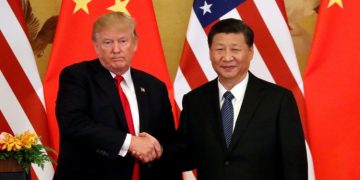
The hugging, hobnobbing, and digital display of friendship on social media between Prime Minister Narendra Modi and President Donald Trump appear to be designed mainly for public consumption, without any substantial achievement for Indians or the Indian economy. The much-talked-about, so-called non-existent free trade deal between the US and India reflects unfair and unequal trade relations between the two countries.


Trump reportedly promised to reduce US tariffs on Indian exports to 18% in return for India’s promise to reduce tariff and non-tariff barriers on US goods and services to zero. Such a trade arrangement is likely to undermine India’s productive capacities in various sectors and drain Indian wealth and human resources in favour of the American economy. The US ruling elites and their corporations seem to view India merely as a market, without any genuine friendship or commitment to stand together during times of crisis or need.
History reveals that the American ruling elites and their imperialist system have never truly stood with anyone. When it comes to India’s national interests, US power elites have consistently acted against India and Indian interests, seeking to undermine those interests and exploit crises by accelerating instabilities and promoting military conflicts. They have attempted to checkmate India’s industrial and technological progress while simultaneously using the technologically advanced and skilled Indian workforce to establish, shape, and develop Silicon Valley and advance their own technological dominance.
The US has never been a genuine friend of India; instead, it has repeatedly used its imperial power to restrain India’s rise. Therefore, India must remain clear-eyed and realistic while developing alliances with the US. It is a strategic illusion to expect significant gains from an Indo-US alliance.
The US is attempting to bully, pressure and trap India in various ways to join US-led alliances as a junior partner, not only to contain China but also to limit India itself. By falling into this US trap, the government is not only undermining India’s independent foreign policy but also creating conditions that could weaken the Indian economy and pave the way for American dominance over Asia.
The Indian government and the Indian people must remain vigilant against all American attempts in the form of trade deals and military alliances. One only needs to look at how American imperialism and its European allies have devastated Ukraine and then abandoned it in the midst of a military and humanitarian crisis, where Russians and Ukrainians are suffering directly and people across Europe are paying the price of the war on a daily basis.
Similarly, American imperialism has destabilised Pakistan by using its military as a proxy to contain India, while also undermining the Pakistani people. The US is manufacturing conflicts and is currently involved in numerous wars and interventions around the world to sustain its imperialist system and maintain the dominance of American capitalism, which is increasingly weakening due to its own internal contradictions.
India and its current government must learn from history to understand the dangers of forming any kind of alliance with the US. India must revive and follow its time-tested non-aligned foreign policy strategies and its traditions to uphold its independence, while promoting internationalism based on solidarity with peoples and nations suffering under imperialist domination and exploitation.
American imperialism has often aligned itself with autocratic, reactionary, and undemocratic regimes while undermining liberal and secular democracies. The state-led, corporate-driven model of planned American capitalism and its market-centred democracy are not compatible with India’s aspirations for inclusive and democratic development.
Therefore, it is essential to oppose unfair trade agreements and imperialist military alliances between India and the US for the sake of India and Indians. India must not forget to celebrate its historic struggles against imperialism, as well as its longstanding tradition of international solidarity with other anti-imperialist movements around the world.
The writer teaches at the London Metropolitan University.