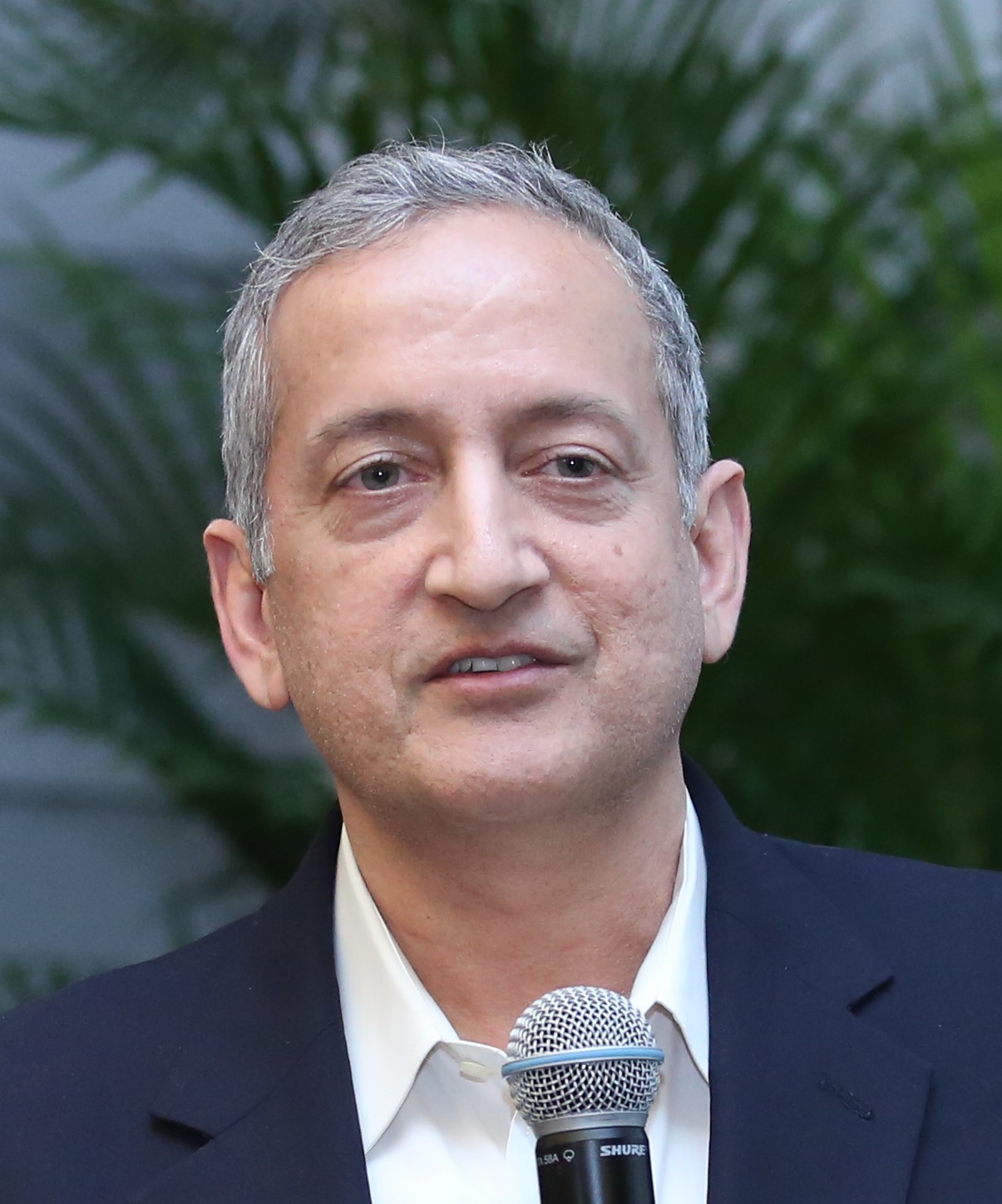
New Delhi: US-based Indian-origin theoretical physicist Jainendra K Jain has received the prestigious Wolf Prize in Physics for his discovery of composite fermions, a breakthrough that transformed the understanding of the fractional quantum Hall effect and continues to shape modern quantum physics.
Jain is the first person of Indian origin to receive the Wolf Prize in Physics.


The award was presented by Israeli President Isaac Herzog at a state ceremony in the Knesset in Jerusalem Thursday.
Congratulating Jain and Venkatesan Sundaresan on receiving the Wolf Prize in Physics and Agriculture respectively, the Office of the Principal Scientific Adviser to the Government of India said in a post on X that the laureates were honoured for their “breakthrough discoveries”.
“The Wolf Prize is awarded annually to scientists and artists for their exceptional achievements in science and arts. Professor Sundaresan was recognised for his key discoveries in plant genetics and crop improvement, while Professor Jain was recognised for his contributions towards our understanding of the two-dimensional electron system,” it added.
Jain, who grew up in Sambhar, a small town on the edge of Rajasthan’s Thar Desert, is the Founding Director of the Lodha Theoretical Physics Institute (LTPI) and serves as professor at Evan Pugh University and Eberly Family Chair in Physics at Pennsylvania State University, USA.
Awarded annually by the Wolf Foundation since 1978, the Wolf Prize in Physics honours physicists whose discoveries have profoundly advanced human knowledge. Widely regarded as among the most prestigious honours in the field, the prize has been awarded to 27 scientists who later went on to receive the Nobel Prize.
“I am deeply honoured by this recognition. Physics has given me far more than I could ever have imagined when I began this journey as a young boy growing up in rural Rajasthan,” Jain said.
The discovery that earned Jain the award dates back to 1989 when he was a postdoctoral scholar at Yale University.
According to the press release, he turned his attention to one of the most perplexing mysteries in physics: the fractional quantum Hall effect.
Experiments had revealed that electrons in ultra-thin semiconductor layers, when placed in a powerful magnetic field, exhibited baffling behaviour.
Their electronic conductivity values appeared in precise fractions that defied conventional understanding and called for a new theoretical framework.
According to the release, the key insight came while Jain was doodling during a television commercial break. He realised that the experiments could be understood when viewed in terms of a new kind of particles, which are created when electrons bind to tiny quantum vortices.
He called these particles “composite fermions”.
Published in Physical Review Letters in 1989, this single theoretical insight provided an elegant and unified explanation that brought unprecedented clarity to the fractional quantum Hall effect.
The precise sequences of fractions that his theory predicted are now known as the Jain sequences or the Jain states, and composite fermions have become a central concept in modern condensed matter physics, the release said.
The release said Jain’s pioneering work continues to shape the frontiers of modern physics.
“Composite fermions have revealed a rich variety of exotic quantum states, some of which are believed to possess remarkable topological properties.
These discoveries have helped inspire new approaches to quantum computation that seek to exploit such states to build quantum bits that are protected from certain sources of error,” the release stated.
Jain has co-authored more than 250 scientific articles and a monograph, Composite Fermions, published by Cambridge University Press in 2007.
His honours include the Oliver E Buckley Prize of the American Physical Society, the Distinguished Alumnus Award of IIT Kanpur, and election to the US National Academy of Sciences, the American Academy of Arts and Sciences, and the Indian National Science Academy.
Jain’s journey to scientific recognition began in rural Rajasthan, where he developed an early fascination with physics. The story of Indian physicist Satyendra Nath Bose and his interaction with Albert Einstein, which Jain read in a children’s magazine, left a lasting impression on him.
At the age of 12, while visiting family in Kolkata, a tram collided with his family’s car. His mother never regained consciousness, and Jain suffered critical injuries that resulted in a lifelong disability.
The release said the low-cost Jaipur Foot prosthetic, developed by P K Sethi and Ram Chandra Sharma, helped him to walk again and continue his education.
He later earned a bachelor’s degree from Maharaja College, a master’s degree from Indian Institute of Technology Kanpur and a PhD from Stony Brook University.
The Wolf Prize is also awarded in agriculture, chemistry, mathematics, medicine and the arts.
Two scientists of Indian origin have received Wolf Prize in Agriculture: Dr Gurdev Singh Khush, who was recognised for his contributions to the Green Revolution, and plant biologist Dr Venkatesan Sundaresan.
Conductor Zubin Mehta received the Wolf Prize in Music.
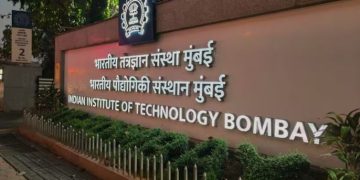
Jain is also associated with the Lodha Theoretical Physics Institute in Mumbai, where he is helping build the country’s first fully privately funded centre dedicated to fundamental research in theoretical physics.
“I hope LTPI will help create an environment where young scientists can pursue ambitious ideas, collaborate with outstanding researchers from around the world, and engage with the deepest questions in physics,” Jain said.