Bhubaneshwar: East Coast Railway (ECoR) has achieved noteworthy progress in the ongoing Double Distant Signalling (DDS) work in Khurda Road–Puri section of Khurda Road Division, a critical safety and capacity enhancement project sanctioned during the financial year 2024–25.
This important initiative is aimed at enhancing passenger safety, improving operational effi ciency and enabling higher permissible train speeds on this vital rail corridor.


The DDS system is being implemented to facilitate an increase in sectional speed up to 130 kmph.
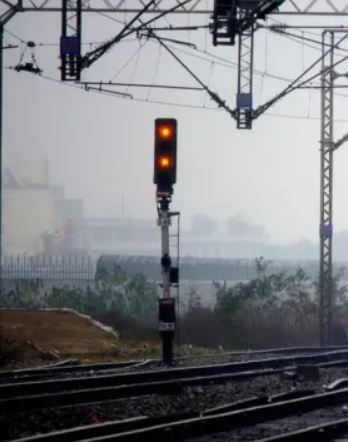
By providing advanced signal information to locomotive pilots, DDS allows better anticipation of signal aspects, smoother speed regulation and safer high-speed train operations, especially on a busy passenger and pilgrim route like Khurda Road–Puri.
Also Read: ECoR to run special trains, augment additional coaches
The signaling and telecommunication component of the project involves extensive upgradation across the section, covering 8 stations, 10 level crossing gates and one intermediate block hut.
As part of system integration, major signalling modifications have been undertaken, including Electronic Interlocking (EI) alterations at six stations, Haripurgram, Sakhigopal, Birapurusottampur, Delang, Malatipatapur and Puri—Route Relay Interlocking (RRI) alteration at Khurda Road station and Panel Interlocking (PI) alteration at Motari station.
All System Integration Plans (SIPs) have been duly approved to ensure safe and seamless incorporation of the upgraded signalling architecture. Since the award of the tender in November 2024, the project has recorded substantial progress.
Commissioning has already been completed at Khurda Road, Haripurgram, Motari and Delang stations, along with three level crossing gates at KP-5, KP-9 and KP-11 in the section.
The entire DDS work in Khurda Road–Puri section is targeted for completion by January 2026.
Upon completion, trains will be able to operate safely at enhanced speeds of up to 130 kmph, resulting in reduced travel time, improved punctuality and greater passenger convenience.
DDS is not merely a technical upgrade but a passenger-centric improvement with direct public benefits. Higher permissible speeds will lead to faster journeys, while advance signal visibility significantly enhances safety by reducing the chances of sudden braking and signal-related incidents.
Improved speed regulation contributes to better punctuality and more reliable train services.
Passengers will also experience smoother and more comfortable travel due to fewer abrupt speed changes, benefiting elderly passengers, children and long-distance travellers in particular.
Enhanced signalling efficiency improves line capacity, enabling the Railways to introduce more train services in the long term.