
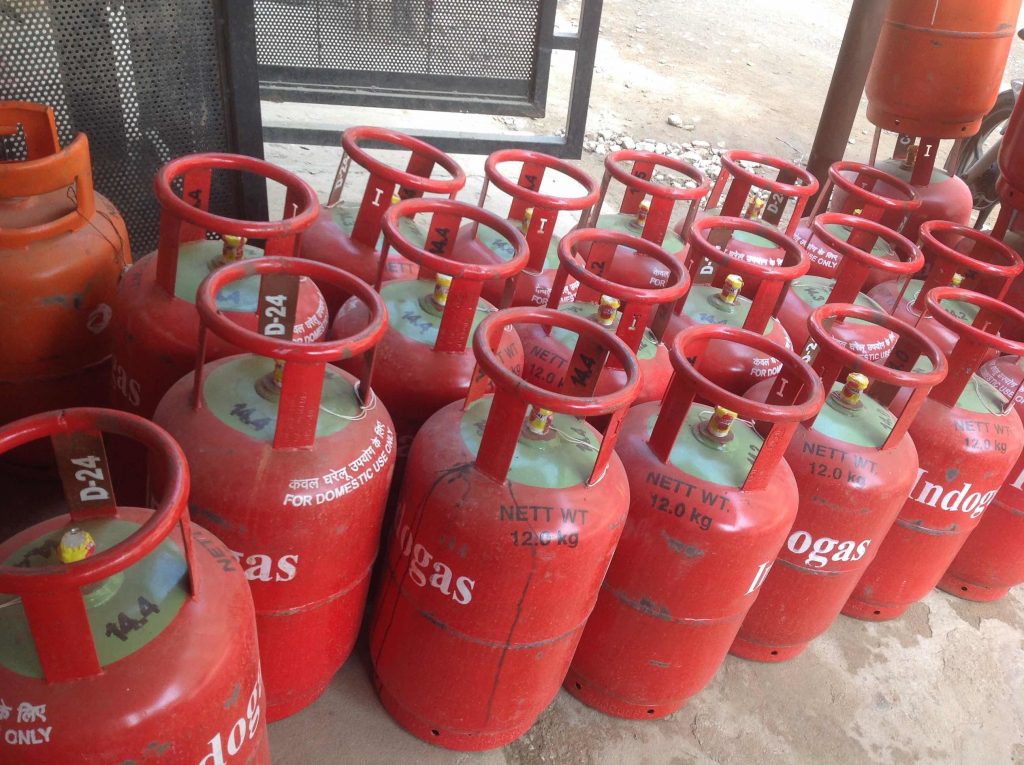
New Delhi: Indian households continue to pay among the lowest prices for cooking gas globally despite a sharp rise in international LPG prices triggered by disruptions in West Asia, the government said Sunday, a day after increasing domestic LPG prices by Rs 29 per cylinder.
The price of a 14.2-kg domestic LPG cylinder in Delhi was raised to Rs 942 from Rs 913, while beneficiaries of the Pradhan Mantri Ujjwala Yojana (PMUY) will continue to pay an effective Rs 642 per cylinder after receiving a subsidy of Rs 300 per refill on the first four refills annually, down from 9 refills announced last year.
The increase follows a Rs 60-per-cylinder hike on March 7, taking the cumulative hike to Rs 89 per 14.2-kg cylinder. State-run oil marketing companies were estimated to be losing about Rs 703 on every LPG cylinder sold before the latest revision.
In a statement, the government said the cost of supplying a domestic LPG cylinder has risen to more than Rs 1,600 following a surge in international prices that followed the outbreak of war in West Asia at the end February.
India’s LPG import costs are linked to the Saudi Contract Price (CP), the global benchmark for the fuel. The benchmark has risen about 46 per cent since February after disruptions linked to the Strait of Hormuz tightened supplies from the Gulf region, according to the statement.
Despite the increase, domestic LPG prices remain below those prevailing in neighbouring countries such as Pakistan, Nepal, Bangladesh, and Sri Lanka, and significantly lower than prices in advanced economies, including the United States, Australia, and Canada, the government said.
The government also said India was among the few countries able to maintain uninterrupted energy shipments through the Strait of Hormuz during the crisis, ensuring there was no shortage of LPG or other petroleum products in the country. Domestic LPG production was increased and supplies diversified through alternative sourcing arrangements to safeguard availability, it added.
According to the statement, cumulative under-recoveries on domestic LPG sales rose to about Rs 60,000 crore by the end of the previous financial year, compared with Rs 41,338 crore a year earlier. The Union Cabinet has approved Rs 30,000 crore in compensation to state-run oil marketing companies to partly offset these losses.
The government said the latest revision balances the need to shield households from volatile global energy prices while ensuring continued availability of cooking fuel across the country.
“The prices of petroleum products in India are linked to the corresponding prices in the international market. The government, however, continues to modulate the effective price to the consumer for domestic LPG. Any household can buy as many cylinders as it needs at Rs 942,” the statement said.
“A PMUY beneficiary will additionally receive the direct benefit transfer of Rs 300 a cylinder on the first four refills each year — broadly the average annual consumption of a typical Ujjwala household, about four refills a year — and so pays an effective Rs 642 on those refills; this support is unchanged.”
Even a non-PMUY household would pay about Rs 700 below the market-linked cost of the cylinder.
Retail prices differ marginally across locations on account of distribution costs.
“What the household does not bear the brunt of is the several hundred rupees a cylinder which the government is bearing. Through a period of sharp international cost increases, that burden has been absorbed upstream rather than passed to the consumer,” it said.
While the commercial cylinder used by hotels and businesses is revised automatically every month because its price is a direct pass-through of the international benchmark, the domestic cooking cylinder is not.
“India used to import 60 per cent of its LPG requirements, and the landed cost of that import tracks the Saudi Contract Price (CP) that Saudi Aramco sets at the start of each month. This is an external price over which the Indian consumer has no control,” the government said.
Through the West Asia disruption the benchmark moved sharply higher. “Expressed as the 50:50 propane-butane blend used for India’s LPG, the Saudi CP for LPG stood at about USD 543 a tonne in February, before the disruption. Following the closure of the Strait of Hormuz in late February, the April contract price — the first set after the disruption tightened Mideast Gulf exports — rose to USD 775 a tonne, with propane at USD 750 and butane at USD 800, and has since edged up further to USD 790 a tonne in June.”
The blended LPG benchmark has thus risen by about 46 per cent since the pre-crisis February level, the statement said.
“The scale of this is visible in the fully market-priced commercial cylinder: the 19 kg cylinder used by hotels and restaurants sells in Delhi at Rs 3,113.50, about Rs 164 a kg, after five increases during the West Asia crisis. The domestic household, by contrast, pays about Rs 66 a kg after the revision,” it said.
“Commercial gas carries a higher rate of tax and larger margins, so it sits above the household’s cost-reflective level; even so, the import-linked cost of a domestic cylinder works out to over Rs 1,600.”
The government said it maintained uninterrupted supplies of LPG and other petroleum products despite disruptions in the Strait of Hormuz, a key shipping route through which 54 per cent of India’s LPG imports are transported. Domestic LPG production was increased by more than 60 per cent — from about 32,000 tonnes a day to about 52,000 tonnes — imports were diversified to suppliers, including the United States, Canada and Algeria, and ensured continued movement of LPG cargoes to Indian ports, preventing shortages in the domestic market.
To conserve supplies, consumers were encouraged to switch to piped natural gas where available, while enforcement against diversion of subsidised LPG cylinders to commercial use was stepped up through wider use of OTP-based delivery verification. The government said these measures helped sustain household supplies during a period of heightened geopolitical tensions and supply-chain disruptions.
“The under-recovery is separate from the subsidy: the gap between the international cost and the regulated retail price — an estimated amount rising towards Rs 60,000 crore on domestic LPG in the last full year, up from Rs 41,338 crore the year before — is borne by the public sector marketing companies and the exchequer, against which the Union Cabinet has approved Rs 30,000 crore in compensation; over and above this, Ujjwala consumers receive an additional Rs 300 per cylinder credited directly to their bank account, reaching more than 10.58 crore connections,” the statement added.