
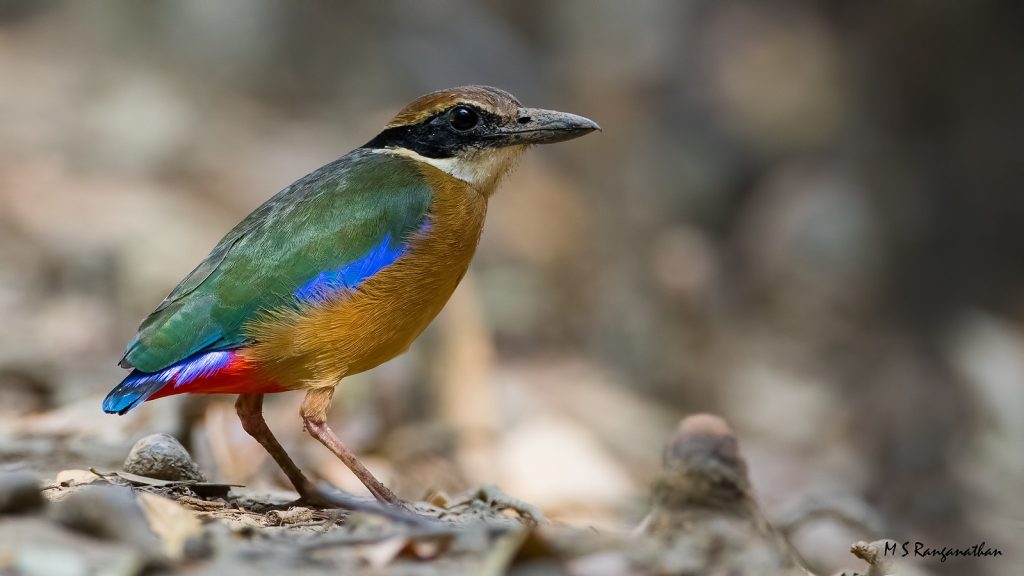
Kendrapara: Mangrove Pitta census was carried out across five ranges of the Rajnagar Mangrove forest division, covering key coastal mangrove habitats in Kendrapara and Jagatsinghpur districts. Divisional Forest Officer Vardhraj Gaonkar said Monday that the census exercise was conducted using both direct and indirect sighting methods across the mangrove patches of the region.
The primary objective was to gather data on the bird’s distribution, habitat, breeding patterns, and behaviour, while also establishing a benchmark for future population assessments. A total of 70 enumerators, organised into 35 teams, undertook the census Sunday.
Forest personnel were deployed across pre-identified segments, and the survey was conducted using the point count method. Teams either traversed forest areas on foot or used country boats to access creeks and interior mangrove zones. The Mangrove Pitta is a small bird measuring about 18–20 cm in length and weighing between 90 and 120 grams.
It inhabits low-altitude coastal ecosystems, typically ranging from sea level up to 100 metres. Its natural habitats include tropical and subtropical mangrove forests, wetlands, rivers, estuaries, coastal marshes, streams, and creeks. Feeding primarily on molluscs, crustaceans, crabs, beetles, ants, termites, and insect larvae, the bird forages on the forest floor and seeks refuge in trees and shrubs during high tide. Its breeding season in the Indian subcontinent spans from April to August.
The species is monogamous, with both partners sharing responsibilities such as nest building, egg incubation, and caring for chicks. The Mangrove Pitta constructs domeshaped nests using sticks, dead leaves, grass, and coconut fibres, typically on slightly elevated ground with a side entrance. Females lay four to five pale eggs, which hatch in about two weeks.
Forest officials noted that the species is approaching the threshold of being classified as “Vulnerable” based on its range size, population trend, and overall population size, underscoring the importance of continued monitoring and conservation efforts.