Lekha Rattanani
The death penalty awarded to nine policemen for the custodial killings of a trader and his son earlier this month will stand out as the biggest strike for accountability and against injustice in a system that has mostly trivialised the lives of those held in custody, who are also invariably among the weakest and poorest members of society.


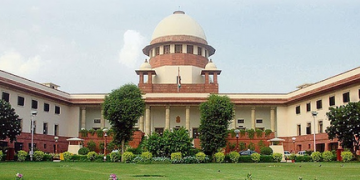
On 6 April, Judge G Muthu kumaran of the First Additional District and Sessions Court, Madurai delivered one of India’s most consequential verdicts on custodial violence. The court sentenced nine policemen to death for the 2020 custodial torture that took the lives of P Jayaraj and his son J Bennicks at Sathankulam Police Station in Tamil Nadu’s Thoothukudi district. A mandatory process of reviewing the death sentence has been initiated by the Madras High Court, with a hearing set for 30 April.
The verdict from the Madurai court, which has been described by Amnesty International as “a rare moment of accountability’’ refers to the case of 19 June, 2020, when Jayaraj and Bennicks were picked up on the charge of keeping their mobile accessories shop open beyond COVID-19 curfew hours. Public outrage over their deaths led the state government to hand over the case to the CBI. The CBI probe built on the testimony of eyewitnesses and forensic evidence led the agency to conclude that several rounds of “merciless beating” with lathis inside the station, caused the death of Bennicks on 22 June, 2020, and his father a day later.
The prosecution used this to argue that the ghastly crime, which had “shocked the collective conscience of society” was supported by the testimonies of three direct eyewitnesses. Jayaraj and Bennicks were ordinary people leading everyday lives, restricted by the pandemic. They had no previous conviction, no criminal record or any previous brush with the law. This is probably why their deaths led to huge protests and an outpouring of anger that forced a higher level of investigation into what the Madurai court judge G Muthukumaran called a “betrayal by those meant to uphold the law.” Custodial deaths have rarely received the attention or punishment they deserve.
Many cases have gone unrecorded, with the culprits walking away with impunity. In India, it is only in 2025 that 21 police men and officers involved in custodial deaths received life sentences. Earlier, in 2018, a trial court in Kerala awarded the death penalty to two police men for custodial torture and murder, the first in Indian legal history. The two policemen were acquitted by the Kerala High Court in 2024. The effect of the award of a death sentence to as many as nine policemen in one go can be electrifying in the way it can jolt a system that has resisted all reform. The signals this verdict sends out will hopefully serve to warn law enforcers across the country that the law will catch up with them too, and make them pay a heavy price for crossing boundaries.
Society has to begin seeing custodial deaths and their attendant fake encounters and extrajudicial killings as cold-blooded murders for which the nation must have zero tolerance. Those in uniform involved in these cases must be seen as serial killers who have betrayed their uniform, broken the oath to serve the Constitution and contributed to a total breakdown of due process. This one judgement will go a long way to send all these messages and deserves to be discussed and made mandatory reading in police training. But India needs to do much more to control the menace of custodial torture and deaths. One option is to make heads of districts personally and directly responsible for any custodial death in their jurisdictions, thus using the strict hierarchy of the system to serve the public good and ensure that any case of torture and death in custody will bring its consequences not only on the operators but will also reach their leaders. Without strong measures, the problem of custodial deaths cannot be addressed.
According to figures submitted by the National Human Rights Commission to the Lok Sabha in 2022, there were 2307 custodial deaths, 2152 judicial and 155 in police custody in 2021-22. Indian thinkers, academics, law and order experts and civil society will have to come together to make concerted attempts to call out and not celebrate all kinds of extrajudicial action that thrive under the system.
Consider that some of the low-ranking officers who became celebrities for leading “police encounters” in Mumbai and have since retired are now busy building their social media profiles. One officer known for over 100 “encounter killings” manages to get invitations to social functions where he is treated as a hero. Recently, politicians, including a former Chief Minister and many Bollywood celebrities, attended the lavish wedding of the son of another low-ranking officer who has claimed celebrity status and managed ties with the film industry. Do note that Mumbai’s law and order was not improved by encounters.
Instead, gangs in the wild became gangs in the police, two groups who took their leads and indeed orders from gangsters and did hatchet jobs for them and turned policing into a new way of making money. In the end, the message from the court is simple but powerful: violation of due process increases crime and criminal activity and does nothing but build new criminals hiding behind uniforms and using their force against some of the weakest in the nation. If India has to become a thriving economy and a respected democracy, this cannot be allowed to continue.
The writer is the Managing Editor of The Billion Press.