
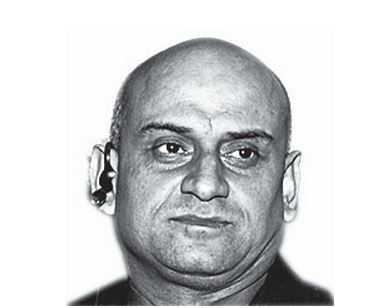
Anil Singh
The forthcoming Monsoon Session of Parliament in July could become one of the most consequential political tests of the current government. At the centre of the agenda is the possibility of reviving the Delimitation Bill and related constitutional amendments. Far from a technical exercise, delimitation touches the core of India’s democratic structure—political representation, women’s reservation, and the balance between states within the federal framework. The NDA enters the session with a numerical advantage but not an assured path to success. The BJP remains the dominant force in Lok Sabha, and the coalition retains a working majority. Yet constitutional amendments operate under stricter rules.
Article 368 requires not only a majority of total membership in each House but also the support of two-thirds of members present and voting. For the government, this transforms the challenge from simple majority management into one of attendance, coalition discipline, and tactical outreach. It is equally important to understand the constitutional process through which such a bill is passed. A constitutional amendment bill in India does not succeed through a simple majority.
To pass the bill, each House must clear two distinct statistical thresholds during voting. First, what may be called the Absolute Threshold (Total Membership): the bill must receive the support of more than 50% of the total membership of the House, irrespective of vacancies, abstentions, or absent members. Second, the Present & Voting Threshold (Two-Thirds): among members physically present and participating in the vote, at least two-thirds (66.6%) must vote in favour.
In practical terms, this means the government not only requires numbers on paper but also disciplined attendance, strategic parliamentary management, and support extending beyond routine coalition arithmetic. Parliamentary arithmetic therefore becomes decisive. Even if the NDA appears politically dominant, constitutional legislation demands broader support or at least a fragmented opposition. Reports of shifting loyalties within the TMC, including speculation about MPs aligning with formations more receptive to the NDA, have intensified attention on the government’s possible vote calculations. Should such shifts materialise, the NDA’s effective Lok Sabha tally could edge closer to or even cross the 300-member mark.
Symbolically, that would strengthen the perception of political momentum. Practically, however, numbers alone may still fall short unless the government secures support from regional parties, benefits from abstentions, or faces reduced opposition participation during voting. The government is expected to frame delimitation as a democratic necessity. Parliamentary representation has remained frozen for decades despite major demographic shifts, migration patterns, and uneven population growth across states. From this standpoint, revisiting constituency boundaries can be presented as an overdue effort to align representation with contemporary realities.
Women’s reservation introduces a separate political incentive. Since implementation has often been linked to delimitation and census exercises, the government may seek to broaden support by presenting the reform as part of a larger agenda of democratic inclusion. This framing could place Opposition parties in a politically difficult position, particularly those reluctant to appear resistant to gender representation. Yet the strongest resistance is likely to emerge from concerns over federal equity. Several southern and smaller states fear that population-based redistribution could diminish their parliamentary influence despite successful population control measures. Their objections are not merely electoral; they reflect anxieties about whether states that managed demographic growth may be politically disadvantaged. The Congress and Samajwadi Party are expected to lead parliamentary opposition to the proposed framework.
However, Opposition unity remains uncertain. Regional parties often calibrate their positions according to state-specific interests rather than national coalition strategy. Some may oppose delimitation outright, others could negotiate safeguards, while a few may choose neutrality or abstention. Such fragmentation could ultimately work to the NDA’s advantage. Several parties, while publicly maintaining distance from the ruling alliance, may justify tacit or indirect support on grounds of regional compulsions, administrative considerations, or political pragmatism. The evolving TMC situation adds another layer to this equation. Any movement of parliamentarians toward the NDA, formal or informal, would not only alter vote projections but also affect opposition morale. The larger democratic challenge lies in balancing reform with legitimacy. The government has every constitutional right to pursue structural changes it considers necessary, but the Opposition is equally justified in demanding safeguards on reforms with long-term institutional consequences.
Delimitation cannot be treated solely as a test of legislative muscle; its implications will shape the representative character of Parliament for decades. The July Monsoon Session is now shaping up as a high-stakes political contest with consequences extending far beyond one piece of legislation. If the NDA succeeds in assembling the numbers—through allies, abstentions, or strategic realignments—it could claim a major constitutional victory and reinforce its image as a government capable of executing long-pending structural reforms.
Failure, however, would expose the limits of coalition arithmetic and embolden an Opposition eager to demonstrate that constitutional change still requires broad political consent. As Parliament prepares for the Monsoon Session, the coming weeks may determine not only the legislative future of delimitation but also the political trajectory of the NDA government and the credibility of Op position politics. In a democracy as large and complex as India, constitutional restructuring cannot rely solely on numerical advantage; it requires political wisdom, institutional sensitivity, and democratic legitimacy. The numbers may ultimately decide the fate of the bill, but the seriousness of parliamentary debate will determine how history judges the process.
Orissa POST – Odisha’s No.1 English Daily