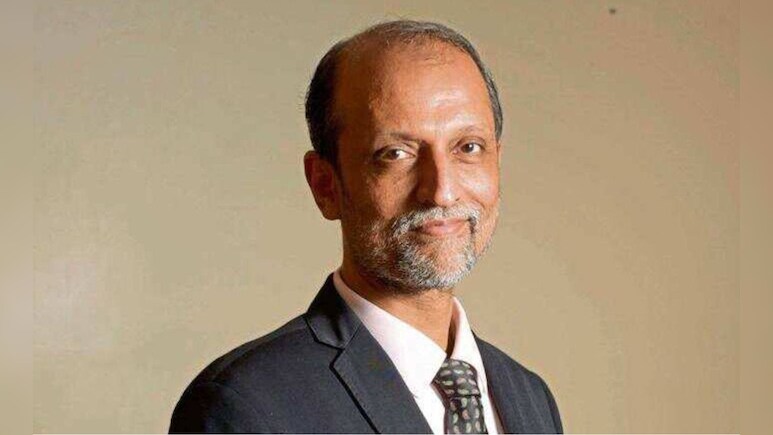


Ajit Ranade
The student protests that dominated the headlines were triggered by an examination paper leak. But it would be a mistake to view them only as a protest against the mismanagement of examinations. The leak touched a much deeper anxiety. For millions of young Indians, success in a competitive examination is one of the few remaining routes to a secure and reasonably paid livelihood. When the integrity of that process is compromised, it means another year in an already prolonged wait for employment.
The protests were therefore as much about jobs as about examinations. Government competitive examinations have become a national waiting room for graduates. Young people in their early twenties spend several years in coaching classes, libraries and rented rooms, making repeated attempts at examinations where the success rate may be one or two per cent. These are prime years in which they could have acquired work experience, workplace skills, savings and professional networks. This waiting is not irrational because entry-level private-sector salaries have hardly moved for a long time. The average monthly earnings of a young male graduate fell from about 21,800 in 2011 to 19,573 in 2023, even before adjusting for inflation.
A government job, by contrast, offers much better pay, continuity, health benefits, social status and much greater protection against dismissal. Waiting is therefore an individually rational response. But the collective outcome is a considerable waste of human potential. Between 2004 and 2023, India produced roughly 5 million graduates every year, but graduate employment increased by only around 2.8 million annually.
Even fewer obtained salaried employment. Millions are either unemployed or working below their qualifications or in the waiting room for the elusive government job. The Periodic Labour Force Survey reported an overall unemployment rate of 3.1% in 2025 and youth unemployment of 9.9%. But the “usual status” measure can classify a person as employed even if he or she undertook a subsidiary economic activity for only 30 days during the previous year. Someone helping intermittently on a family farm, doing oc casional delivery work or earning a small amount through self-employment may thus be statistically employed without possessing a stable livelihood. Agriculture offers the clearest illustration of underutilisation of human capital. Its share in employment, after declining for several decades, rose from 44.1% in 2017-18 to 46.1% in 2023-24. This reversal reflected pandemic-era migration as well as the inability of manufacturing and services to absorb workers sufficiently. Agriculture produces only about one-sixth of national output but supports more than two-fifths of the workforce. The family farm is often functioning as an employer of last resort. The latest PLFS shows a slight decline, but that could be because of a change in measurement methodology.
More revealing is the wage picture. Average daily earnings of male casual workers remained virtually unchanged at 455 in 2025, compared with 456 in 2024. Female casual earnings rose from 299 to 315. These are nominal figures, before taking account of the rise in living costs. The spread of platform work must be understood in this setting. A recent promotional offer advertised an hour of domestic help for 29. This was a subsidised price charged to the customer, not the wage paid to the worker. Indeed, workers interviewed by a leading digital news publication reported monthly earnings that were often better than those available in traditional domestic work.
Yet it also revealed rigid limits on leave, penalties, unpredictable breaks, long working days and close supervision through the app. Workers described being unable to take leave during emergencies or even eat at regular hours. Platforms perform a useful economic function. They reduce search costs, match customers and workers quickly, create new services and can bring some transparency into deeply informal labour markets. The policy response should therefore not be to obstruct the gig economy. But describing workers as “partners” cannot by itself settle the question of responsibility when the platform controls access to customers, working hours, ratings, penalties and continued eligibility for work. Precarity is also appearing in occupations that were once regarded as secure. In IT, layoffs occur through reduced bench periods, performance improvement plans, skill-based exits and encouraged resignations.
At the same time, researchers and engineers with scarce AI expertise are receiving exceptional salaries and stock awards. The labour market is becoming more unequal: extraordinary rewards at the frontier, but greater insecurity in routine coding, testing and back-office work. This suggests that India must prepare for a future in which there may be plenty of work, but fewer conventional jobs. A job traditionally implied a continuing relationship with one employer, a defi ned salary, predictable hours and some measure of social protection. Work in the future may increasingly be organised through projects, assignments, platforms and multiple short-term engagements. The gig worker, broadly de fi ned, may no longer be a small or exceptional category. Flexible working arrangements could become the norm for a substantial part of the workforce. India therefore needs two objectives simultaneously: an environment in which the gig and platform economy can flourish, and a framework that makes such work decent. Social-security benefits must become portable across employers and platforms.
Platforms should disclose clearly how remuneration, ratings, work allocation and deactivation decisions are determined. Workers need accessible grievance mechanisms, timely payment and protection against arbitrary exclusion. It is in this context that India’s abstention from the ILO Convention on Decent Work in the Platform Economy does not bode well.
The ILO’s Convention No. 193 is the world’s first legally binding treaty targeting app-based and digital platform work. The representatives of both Indian workers and employers reportedly supported the convention, while the government delegate abstained. The government’s choice raises concerns because India’s domestic gig workforce is expanding rapidly, yet there is official reluctance to commit to binding global standards on algorithmic transparency and worker reclassification. India certainly needs more employment. The policy challenge is to protect workers, not jobs, and to enable technology and flexible working. It is to ensure that a labour market based increasingly on assignments, contracts and platforms does not leave workers without income security, bargaining power or social protection. Otherwise, the national waiting room may continue to fill.
The writer is a noted economist.
Orissa POST – Odisha’s No.1 English Daily