
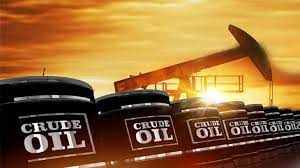
The widening conflict in West Asia is beginning to cast a shadow over India’s economic outlook. The country’s heavy dependence on imported energy and the structural woes plaguing its long-neglected economy, due to which there is persistently high inflation, unemployment, ever-widening inequality and a depreciating rupee, have all added up to make India the most vulnerable country during this period of global geopolitical turmoil. As crude prices hover around $100 per barrel with the possibility of a further steep hike very soon, the risks are no longer confined to the energy sector alone. They threaten to ripple across India’s external balance, fiscal stability, financial markets and even the broader growth trajectory of the economy. No other major economy is as exposed to oil price shocks as India, which imports nearly 90 per cent of its crude oil and about half of its natural gas. Much of this comes from the Middle East, a region now facing heightened instability. In normal times, such dependence was manageable through diversified supply chains and stable shipping routes. Unfortunately for India, when geopolitical tensions escalate and energy flows are disrupted, as seen with the closure of the Strait of Hormuz, the vulnerabilities begin to unravel, as is evident from the ongoing LPG crisis in the country.
Economists estimate that if crude prices average around $100 per barrel for the next financial year, India’s current account deficit, the gap between what the country earns from exports and what it spends on imports, could widen sharply to nearly 2 per cent of the GDP, more than double the current projections. In an environment already marked by financial volatility, this could significantly weaken the rupee and fuel inflationary pressures. The currency markets are already flashing warning signals. The rupee has slipped to a record low of 92.30 against the US dollar, as on 15 March, with analysts predicting that if the war persists for some more weeks, the currency could fall to as low as 95.
High oil prices also threaten to strain government finances. Analysts estimate that if crude remains around $100 per barrel, government expenditure could rise by as much as Rs 3.6 trillion in the next financial year. Much of this increase would come from subsidies designed to shield the most vulnerable sectors of the economy. Fertiliser subsidies alone could rise substantially, as the government moves to ensure farmers continue receiving essential inputs at affordable prices. The burden could grow further if oil marketing companies are encouraged, as they often are when difficult economic periods coincide with national or state elections, to hold back increases in petrol and diesel prices despite rising global costs.
The risks are not limited to domestic economic variables alone. West Asia is also a crucial trading partner for India. Nearly one-fifth of India’s exports are destined for the region, while trade with the United Arab Emirates alone exceeds $100 billion. Indian companies involved in engineering goods, energy infrastructure and construction rely heavily on projects across the Gulf. Any escalation of conflict that delays investment or disrupts logistics would affect export revenues as well.
Financial markets have already reacted nervously. Foreign investors have never been so bearish on India. Foreign portfolio investors (FPIs) withdrew Rs 52,704 crore (approximately $5.73 billion) from domestic equities in the first fortnight of March amid the escalating tensions in West Asia. Stock markets have corrected sharply, with benchmark indices Sensex and Nifty dropping more than 10 per cent from their recent highs. In a single week, the combined market capitalisation of India’s largest listed companies shrank by Rs 4.48 lakh crore. The fall in India’s stock markets has been among the worst in the world, with markets even in countries directly involved in the conflict, such as the US and Israel, faring better than India.
Another impact is on remittances. Nearly 40 per cent of the money sent home by Indians working abroad originates from the Gulf region. These inflows support millions of households and form a vital pillar of India’s consumption-driven growth. Any disruption in Gulf economies could drastically reduce remittance flows. In a worst-case scenario, large numbers of expat workers returning home unemployed would place additional strain on India’s already sluggish labour market.
The flawed policies of the government over the last decade, starting with demonetisation, forcible digitisation resulting in cash going out of the hands of the poor and middle class, and a regressive taxation system, have dealt one blow after another to the Indian economy. If the Middle East crisis drags on and energy markets remain volatile, there could be more economic pain in store for ordinary Indians.