
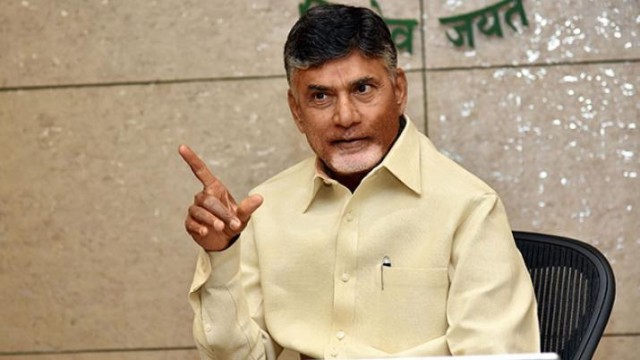
Over the decades, since Independence, India’s southern states have achieved great success in population control with their governments aggressively promoting family planning measures. As a result of these efforts, states like Andhra Pradesh, Tamil Nadu, Kerala and Karnataka recorded sharp declines in fertility rates through sustained public policy interventions. Today, however, the political discourse in the southern states vis-à-vis population has undergone a dramatic reversal. For example, Andhra Pradesh Chief Minister N. Chandrababu Naidu’s announcement of cash incentives for families having a third and fourth child marks not merely a demographic policy shift, but a profound political statement shaped by the looming shadow of delimitation.
Naidu’s government has announced incentives of Rs 30,000 for the birth of a third child and Rs 40,000 for a fourth child, while also considering nutritional assistance and free education benefits for larger families. Just a few years ago, such proposals would have sounded politically absurd and negative in the national interest in a country long preoccupied with controlling population growth. Yet the Andhra CM now argues that “children themselves have become wealth” and that society must work collectively to raise birth rates.
The immediate justification offered by the state government is demographic decline. Andhra’s Total Fertility Rate (TFR) has reportedly fallen to around 1.5, well below the replacement level of 2.1 required to maintain a stable population. The concern is not unfounded. Several countries, including Japan and South Korea, are struggling with ageing populations, shrinking workforces, soaring pension burden, and slowing economic growth. India’s southern states increasingly fear a similar trajectory as rising incomes, urbanisation, and changing social aspirations have drastically altered demographic patterns across the region. Apart from the threat of political weight of these states declining due to delimitation, this has also increased migration from outside, mainly from north and eastern states of the country into these southern states of large numbers of uneducated, unemployed youths looking to eke out a living which their own states are incapable of offering.
Having said that, Andhra’s recent policy shift shouldn’t be seen purely through the lens of economic planning or social welfare. India’s fresh delimitation exercise after the next Census, possibly before the 2029 general elections, is a crooked political move designed exclusively to destroy the essence of federalism, a long-cherished strength that encouraged intellectual and material growth. Since parliamentary seats are allocated broadly according to population, states with higher population growth stand to gain more representation in the Lok Sabha. This has triggered deep anxieties in southern states, which successfully implemented population control measures over the past four decades, while many northern states continued to encourage burgeoning growth of their population.
The concern in the south is clear-cut — states that have religiously followed the Union government’s family planning agenda may now be punished politically by the BJP-led NDA government for their success. If Lok Sabha seats are redistributed strictly on the basis of current population figures, mostly Hindi-speaking states like Uttar Pradesh and Bihar could gain significantly greater parliamentary weight, while all five southern states – Tamil Nadu, Karnataka, Andhra Pradesh, Telangana and Kerala — may see their relative influence in national politics decline. The number of seats in these states may not decline but the northern states will have a bigger share of seats in a larger Lok Sabha.
It is in this context that Naidu’s political positioning becomes significant. Unlike Tamil Nadu or Kerala, which have openly expressed their opposition to population-based delimitation, Andhra Pradesh under the Telugu Desam Party has largely aligned itself with the BJP led Union government on the issue. Naidu even criticised Opposition parties after the Delimitation and Constitutional Amendment Bills faced resistance in the Parliament, accusing them of doing a “great disservice to the nation.” Yet his government’s sudden enthusiasm for boosting population growth reveals the contradiction at the heart of the delimitation debate. While supporting the Centre politically, Andhra Pradesh appears acutely aware of the long-term consequences of demographic decline on political representation. Naidu’s move may seem negative on a larger national canvas yet is positive for states such as Andhra.
This shift also unravels the unintended consequences of India’s earlier population control discourse. For decades, governments treated a high population as a developmental burden. Incentives for sterilisation, restrictions on welfare benefits, and slogans promoting small families became central to state policy. Today, those same states are scrambling to reverse their declining birth rates, while simultaneously confronting fears of diminished political power.
It is indeed ironic that states that achieved better health outcomes, improved literacy, lower fertility rates, and greater demographic stabilisation now fear political marginalisation within India’s federal structure. In contrast, states with higher population growth, especially those in north India that failed in proper implementation of federal policies, could emerge with greater parliamentary dominance. This creates a dangerous perception that responsible governance and successful social policy may ultimately lead to political disadvantage.
State governments certainly have the right to respond to demographic realities. At the same time, linking political representation too rigidly to population, as is being done by the BJP government, risks undermining the spirit of cooperative federalism as enshrined in the Constitution. It is for this reason that delimitation should not become a mechanism through which a region’s developmental achievements invariably lead to its diminished national influence. It may help a particular limited interest now, but will create a long-lasting impression that discourages implementation of future pro-people policies at the national level.