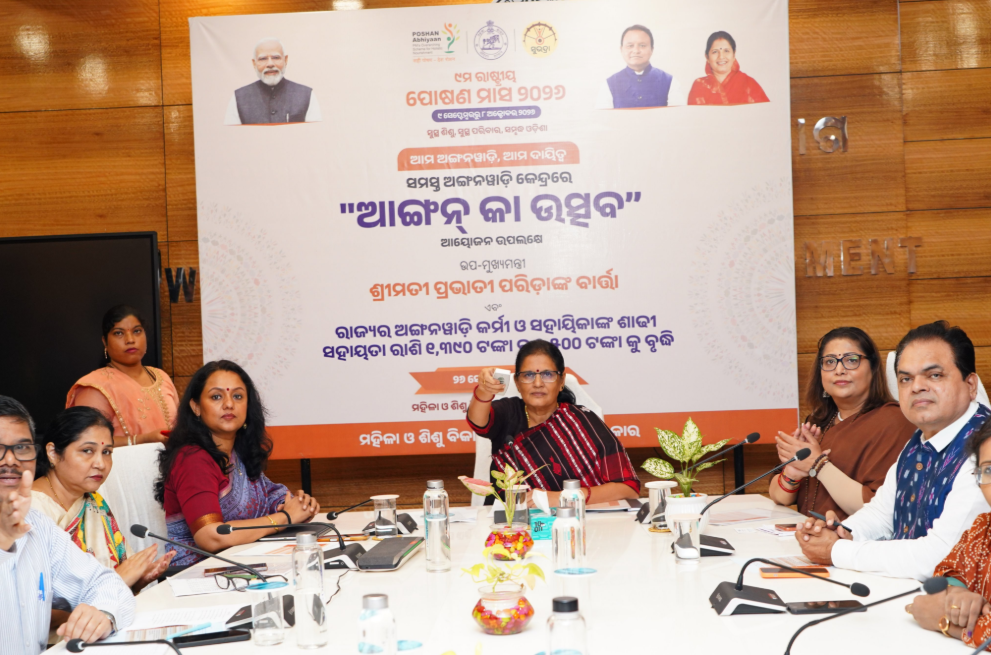
Bhubaneswar: Odisha Government Saturday raised Anganwadi workers’ clothing allowance to Rs 1,500 and launched a digital system for managing electricity bills at their centres.
Deputy Chief Minister Pravati Parida announced the measures while virtually inaugurating the three-day ‘Angan Ka Utsav’ campaign from the Women and Child Development Department.

Under the revised clothing allowance, the Centre will contribute Rs 600 and the state Rs 900. With a budgetary provision of Rs 22.30 crore, around 1.48 lakh Anganwadi Workers and Helpers across Odisha are expected to benefit.
ଅଙ୍ଗନୱାଡ଼ି କେନ୍ଦ୍ରଗୁଡ଼ିକୁ ଆହୁରି ସଶକ୍ତ କରିବା ଏବଂ ଶିଶୁ, ମା’ ଓ କିଶୋରୀଙ୍କ ପୋଷଣ ଓ ସ୍ୱାସ୍ଥ୍ୟ ସଚେତନତାକୁ ଗାଁ ଗାଁରେ ପହଞ୍ଚାଇବାର ଲକ୍ଷ୍ୟ ନେଇ ଆଜି ‘ଆଙ୍ଗନ୍ କା ଉତ୍ସବ’ ଅଭିଯାନର ଶୁଭାରମ୍ଭ କରାଗଲା । ଏହି ଅବସରରେ ଅଙ୍ଗନୱାଡ଼ି କର୍ମୀ ଓ ସହାୟିକାଙ୍କ ପୋଷାକ ଭତ୍ତା ୧,୩୯୦ ଟଙ୍କାରୁ ୧,୫୦୦ ଟଙ୍କାକୁ ବୃଦ୍ଧି ବାବଦରେ ଘୋଷଣା… pic.twitter.com/qUBusaM2fk
— Pravati Parida (@PravatiPOdisha) September 26, 2026
Parida also launched DIPTI (Direct Invoice Payment & Tracking Interface), a digital platform developed by the department in coordination with DISCOMs for verification, payment and tracking of electricity bills of Anganwadi Centres.
The system will relieve Anganwadi Workers of the responsibility of paying electricity bills and related administrative work, allowing them to focus on nutrition, health and early childhood development services, officials said.
Also Read : Odisha begins evacuation as heavy rain swells rivers, triggers floods
The ‘Angan Ka Utsav’ will be held at all 74,224 Anganwadi Centres from September 27 to 29 as part of Poshan Maah and the Seva Sankalp Abhiyan. Around 37.11 lakh beneficiaries and Anganwadi Management Committee members, besides 13.03 lakh children aged 3-6 years, are expected to participate.
The first day will feature nutrition and food competitions, including ‘Poshan Pitha’ showcases and cooking contests for fathers using locally available ingredients. The second day will focus on games, storytelling and other child-centric activities, with children being served lassi, local fruits and millet cookies.
Parida said greater family and community participation was essential to improving nutrition, health and holistic development of children.