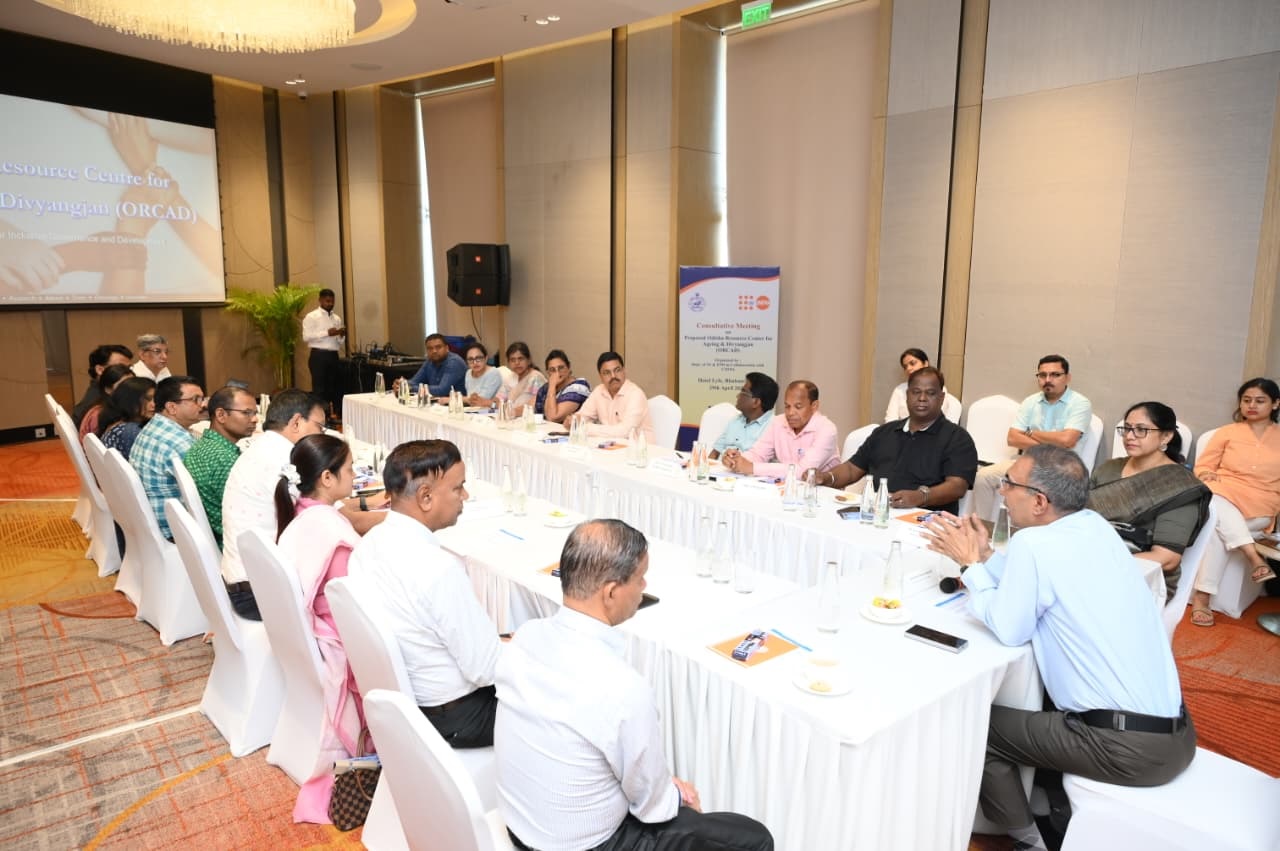
Bhubaneswar: Odisha has initiated efforts to build a robust institutional framework for inclusive governance through the proposed Odisha Resource Centre for Ageing & Divyangjan (ORCAD), a state-level centre of excellence aimed at promoting accessibility, inclusion and coordinated services for elderly persons and Divyangjan across the state.
Envisioned as a strategic platform, ORCAD aims to strengthen inter-departmental convergence, promote evidence-based policymaking and enhance administrative capacities at various levels to ensure meaningful participation of senior citizens and persons with disabilities in Odisha’s socio-economic development.

The proposed centre is also aligned with the broader vision of Viksit Odisha 2036 and 2047, focusing on inclusive and sustainable growth.
A high-level consultative meeting in this regard was held here Wednesday in view of Odisha’s changing demographic landscape and the increasing need for integrated, future-ready systems to support ageing populations and persons with disabilities.
The consultation was organised by the Department of Social Security & Empowerment of Persons with Disabilities (SSEPD) in collaboration with the United Nations Population Fund (UNFPA).
The meeting brought together senior government officials, representatives from United Nations agencies, including UNDP and UNICEF, development partners, and subject experts.
Principal Secretary Suresh Kumar Vashishth highlighted the importance of creating responsive and inclusive systems capable of addressing the complex and interconnected challenges emerging from demographic transitions.
He reaffirmed the state government’s commitment to ensuring dignity, independence, and equitable opportunities for all sections of society.
Director Parul Patawari outlined ORCAD’s proposed role as a knowledge and resource hub focused on research, capacity building, and policy innovation.
She stressed the need for strong institutional mechanisms that can effectively transform data and insights into scalable interventions while embedding inclusion within Odisha’s governance structure.
The consultation also saw active participation from key departments including Health and Family Welfare, School and Mass Education, Higher Education, Mission Shakti, Panchayati Raj & Drinking Water, and Women & Child Development, along with technical experts.
Detailed discussions during the meeting generated significant inputs that are expected to shape ORCAD’s institutional design, governance structure, and implementation roadmap.
UNFPA Odisha State Head Nadeem Noor presented the proposed institutional framework for ORCAD, developed jointly with the SS&EPD department.