Odisha News, Odisha Latest news, Odisha Daily - OrissaPOST
  • Home
  • Trending
  • State
  • Metro
  • National
  • International
  • Business
  • Feature
  • Entertainment
  • Sports
  • More..
    • Odisha Special
    • Editorial
    • Opinion
    • Careers
    • Sci-Tech
    • Timeout
    • Horoscope
    • Today’s Pic
  • Video
  • Epaper
  • News in Odia
  • Home
  • Trending
  • State
  • Metro
  • National
  • International
  • Business
  • Feature
  • Entertainment
  • Sports
  • More..
    • Odisha Special
    • Editorial
    • Opinion
    • Careers
    • Sci-Tech
    • Timeout
    • Horoscope
    • Today’s Pic
  • Video
  • Epaper
  • News in Odia
No Result
View All Result
OrissaPOST - Odisha Latest news, English Daily -
No Result
View All Result

Outcomes matter more than intent

Updated: January 3rd, 2026, 08:03 IST
in Opinion
0
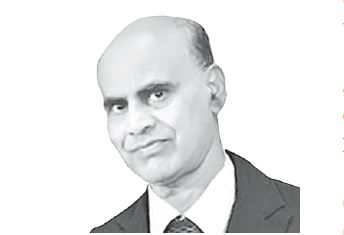
Nalinikanta Dhar

Nalinikanta Dhar

Share on FacebookShare on TwitterShare on WhatsAppShare on Linkedin

By Nalinikanta Dhar

In line with the National Education Policy (NEP) 2020, the Union government has introduced the Developed India Education Institutions Bill–2025 in Parliament, proposing the creation of a National Higher Education Regulatory Council. In a vast and diverse country like India—marked by historical, social, and regional variations—there is an undeniable need for a coherent, democratic, and inclusive regulatory framework that ensures equity, transparency, and justice in higher education.

Also Read
Nalinikanta Dhar

Outcomes matter more than intent

1 day ago
Homi Kharas & Mahmoud Mohieldin

SOVEREIGN BORROWERS’ CLUB

1 day ago

India has previously witnessed the benefits of independent regulatory reforms. Institutions such as the Securities and Exchange Board of India (SEBI, 1992), the Telecom Regulatory Authority of India (TRAI, 1997), and the Real Estate Regulatory Authority (RERA, 2016) have largely functioned with minimal political interference and have delivered tangible public benefits through timely reforms.

The proposed council will comprise three interlinked verticals: a Regulatory Council, an Accreditation Council, and a Standards Council. Institutions of national importance such as IITs, IIMs, and NITs will also come under this framework. One of the stated objectives is to address persistent issues such as delayed approvals, overlapping regulations, excessive compliance burdens, and regulatory inconsistency caused by multiple authorities. A single regulator could potentially streamline governance and enhance efficiency.

However, a significant departure from NEP 2020 is the government’s decision not to establish an independent Higher Education Financing Authority as originally envisaged. Instead, funding will remain under the direct control of the Ministry of Education. While the government argues that diversified funding sources make a single authority impractical, this raises concerns about excessive centralisation of financial power.

Although the regulator will not have the authority to fix fees, it will frame policies to prevent the commercialisation of education. The Bill aims to unify regulatory norms, improve transparency, and strengthen quality assurance. Strict penalties—up to Rs 2 crore—and even cancellation of affiliation are proposed for violations. These measures may help curb malpractices such as fake certificates, irregular admissions, and poor infrastructure, particularly in the private sector.

Yet, many structural challenges in higher education remain unresolved: outdated curricula; limited emphasis on research, creativity, critical thinking, and problem-solving; rote-based examination systems; weak industry-academia linkages; bureaucratic interference; and rampant commercialisation. Social inequities continue to obstruct inclusive access, especially for Dalits, backward classes, and marginalised communities.

While the Bill has several positive features, apprehensions persist regarding over-centralisation, erosion of university autonomy, and transitional challenges in implementation. Questions also remain about adequate representation of women, minorities, and tribal communities in the new regulatory structure, and whether regional needs will be meaningfully addressed.

Despite having over 1,300 universities and 52,000 colleges, India’s global standing in higher education and research remains weak. Compared to Asian peers like China, Japan, South Korea, Singapore, and Taiwan, India lags significantly in patents and innovation.

Every year, Indian students spend nearly Rs 30,000 crore in foreign exchange on overseas education. With developed countries tightening visa norms, Indian students face increasing uncertainty and costs. If India is to realise its vision of becoming a $25–30 trillion economy by 2047, it must achieve self-reliance in high-quality education and advanced technical knowledge.

Improving higher education is impossible without strengthening school education. Alarming findings from the 2024 ASER survey show that only 44.8 percent of Class V students can read a Class II-level text, and only 30.7 percent can solve basic arithmetic. The proposed higher education regulator must therefore act as a bridge between school education reforms and higher learning.

Ultimately, policy intent alone does not guarantee success. What matters is effective implementation, continuous evaluation, and corrective reform. As the Bill is currently under Parliamentary Standing Committee scrutiny, it is imperative to incorporate stakeholder feedback and expert opinion to build a balanced, inclusive, and outcome-oriented regulatory institution.

The writer is an expert in Economics.
Views are personal.

Orissa POST – Odisha’s No.1 English Daily
Tags: Opinion
ShareTweetSendShare
Suggest A Correction

Enter your email to get our daily news in your inbox.


OrissaPOST epaper Sunday POST OrissaPOST epaper

Click Here: Plastic Free Odisha

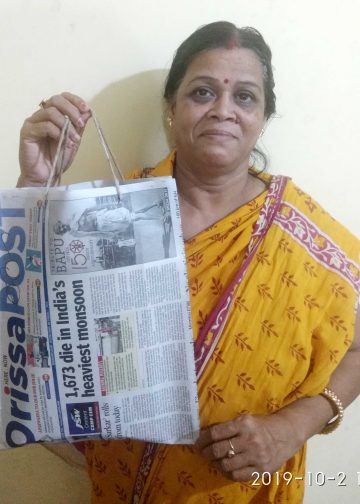
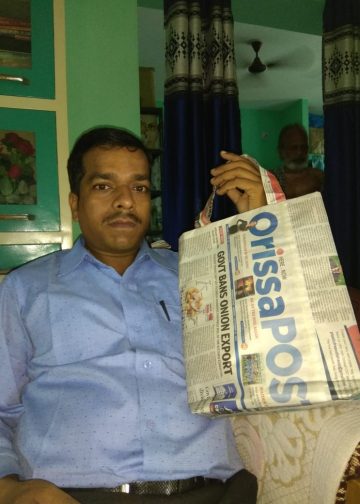
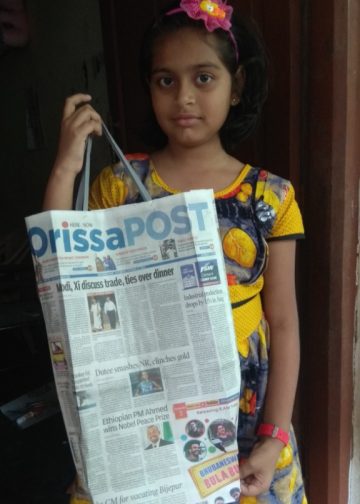
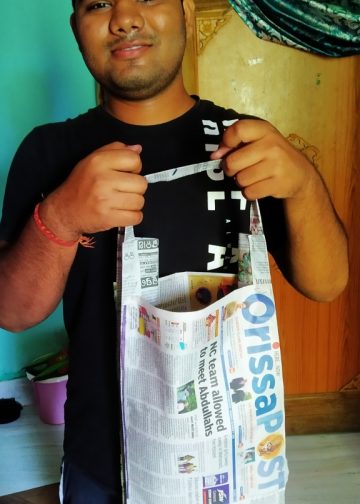
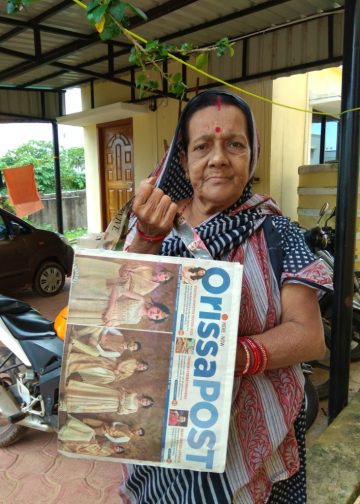
#MyPaperBagChallenge

Saishree Satyarupa

December 12, 2019
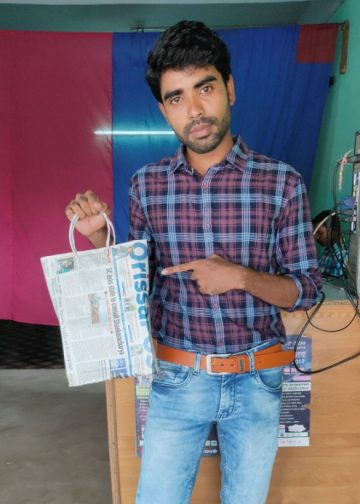
#MyPaperBagChallenge

Jhili Jena

December 12, 2019
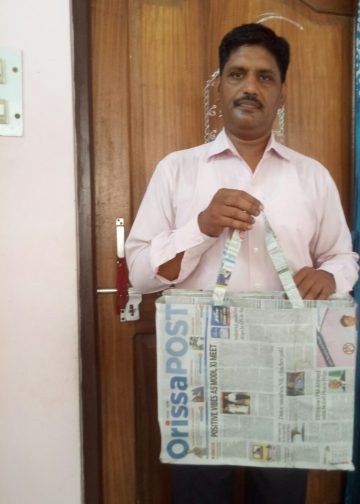
#MyPaperBagChallenge

Bijswajit Pradhan

December 12, 2019
#MyPaperBagChallenge

Diptiranjan Biswal

December 12, 2019
#MyPaperBagChallenge

Mandakini Dakua

December 12, 2019
#MyPaperBagChallenge

Pitabas Tripathy

December 12, 2019
#MyPaperBagChallenge

Parbati Mohanty

December 12, 2019
#MyPaperBagChallenge

Sibarama Khotei

December 12, 2019
#MyPaperBagChallenge

Keshab Chandra Rout

December 12, 2019
#MyPaperBagChallenge

Priyabrata Mohanty

December 12, 2019
#MyPaperBagChallenge

Anshuman Sahoo

December 12, 2019
#MyPaperBagChallenge

Adrita Bhattacharya

December 12, 2019
#MyPaperBagChallenge

Sisirkumar Maharana

December 12, 2019
#MyPaperBagChallenge

Pratyasharani Ghibela

December 12, 2019
#MyPaperBagChallenge

Debasis Mohanty

December 12, 2019
#MyPaperBagChallenge

Shreyanshu Bal

December 12, 2019
#MyPaperBagChallenge

Sitakanta Mohanty

December 12, 2019
#MyPaperBagChallenge

Archana Parida

December 12, 2019
#MyPaperBagChallenge

Sipra Mishra

December 12, 2019
#MyPaperBagChallenge

Anup Mahapatra

December 12, 2019
#MyPaperBagChallenge

Pratik Kumar

December 12, 2019
#MyPaperBagChallenge

Rajashree Pravati Mohanty

December 12, 2019
#MyPaperBagChallenge

Adyasha Priyadarsani Sendha

December 12, 2019
#MyPaperBagChallenge

Subhajyoti Mohanty

December 12, 2019
#MyPaperBagChallenge

Ipsita

December 12, 2019
#MyPaperBagChallenge

Mrutyunjaya Behera

December 12, 2019
#MyPaperBagChallenge

Pratik Kumar Ghibela

December 12, 2019
#MyPaperBagChallenge

Anasuya Sahoo

December 12, 2019
#MyPaperBagChallenge

Geetanjali Patro

December 12, 2019
#MyPaperBagChallenge

Spinoj Pattnaik

December 12, 2019

Archives

Editorial

Only Energy

Venezuela
January 5, 2026

It was a moment of geopolitical déjà vu. On the same calendar day, separated by thirty-six years, United States forces...

Read moreDetails

Dragon Dominance

Aakar Patel
January 4, 2026

By Aakar Patel One of the more interesting things to look forward to in 2026 is the rivalry between the...

Read moreDetails

Institutional Shield

January 3, 2026

By Dilip Cherian India-Bangladesh relations today feel like they’re running on muscle memory, while politics keeps tugging at the steering...

Read moreDetails

Thai-Cambodian Truce

Thailand-Combodia
December 31, 2025

After a protracted, bloody conflict in which over 100 people were killed and about half a million civilians in both...

Read moreDetails
  • Home
  • State
  • Metro
  • National
  • International
  • Business
  • Editorial
  • Opinion
  • Sports
  • About Us
  • Advertise
  • Contact Us
  • Jobs
Developed By Ratna Technology

© 2025 All rights Reserved by OrissaPOST

  • News in Odia
  • Orissa POST Epaper
  • Video
  • Home
  • Trending
  • Metro
  • State
  • Odisha Special
  • National
  • International
  • Sports
  • Business
  • Editorial
  • Entertainment
  • Horoscope
  • Careers
  • Feature
  • Today’s Pic
  • Opinion
  • Sci-Tech
  • About Us
  • Contact Us
  • Jobs

© 2025 All rights Reserved by OrissaPOST

    • News in Odia
    • Orissa POST Epaper
    • Video
    • Home
    • Trending
    • Metro
    • State
    • Odisha Special
    • National
    • International
    • Sports
    • Business
    • Editorial
    • Entertainment
    • Horoscope
    • Careers
    • Feature
    • Today’s Pic
    • Opinion
    • Sci-Tech
    • About Us
    • Contact Us
    • Jobs

    © 2025 All rights Reserved by OrissaPOST