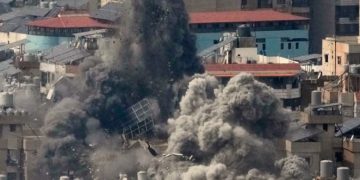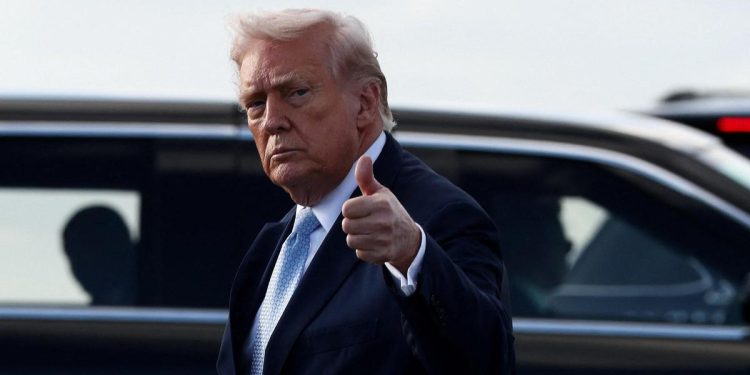
In a major development on 23 March, US President Donald Trump said in a Truth Social post 23 days after the US-Israel war against Iran that he has instructed the defence department to postpone all airstrikes against Iranian power plants and energy infrastructure for a five-day period. This is subject to the “success” of ongoing “meetings and discussions,” he clarified. But, given Trump’s track record of reneging on his words and promises of ending wars, there are too many ifs and buts before the world can really heave a sigh of relief. The announcement came at a moment when the ongoing war has caused severe dislocation of world economy, pushing crude toward $108 per barrel. The situation was looking even more bleak following Trump’s 48-hour ultimatum threatening to obliterate Iranian power plants. Iran too threatened retaliation by “irreversibly” destroying essential infrastructure across the Middle East, including vital water supply systems should the US followed through on Trump’s threat.
The seemingly unending saga of issuing threats and counter-threats of destruction was only complicating matters and plunging the world into an unprecedented fuel and gas crisis. In the process Trump not only failed to achieve his stated goals of finishing off the war within a few days, but also found himself cornered and deserted by traditional allies of the US. At this stage he announced the five-day window. During that period, the Department of War has been instructed to postpone strikes. Iranian state media, however, reported that there was no direct or indirect contact with Trump, adding the US President backed down after being warned by Iran that its targets would include power plants across West Asia.
Also Read


However, Trump’s words will be read carefully. For, he said conversations are underway toward a complete and total resolution. But he stopped short of saying whether a resolution has been reached. He said the strikes are postponed for five days subject to the success of ongoing meetings. He did not say the strikes are cancelled. He said the tone and tenor of conversations is constructive, but there is no word yet on whether Iran has agreed to reopen the Strait of Hormuz, stop firing missiles at Israel, or accept any specific terms.
It would be worthwhile to remember that in the Trumpian lexicon a pause is not a peace deal, nor is a postponement a ceasefire. It is too early to hazard a guess about whether the war is going to end very soon. One can only say the conflict has entered a negotiating phase, and that is some progress from the escalating strike-and-counter-strike phase. This seems to have taken shape after tremendous pressure from the countries around Iran that are getting the brunt of the missile and drone strikes.
There are miles to go and so many intractable issues are to be sorted out such as Iran’s nuclear programme, reopening the Strait of Hormuz and cessation of bombardments from both sides. Obviously, none of them can be resolved in five days. The most realistic outcome from the current talks within the five-day window that can be expected is a framework agreement, a set of principles and commitments that both sides agree to as the basis for a longer negotiation. It can at best be described as an effort to begin the end of the war. The recent history of Russia-Ukraine war does not inspire much confidence as ceasefires were made and unmade too frequently.
However, Trump appears to be learning to be wise after the event after unilaterally starting the war without even caring to consult traditional Middle Eastern, European and NATO allies. He has also to face the midterm election in his country. If good sense prevails, it would bring the world from the brink of a catastrophic fuel and resultant economic crisis.