
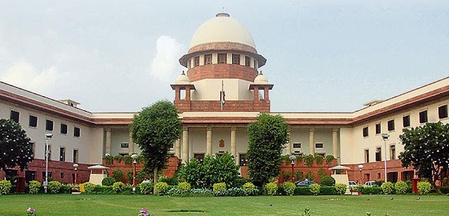
New Delhi: Amid the political storm over allegations of forced religious conversion and sexual exploitation at the Tata Consultancy Services’ (TCS) Nashik branch, a fresh application was moved before the Supreme Court Thursday in the pending religious conversion case, citing the incident as evidence of “organised religious conversion” and seeking stronger judicial intervention against unlawful conversions across the country.
Filed in the pending matter “In Re: The Issue of Religious Conversion”, the application contends that the alleged incidents at TCS’s Nashik office demonstrate the need for stronger legal measures against conversions carried out through force, fraud, coercion or inducement.
The development comes as multiple women employees of TCS’s Nashik branch have alleged harassment by senior staff between 2022 and 2026, including alleged pressure to adopt certain religious practices or convert.
“The organised religious conversion in Nasik has shaken the conscience of citizens throughout the country,” the plea said, adding that such acts pose a “serious threat to sovereignty, secularism, democracy, equality, justice, liberty, fraternity, unity and national integration”.
The applicant, advocate Ashwini Kumar Upadhyay, said that Article 25 of the Constitution does not protect conversion through fraud, force, coercion or cheating, and asserted that the right to propagate religion does not include a right to convert another person against their free will.
Citing earlier judgments of the top court, the application said that Article 25 grants only the right to “transmit or spread” one’s religion and not a fundamental right to convert another person.
The plea also claimed that forced religious conversions, when carried out in an organised and systematic manner, should be treated as a form of organised crime, alleging that such acts often involve coercion, fraud, intimidation, psychological pressure and exploitation of vulnerable persons.
The application also urged the apex court to recognise organised forced conversion campaigns as potentially falling within the ambit of “terrorist acts” under Section 113 of the Bharatiya Nyaya Sanhita (BNS) if undertaken through systematic violence or coercion with intent to threaten public order or national integrity.
The applicant has sought directions for the Union government to frame stricter legal provisions to regulate and curb unlawful religious conversions.
Meanwhile, the TCS Nashik incident has triggered demands across party lines for a comprehensive investigation, with political leaders differing on whether institutional accountability of the company should be examined.
Shiv Sena spokesperson Sanjay Nirupam described the allegations as “serious and alarming”, claiming that Hindu women employees at the Nashik office were allegedly pressured to convert their religion and subjected to exploitation.
“We want to ask TCS — you are such a prestigious company providing services worldwide, yet such wrongdoing was happening right under your nose and you were not even aware of it,” Nirupam said.
The Bharatiya Janata Party also demanded strict action, with MLC Chitra Wagh alleging coercion in the alleged conversions, while Union Minister Ramdas Athawale said voluntary conversion is legal but coercive conversion must be dealt with sternly.
According to reports, the controversy began in March after a woman accused a TCS colleague of maintaining a physical relationship with her on the false promise of marriage, following which multiple additional complaints surfaced and several FIRs were registered.
Police have so far arrested at least six employees in connection with the case, and Maharashtra authorities are probing whether any organised coercion or wrongdoing took place within the company premises.