
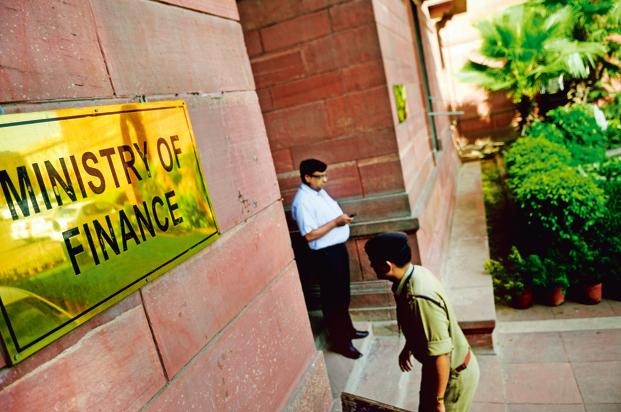
New Delhi: A finance ministry report Friday cautioned that prolonged crisis in the Middle East can have adverse implications on the exchange rate and may stoke inflationary pressures on account of rising prices of petroleum goods and fertilisers.
Besides, subdued capital flows, accentuated by a flight to safety, could put pressure on the currency, the Monthly Economic Review for February released by the finance ministry said.
The US-Israel strikes on Iran February 28, killing Iranian Supreme Leader Ali Khamenei and sparking retaliatory threats, has disrupted shipping through the Strait of Hormuz — the world’s most critical oil chokepoint handling 20 per cent of global oil flows — and damage to key energy infrastructure assets in the Middle East, mark a pivotal escalation echoing the 1991 Gulf War oil shocks, potentially reshaping global energy geopolitics for decades.
This conflict has already driven Brent crude up around 9 per cent to near USD 80/bbl and LNG prices around 50 per cent, it said.
Despite the country’s high import dependency on crude oil, the report said, it has sufficient foreign exchange reserves, a low CAD (which stands at 0.8 per cent of GDP in H1 FY26), and low inflation rates, which collectively allow it to effectively mitigate the impacts of rising global crude oil prices and ensure domestic energy security.
“However, if the crisis persists, it could have material implications for the exchange rate and the current account deficit and could stoke inflationary pressures(which otherwise have supportive supply-side dynamics),” it said.
Subdued capital flows, accentuated by a flight to safety, could put pressure on the currency, it said, adding that some sectors dependent on LNG and crude, like fertilisers and petrochemicals, could be affected if the crisis is prolonged.
However, the report stressed that Indian economy has maintained strong momentum in FY26, with real GDP growth estimated at 7.6 per cent and real GVA growth at 7.7 per cent.
Economic activity in January 2026 remained broad-based, supported by strong high-frequency indicators, including robust logistics activity, expanding PMI indices and sustained demand conditions, pointing to continued growth momentum, it said.
The external sector is stable despite elevated global trade uncertainty.
Moreover, it said, India’s active trade diplomacy, including progress on the India-EU FTA, the India-US Interim Trade Arrangement and the India-Oman CEPA, together with Budget initiatives aimed at improving trade facilitation, logistics efficiency and export competitiveness, is expected to diversify export destinations and strengthen external resilience over the medium term.
Looking ahead, the report said, the policy framework outlined in the Union Budget 2026-27 provides a strong anchor for sustaining growth.
It combines continued fiscal consolidation with sustained capital expenditure and sector-focused initiatives covering manufacturing, agriculture, MSMEs, infrastructure and human capital development, it said, adding that these measures are expected to strengthen productivity, investment and employment dynamics across sectors.
External developments, including global growth conditions, trade dynamics, commodity price movements and geopolitical factors, will continue to shape the outlook, it said.
Nevertheless, it said, strong macroeconomic fundamentals and continued reform momentum position the economy well for expansion.
In view of positive developments, including recent successful trade deals and consecutive strong growth of 7-plus over the previous three years, real GDP growth has been upgraded to 7-7.4 per cent for FY27, it added.
PTI