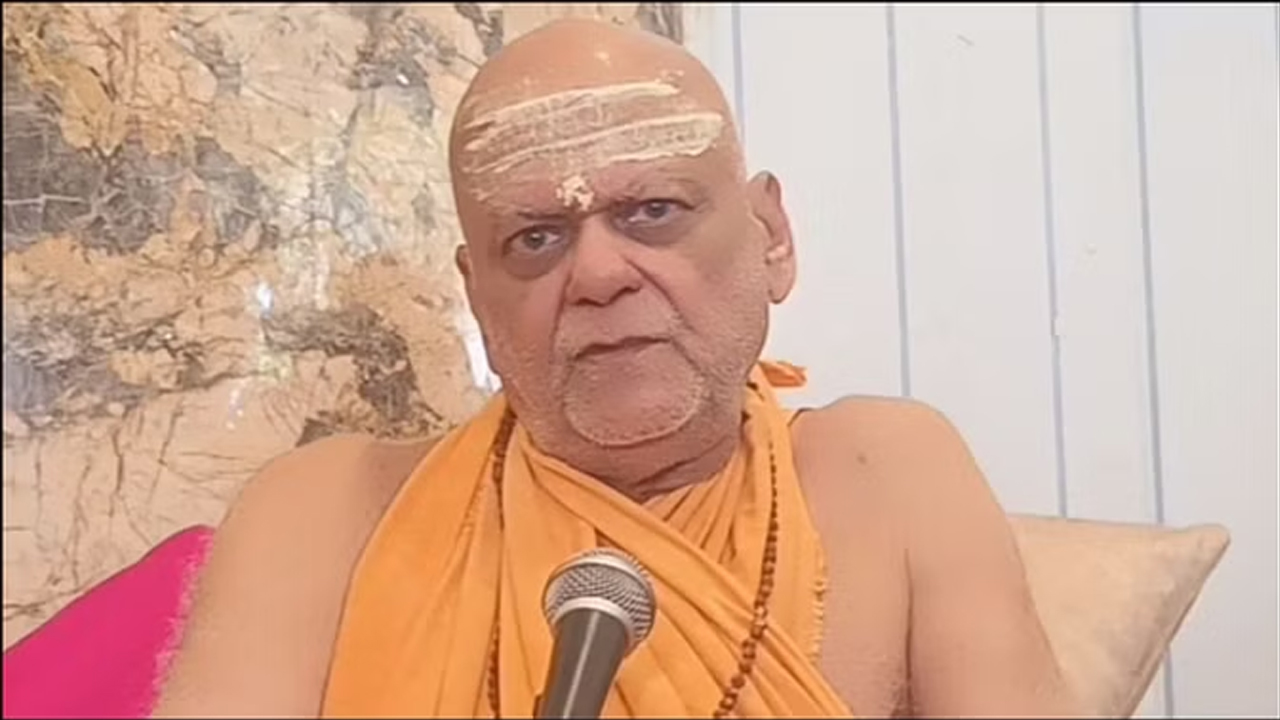
Bhubaneswar: Jagadguru Shankaracharya Swami Nischalananda Saraswati of the Govardhan Math in Puri has strongly objected to the animated film ‘Jai Jagannath’, alleging that its portrayal of Lord Jagannath is contrary to scriptural prescriptions and established religious traditions, and has demanded a complete ban on its release and dissemination.
According to a press release issued by the residential office of Puri Gajapati Maharaja Dibyasingha Deb, Shankaracharya expressed his objections to the animated production by Bhubaneswar-based Eli Animations Private Limited.


The Mukti Mandap Pandit Sabha of Puri subsequently apprised the Gajapati Maharaja of the Shankaracharya’s views and his decision to seek a ban on the film.
The Shankaracharya alleged that the depiction of Lord Jagannath in the animated production was inconsistent with the form prescribed in the scriptures and followed in the established traditions of the Jagannath culture.
He termed such a portrayal an “unforgivable” offence and called for a ban on the film’s release and its dissemination through all forms of mass media.
He said portraying deities in forms that differ from or distort established religious traditions and beliefs was a serious matter that required careful examination at the religious, philosophical and practical levels.
According to the Shankara charya, the culture, philosophy and worship practices associated with Lord Jagannath are rooted in long-established traditions.
Any portrayal that deviates from these traditions, he maintained, could adversely affect the traditional understanding of Lord Jagannath among future generations.
The Mukti Mandap Pandit Sabha has also sought a review of an earlier Supreme Court decision declining to stay the release of the film.
The Shankaracharya further expressed serious objections to what he described as an inappropriate portrayal of Lord Jagannath in the “Daru Brahma” form.
He said the Daru Brahma form described in the Atharvaveda Parishishta, Gopala Sahasranama and other scriptures should not be presented in a distorted manner.
Describing the matter as a serious religious and human-rights issue, he also expressed his views on the role and limitations of the judiciary in matters concerning religion.
He said religious leaders and followers of the Sanatana Vedic tradition had the right to disagree with judicial decisions and seek their review without undermining or challenging the functioning of the judiciary.