
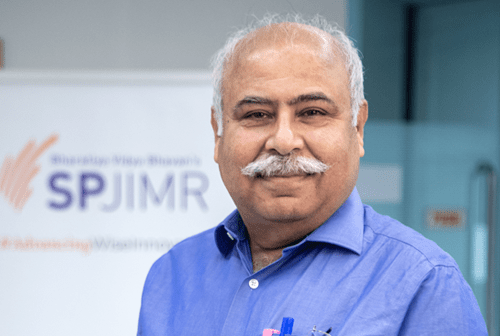
Jagdish Rattanani
While the nation was attracted to the AI summit in New Delhi and distracted by the horrendous claims of a university on developing a robodog that was in fact imported from China, a different kind of attention was focused on twins from Odisha who passed out with flying colours in the entrance exams that serve as the admissions gateway to the much-vaunted IITs. One is the story of plain lies presented in plain sight. The other is the story of achievement and success that comes after much effort and sacrifice, most of it in what has come to be called the exam coaching factories of Kota, which is troubling in its own way. One is seen as everything that is wrong with India; the other as a high-water mark of Indian technical excellence claimed by and accorded to institutions like the IITs. The twin candidates will hopefully go on to do well and make their parents and nation proud. Yet the two stories– failure of one kind and achievement of another – are equally problematic for an India that has an ever-increasing number of STEM graduates but a very poor showing in terms of creativity, innovation or world-class solutions that can justify the investments the nation and the students make in passing through an Indian university. We have pilloried the private university that claimed a Rs 350 crore investment in AI-related infrastructure, but some troubling issues ride alongside. How do our regulators allow a university to function with almost every leadership position, academic and administrative, occupied by a member of the promoter family?
How does patent filing become a game, as alleged in this case, or how does a paper authored under the university on banging vessels to kill the coronavirus get written? The incident brought to sharp light how India has slipped into an education system run on high fees by private institutions with questionable credentials. Apart from a few exemplars in the private sector, which have higher standards, or the public sector institutions that have held up despite immense strain on resources and academic freedom, much cannot be said about the rest of the higher education sector. This is worrying because an increasing number of students study in private institutions rather than in public institutions. The skew plays out in complex ways by adding glamour and compromising rigour, while the falling investments in public education take opportunities away from those who cannot afford to pay the demanding private sector fees.
Official data from 2021-22, the latest available, shows that government universities are 58.6% of total universities, with 73.7% of total enrolment. Private universities (41.4%), autonomous, degree-granting and typically with fees at far higher levels, account for 26.3% of total enrolment, and are growing. But this is not the complete picture. Private aided and unaided colleges are 78.5%; government colleges are 21.5% of total. This leads to the case that a majority of higher education enrollment in India is in some form of private sector institution. The trend towards privatising higher education is well recognised, clear, and often the subject of study. What this incident with its shock value highlights is simple: in the absence of strict norms and good regulation, education will become (like hospitals already have) money spinners for a few, while the bulk of India will remain not educated. Watching the education sector is particularly significant as the nation prepares to implement the New Education Policy (NEP) with its expansive vision of education that is equitable, multi-disciplinary, holistic and rooted in the Indian ethos. The goals of NEP are less likely to be reached without public investment and some reorientation towards a balanced view that makes education thrive as a public good and is accessible to all. Yet it is unmissable that STEM education, particularly of the celebrated variety, has willy-nilly become an end in itself, as witnessed by the pressures, the cramming and the hard labour that young adults are put through in training camps and IIT prep schools of Kota and elsewhere. In the celebrations after the twin brothers from Odisha came up with identical scores in the JEE last week, we saw pictures of what was won but also what was lost – the children were put through a lot to fetch the scores that it is believed will change their lives. But engineers in particular have to reorient in the age of AI.
As AI does all the tech work that was once the domain of engineers, it is only the vision of the NEP that can come to the rescue. We need to build holistically rounded students who can adapt and shine in the new world. The philosopher Martha Nussbaum explains it rather well: “The educational culture of India used to contain progressive voices, such as that of the great Tagore, who emphasised that all the skills in the world were useless, even baneful, if not wielded by a cultivated imagination and refined critical faculties. Such voices have now been silenced by the sheer demand for profitability in the global market. Parents want their children to learn market able skills, and their great pride is the admission of a child to the Indian Institutes of Technology or the India Institutes of Man agement … I fear for democracy down the road, when it is run, as it increasingly will be, by docile engineers … unable to criticise the propaganda of politicians and unable to imagine the pain of another human being.”
The writer is a journalist and faculty member at SPJIMR.