
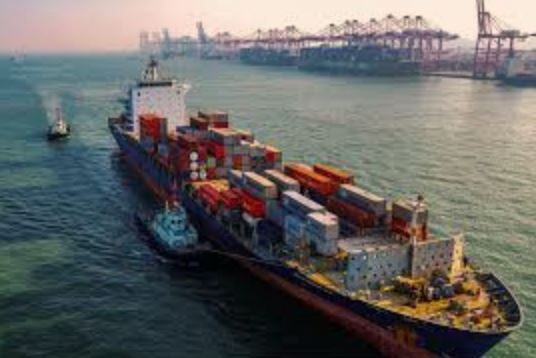
New Delhi: Rising tensions in the Middle East following attacks by the US and Israel on Iran are expected to disrupt trade flows, push up freight and insurance costs, delay cargo shipments, and drive a surge in global oil prices, thereby increasing India’s import bill, say experts.
Though India’s trade with Iran has declined over the years due to Western sanctions, the country’s two-way commerce with Bahrain, Kuwait, Oman, Qatar, Saudi Arabia and the UAE has registered healthy growth.
Experts and exporters are of the view that prolonged tensions in the region will have consequences for India on the trade front.
Iran has reportedly closed traffic through the Strait of Hormuz and a large share of India’s crude oil and LNG supplies from Iraq, Saudi Arabia, the UAE and Qatar transit this narrow choke point.
Estimates suggest roughly 35-50 per cent of India’s crude imports and a significant portion of LNG shipments pass through the strait.
“Any disruption would push up freight and insurance costs, delay cargoes, and trigger a spike in global oil prices — directly raising India’s import bill,” the Global Trade Research Initiative (GTRI) said.
In response, refiners may reroute cargoes via pipelines to Red Sea ports, source more oil from Russia, the US, West Africa and Latin America, and draw on strategic petroleum reserves to cushion short-term shocks, though these alternatives increase costs and transit times, it said.
“The impact would be global, not just Indian. Nearly one-fifth of the world’s oil and a major share of LNG trade flows through the strait, and most shipments are destined for Asian economies, including China, Japan and South Korea,” GTRI Founder Ajay Srivastava said.
He added that the disruption in the Strait of Hormuz threatens a major share of India’s crude oil and LNG imports, raising freight costs, insurance premiums, and fuel prices, while a surge in global oil prices could widen the current account deficit and fuel inflation.
The Strait of Hormuz is a narrow 33-kilometre passage connecting the Persian Gulf to the Arabian Sea.
Sharing similar views, trade expert Biswajit Dhar said that shipping lines have been affected due to this war, and that will impact Indian exporters.
“Oil prices may rise to USD 120 130 per barrel, and it would push our import bill, and may hurt inflation,” he said, adding that if it continues for long, remittances could get hit.
It may also slow down free trade agreement (FTA) talks with the GCC (Gulf Cooperation Council).
India has recently started FTA negotiations with the GCC bloc.
GCC is a union of six countries in the Gulf region — Saudi Arabia, the UAE, Qatar, Kuwait, Oman and Bahrain.
About 10 million Indians are living and working in the GCC region.
India has already implemented a free trade pact with the UAE in May 2022. It has also signed a Comprehensive Economic Partnership Agreement (CEPA) with Oman.
India’s exports to the GCC grew by about one per cent to about USD 57 billion in 2024-25 against USD 56.32 billion in 2023-24. Imports rose by 15.33 per cent to USD 121.7 billion in 2024-25 from USD 105.5 billion in 2023-24.
Bilateral trade has increased to USD 178.7 billion in 2024-25 from USD 161.82 billion in 2023-24.
The UAE was India’s third-largest trading partner in the last fiscal.
Leading leather and footwear exporter Rafeeq Ahmed said high oil prices will increase input costs for exporters.
“We are keeping our fingers crossed…if it will continue for more days, it will not be good for us,” Ahmed said.
Following the attack by the United States and Israel, Iran on Saturday launched retaliatory military strikes targeting several American military bases in the Middle East, including in Qatar, Kuwait and the United Arab Emirates (UAE).
Federation of Indian Export Organisations (FIEO) President SC Ralhan said the ongoing conflict has already begun to disrupt established global logistics channels.
Air routes are being altered, and maritime trade through the Red Sea and key Gulf straits face heightened uncertainty. If diversions become prolonged, shipments may increasingly have to reroute via the Cape of Good Hope, adding an estimated 15-20 days to transit time for Europe and the United States, Ralhan has said.
In 2024, the tensions in the Middle East region following the Israel-Hamas war had impacted the transportation of goods from India through the Red Sea route, as shippers had to take longer routes to reach destinations in the US and Europe.
The Bab-el-Mandeb Strait is a crucial shipping route for traders connecting the Red Sea and the Mediterranean Sea to the Indian Ocean.
The route starts from major Indian ports like Mumbai, JNPT, or Chennai, heads westward through the Arabian Sea, enters the Red Sea, and navigates through the Suez Canal into the Mediterranean Sea. From there, ships can reach various European ports, depending on their destinations.
The Cape of Good Hope route is longer and slower, but it avoids the potential for delays or disruptions in the Suez Canal. It is typically used for bulk cargo shipments, where time is less critical or when political instability in the Middle East raises concerns about using the Suez Canal.
The country’s exports rose marginally by 0.61 per cent to USD 36.56 billion in January, while trade deficit widened to a three-month high of USD 34.68 billion.
Imports rose 19.2 per cent – the highest so far this fiscal – to a three-month high of USD 71.24 billion in January, driven by a sharp rise in inbound shipments of gold and silver due to higher prices.
PTI