RABINARAYAN JENA, OP
Bhubaneswar: The Odisha School Education Programme Authority (OSEPA), which is responsible for universalising primary education and steering school education at the grassroots level in the state, has allegedly wasted public money. At times, it has purchased computer equipment, software and hardware in violation of government norms, while on other occasions it has purchased desks from agencies despite existing rate contracts, resulting in wasteful expenditure of Rs 24.30 crore on desks alone, according a report by the Comptroller and Auditor General (CAG) of India presented in the Assembly recently.


According to the report, the Union and state governments have made it mandatory to use Government e-Marketplace (GeM), a dedicated portal for procurement of goods and services. The Directorate of Export Promotion and Marketing (EPM) in Odisha has also entered into rate contracts with micro and small enterprises for various items.
Under the rules, government departments are required to purchase goods through GeM and from suppliers covered by EPM rate contracts. However, OSEPA authorities allegedly ignored these provisions and purchased desks from outside agencies, resulting in substantial additional expenditure. The CAG report said the Finance Department had directed in February 2019 that GeM platform be used to the maximum extent for government procurement.
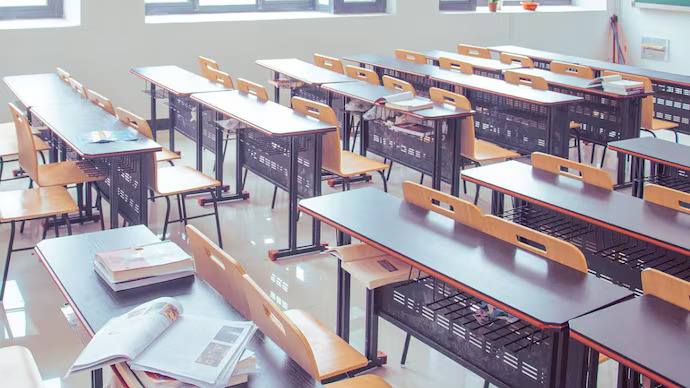
However, the audit found that the EPM Directorate had entered into a rate contract for two-seater compact desk cum-benches (dual desks) for students up to Class X, with specified designs, dimensions, materials and finishes. Until November 2021, the rate of the highest-quality dual desk was Rs 2,496, excluding GST. The rate was subsequently increased to Rs 4,102.
However, 16 implementing agencies purchased dual desks worth Rs 42.71 crore from various suppliers through quotations or on a nomination basis instead of procuring them through GeM. The agencies paid Rs 760 to Rs 7,907 more per desk than the rates specified in the EPM rate contract, resulting in an excess expenditure of Rs 24.30 crore, the CAG said.
Shortcomings in smart classrooms & labs: The CAG report exposed the deficiencies in infrastructure and facilities provided to students under initiatives aimed at imparting modern knowledge and skills. During the audit conducted between 2024 and March 2025, it was found that smart classrooms had not been installed in six of around 54 schools covered by the audit. The schools also lacked adequate electrical infrastructure. Apart from this, five schools did not have the required equipment and chemicals, while 19 schools lacked water or gas connections in their laboratories.
Overall, 32 schools were found to have inadequate science laboratory infrastructure, with the laboratories not fully functional. In addition, 13 schools lacked internet connectivity, preventing students from accessing online learning facilities. More significantly, 19 schools did not have e-book content in their e-libraries. The audit also found that some e-library facilities were being used for unrelated purposes, including as staff rest rooms and storage spaces.
Orissa POST – Odisha’s No.1 English Daily