
Paralakhemundi: Gajapati district has earned a rare recognition for rubber cultivation, with farmers in the hilly areas benefiting significantly from the cash crop.
Rubber is being cultivated in Gumma, Mohana, Kashinagar and Gosani blocks, where the produce has a strong market demand.
At present, rubber is cultivated on more than 2,000 hectares of land in the district.
With technical assistance from the Rubber Board, farmers are earning around Rs 2 lakh per hectare from the cultivation.
Major tyre companies, including Birla Tyres of Kolkata, Bansal Tyres and National Tyres of Kalahandi, Hindustan Tyres of Hyderabad, purchase rubber directly from the farmers.
Notably, India is the world’s largest producer with over 8.5 lakh hectares of plantations and also the third-largest user of natural rubber.
The cultivation is primarily concentrated in Kerala and Tamil Nadu and is currently expanding to Tripura, Assam, and other Northeastern states. Notably, rubber cultivation in the southern Odisha district began in 1999 with the support of the Rubber Board.
Farmers such as Munusingh Sukei, Kinte Singh, Abu Singh and Baru Singh of Gumma block started the cultivation in areas including Tarava, Munjuli, Kholabada, Sana, Bada Tabara, and Buruding.
Rubber trees start yielding latex about seven years after planting.
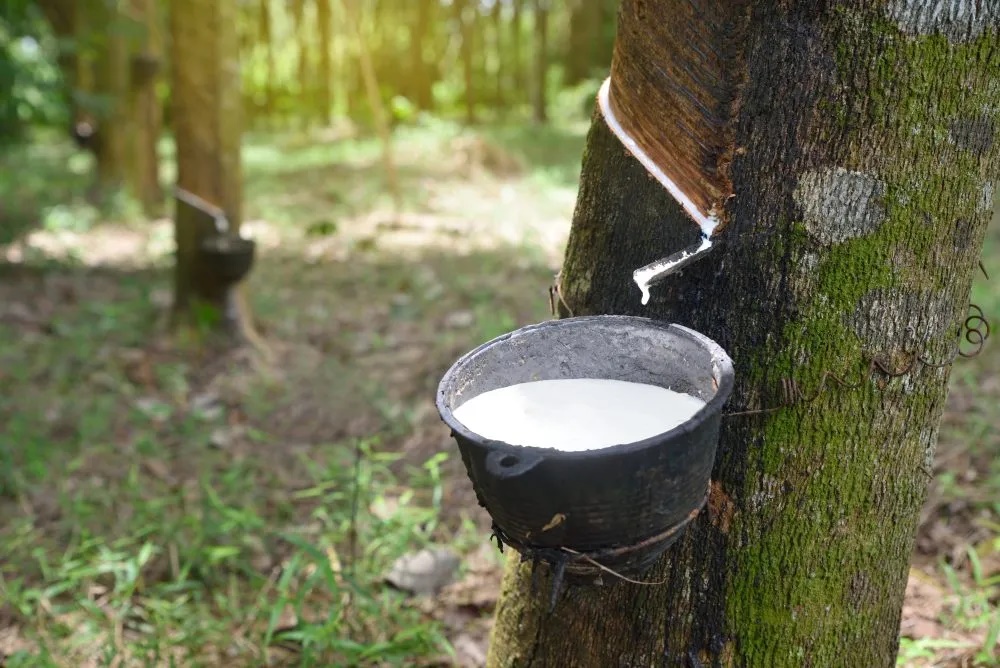
The latex is extracted from the trees before sunrise and collected in containers. It is then processed through machines to produce rubber sheets.
These sheets are first dried in smokehouses and later dried outside before being stored and sold to different companies.
Once properly maintained for seven years, a rubber tree can yield latex for about 35 to 40 years.
After the tree dries up, the wood is used for making various types of furniture.
Regional officer Sanatan Sethi said farmers from other parts of the district are also showing interest in rubber cultivation.
In the coming days, the target is to expand rubber cultivation to more than 100 acres of land in Gumma, Rayagada and Kashinagar blocks.
He added that rubber cultivation also helps improve the climate and contributes to creating a healthy environment.