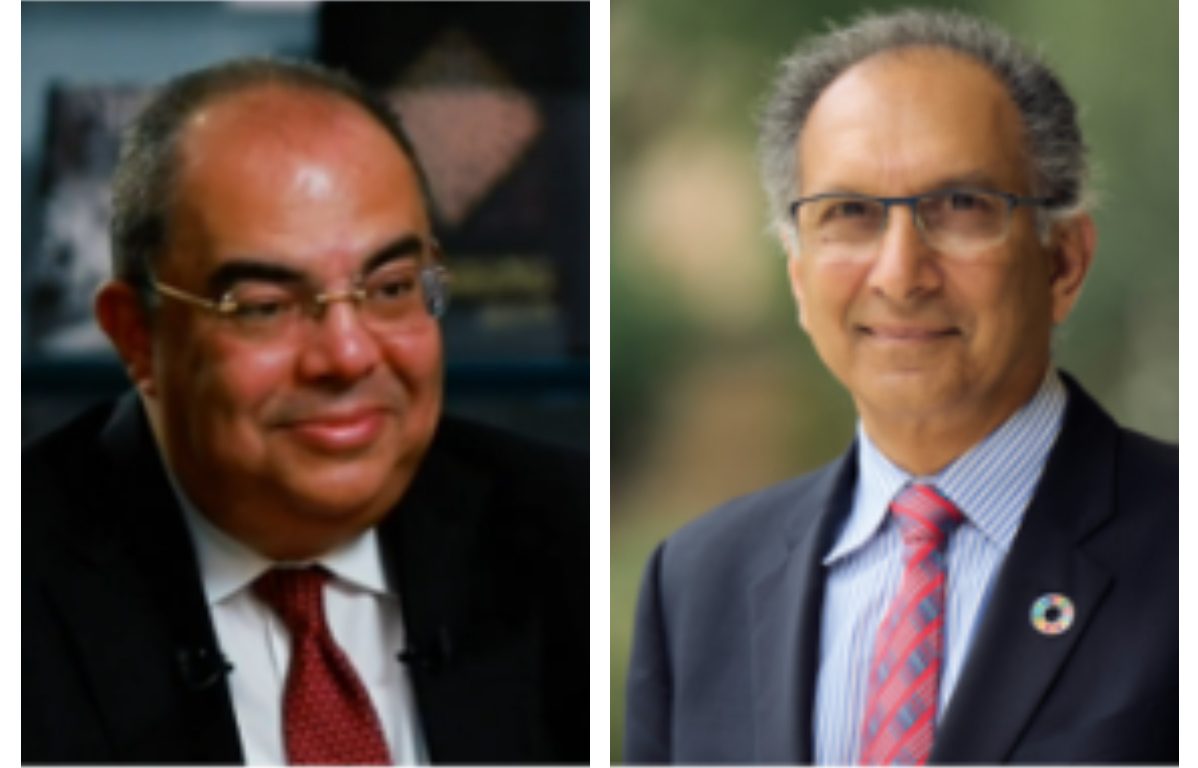
By Homi Kharas & Mahmoud Mohieldin
One of the most promising ideas in the Seville Commitment (Compromiso de Se villa), which heads of state and government adopted in July, is the creation of a platform for borrower countries, supported by existing institutions and facilitated by a United Nations secretariat. This simple but potentially transformative concept could shift the balance of information and influence, which has long favoured creditors.
Also Read


By allowing borrower countries to discuss technical issues and debt challenges, access capacity-building assistance, and coordinate their actions, the platform would amplify their voice in the global financial system. While creditor coordination has long been institutionalised– through the Paris Club, the London Club, and industry-led efforts such as the Institute of International Finance – borrower countries have often been discouraged from sharing information, leading to ad hoc exchanges. Establishing a borrowers’ club is therefore a political signal: it recognises that enabling the Global South to speak with one voice can benefit financial stability. This is not the first attempt at borrower coordination, and lessons should be drawn from past efforts, which began during the Latin American debt crisis of the 1980s. Argentina, Brazil, Mexico, and other countries in the region explored forming a “debtors’ club,” supported at the time by UN Trade and Development and the UN Economic Commission for Latin America and the Caribbean.
The result was the Cartagena Group, formed in June 1984 by 11 Latin American countries accounting for 75% of regional debt. The group highlighted the external origins of the cri sis. Their proposals were sent to the 1984 G7 leaders’ summit in London, only to be rejected in favour of the International Monetary Fund and World Bank’s case-by-case approach. Subsequent attempts have faced similar barriers. More recent initiatives, such as the Sustainable Debt Coalition, established during the 2022 UN Climate Change Conference in Egypt, and proposals by the V20 Group, have linked debt to climate breakdown, but remain fragmented.
During Europe’s post-2008 sovereign-debt crisis, the in adequacy of existing tools led to the creation of new institutions such as the European Stability Mechanism. No such innovations exist for developing countries. Of course, the G20’sDebt Service Suspension Initiative (DSSI) offered temporary relief for low-income countries during the pandemic, but private and multilateral creditors largely did not participate, limiting its impact. And while the G20’s Common Framework for Debt Treatments was designed to provide relief to countries in debt distress, only Zambia, Chad, Ghana, and Ethiopia have used the mechanism for debt restructuring, with others citing concerns about timeliness and outcomes. The IMF-World Bank Global Sovereign Debt Roundtable has identified promising strategies to address liquidity challenges– including a more flexible “three-pillar approach” that combines reform, financing, and restructuring – but implementation remains slow. These piecemeal initiatives, which have largely disappointed, should inform the design of a borrowers’ club under the Seville Commitment. The governance structure must accommodate diverse debt profiles and complex political realities, and the funding model must guarantee institutional independence and protect decision-making from creditor influence. The secretariat must be capable of generating credible data and countering misperceptions that inflate borrowing costs for developing countries. There must also be coordination mechanisms to ensure effective alignment with the newly created Seville Forum on Debt. Such a club should not be a confrontational bloc, but rather a mechanism for mutual capacity-building in four main areas. First, debt restructuring must emphasise preserving market access. Many countries avoid the Common Framework (like the DSSI before it) and even precautionary IMF programs because they fear rating downgrades and negative market reactions. Borrowers need stronger communication strategies to present credible macroeconomic programs and provide consistent, evidence-based messaging to rating agencies and private creditors. Second, long-run sustainable growth must be integrated into financial programming, as required by the Global Sovereign Debt Roundtable’s three-pillar approach.
Given that current models do not capture climate transition risks or opportunities, borrowers need shared analytical tools that allow them to articulate credible, comparable, and climate-aligned growth strategies. Lastly, debt transparency must be improved. The World Bank advocates “radical transparency,” but many countries struggle to operationalise this in debt-management practices. A borrowers’ club could help standardise templates, disclosure protocols, and peer review processes tailored to developing-country contexts. Some progress has been made toward alleviating the developing world’s debt crisis. To seize this opportunity, Global South countries and international financial institutions must build on the momentum of the Seville Commitment and the G20 leaders’ summit in South Africa.
Homi Kharas is a senior fellow at the Center for Sustainable Development at the Brookings Institutio while Mahmoud Mohieldin is a former minister of investment of Egypt (2004-10).