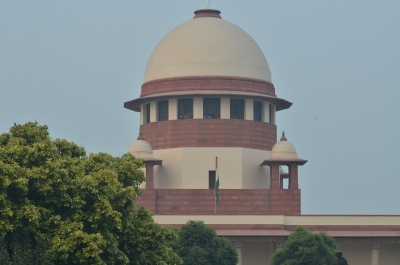
New Delhi: The Supreme Court Thursday stayed the recent UGC Equity Regulations on preventing caste-based discrimination on campuses, observing they are prima facie vague and capable of misuse.
The apex court orally observed that if it does not intervene in the matter, it will lead to a dangerous impact and divide the society.


The Supreme Court order came after various pleas were filed contending that the University Grants Commission (UGC) adopted a non-inclusionary definition of caste-based discrimination and excluded certain categories from institutional protection.
The regulations had triggered protests at various places, with student groups and organisations demanding their immediate rollback.
While issuing notice to the Centre and the UGC, a bench of Chief Justice Surya Kant and Justice Joymalya Bagchi suggested that the regulations must be revisited by a committee comprising eminent jurists.
Issue notice, returnable March 19. Solicitor General accepts notice…. Meanwhile, let UGC Regulations 2026 remain in abeyance, and 2012 regulations shall continue, the bench said.
During the hearing, the bench observed, Prima facie, we say that the language of the regulation is vague. Experts need to look into how the languagecan be modulated so that it is not exploited.
The new regulations mandating all higher education institutions to form equity committees to look into discrimination complaints and promote equity were notified January 13.
The University Grants Commission (Promotion of Equity in Higher Education Institutions) Regulations, 2026, mandated that these committees must include members of the Other Backwards Classes (OBC), the Scheduled Castes (SC), the Scheduled Tribes (ST), persons with disabilities, and women.
The new regulations replace the UGC (Promotion of Equity in Higher Educational Institutions) Regulations, 2012, which were largely advisory in nature.
The pleas assailed the regulation on the grounds that caste-based discrimination is defined strictly as discrimination against members of the SCs, STs and OBCs.
It said that by limiting the scope of caste-based discrimination only to SC, ST and OBC categories, the UGC has effectively denied institutional protection and grievance redressal to individuals belonging to the general or non-reserved categories who may also face harassment or bias based on their caste identity.
The top court was hearing pleas challenging the constitutional validity of UGC Equity Regulations 2026 filed by Mritunjay Tiwari, advocate Vineet Jindal and Rahul Dewan.