
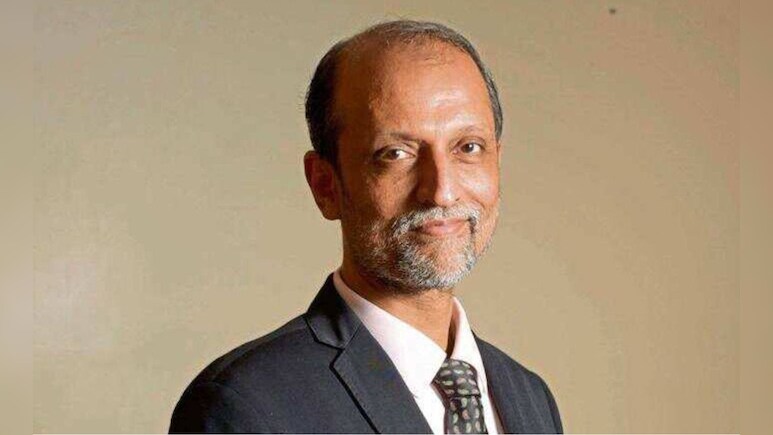
Ajit Ranade
Imagine spending the best years of your life from age 22 to 29, in a waiting room. You are educated, ambitious, and capable. But the job that you are waiting for has odds worse than a lottery. So, you study harder, make an attempt once more, and wait again. Meanwhile, your peers elsewhere are earning, saving, climbing career ladders, getting married, starting families. You are doing none of that. You are preparing for the next exam. This is the lived reality for an estimated 11 million young graduates in India today.
The fifth edition of the State of Working India report published this month, by Azim Premji University reveals a startling statistic: 67% of all unemployed youth aged 20–29 are graduates, that is 1.1 crore people. In 2004, graduates constituted just 32% of the unemployed youth cohort. Their share in the youth population has itself risen from 10% to 28% over these two decades. But employment has not kept pace. Between 2004 and 2023, India produced roughly 50 lakh graduates every year. Only 28 lakh graduates found any employment annually, and a mere 17 lakh entered salaried work. The arithmetic of national waste is stark. The overall unemployment rate among all graduates aged 22 to 29 runs as high as 33%. Yet this same rate drops to below 4% after age 30.
Something happens around age 30 to dissolve what had been an acute crisis just years earlier. What happens is not success. It is resignation. Young men eventually succumb to economic pressure, marriage obligations, or parental urgency and accept whatever work is available, however dead-end. Young women, by contrast, often exit the labour force altogether, retreating into unpaid domestic care work. The data shows this starkly: male unemployment falls because men find some job; female unemployment falls because women stop looking. Why do millions of graduates spend the prime years of their lives in this limbo? The answer lies in a rational calculation, which is ultimately socially ruinous. The private sector offers starting salaries that have barely moved in two decades. In 2011, a young male graduate earned about Rs 21,800 a month. By 2023, this figure had fallen to Rs 19,573. That is a drastic drop, and when adjusted for inflation, it is disastrous. No wonder those educated youth don’t miss out on joining the private sector treadmill of entry-level jobs. Government jobs are a different story. A government driver, by comparison, may earn four times his private sector counterpart.
A government clerk enjoys health cover, a pension, iron-clad job security, and social prestige. No wonder the aspiring graduate chooses to wait. This wait takes a specific and peculiar form: the endless preparation for competitive examinations. A study by Kunal Mangal of Tamil Nadu Public Service Commission data found that a single TNPSC Group 4 recruitment in 2018–19 drew 13.7 million applicants, nearly four times the next largest recruiter in the state. About 80% of all unemployed individuals in Tamil Nadu were simultaneously preparing for a TNPSC exam. When the state imposed a partial hiring freeze between 2001 and 2006, vacancies fell by 86%, but exam applications actually rose by 7%. This pattern is not peculiar to Tamil Nadu. It is seen across States. The government exam has become India’s great waiting room. The private sector, meanwhile, offers a treadmill at the entry level, not a career. The Economic Survey 2024–25 noted that only 8.25% of graduates work in roles aligned with their qualifications. Nearly half are in elementary or semi-skilled work — jobs that require a degree for eligibility but deliver no skill development, no learning by doing, no career progression. Between 2012 and 2019, India’s GDP grew at 6.7% annually, while employment grew at 0.1%. Of 83 million jobs added between 2021–22 and 2023–24, nearly half were in agriculture. The gender dimensions of this crisis deserves special attention. For young women, the problem is not just unemployment but erasure. PLFS data confirm that educated women in their early 20s report high unemployment, signalling a genuine desire to work. But by their late 20s, instead of finding employment, they exit the labour force. Marriage expectations and the assumption that domestic care falls entirely on women extinguish participation. Now consider the perverse policy feedback loop.
Governments, sympathetic to the plight of unemployed graduates, respond with cash transfer schemes and subsidised coaching for competitive exams. This fiscal expenditure, though well-intentioned, tightens the budget constraint, which, ironically, leaves the government with less room to hire. The consequences for India’s reservation policy are painful. Affirmative action can only function if the government is actually hiring. When recruitment slows, reserved posts go unfilled. SC employees in Central government fell by 47% in absolute numbers between 2003 and 2021. The very communities that reservation was designed to lift — Dalits, Adivasis, OBCs — see their representation erode. When one generation gains a government post, the next generation climbs higher; that intergenerational ladder breaks when the post is never filled. It is no coincidence that the scarcity of government posts has intensified demands for reservation from communities not traditionally covered, such as Marathas in Maharashtra, or Gujjars in Rajasthan. Conflict over reservation shares is, at its root, a symptom of an economy failing to create enough good jobs. The policy prescription follows from the diagnosis. Reduce search frictions through better labour market information, job portals, and portable apprenticeship schemes that benefit both employers and workers. Fix skills mismatch through employer-driven, not certificate-driven, training.
Critically, reduce the enormous premium on government employment through rationalised pay, fixed-term contracts, and wider staffing structures. Eleven million educated young Indians are today squandering the most productive years of their lives in a lottery they will almost certainly lose. The waiting room has become a national institution. That is a waste of individual lives and of public investment in education. We cannot afford to let our demographic dividend rot in a coaching class or waiting room.
The writer is a noted economist.
Orissa POST – Odisha’s No.1 English Daily