By BANDANA SETHI, OP
Bhubaneswar: Long before Bhawani Mall altered the landscape of this Odisha capital’s Saheed Nagar neighbourhood, a bustling 4-acre market stood in its place. Inaugurated in August 1967 by the late MLA Raj Ballabh Mishra, the original Saheed Nagar Haat was designed to give farmers from the City’s outskirts a dedicated space to sell their goods.


For decades, the market survived various challenges—until 2004, when the Bhubaneswar Municipal Corporation (BMC) evicted roughly 500 traders to make way for a five-storey commercial complex. Displaced vendors were promised stalls in the new development, but they faced a long wait.
Construction of Bha wani Mall began in 2004 and the building opened in 2012, yet the promised retail spaces were not completed and handed over until 2026. When the 218 stalls and 81 shops finally materialised, tensions flared.
A BMC survey recognised only 299 of the original 500 displaced vendors, drawing allegations from traders that the list included ineligible names and administrative irregularities. Furthermore, applicants faced steep fees: a Rs 50,000 deposit and a Rs 500 monthly rent for shops and a Rs 20,000 deposit and a Rs 200 monthly rent for stalls.
Many vendors also criticised the finished spaces as too small to conduct viable business. Consequently, most have contin ued operating outside the formal mall structure.
A new dawn
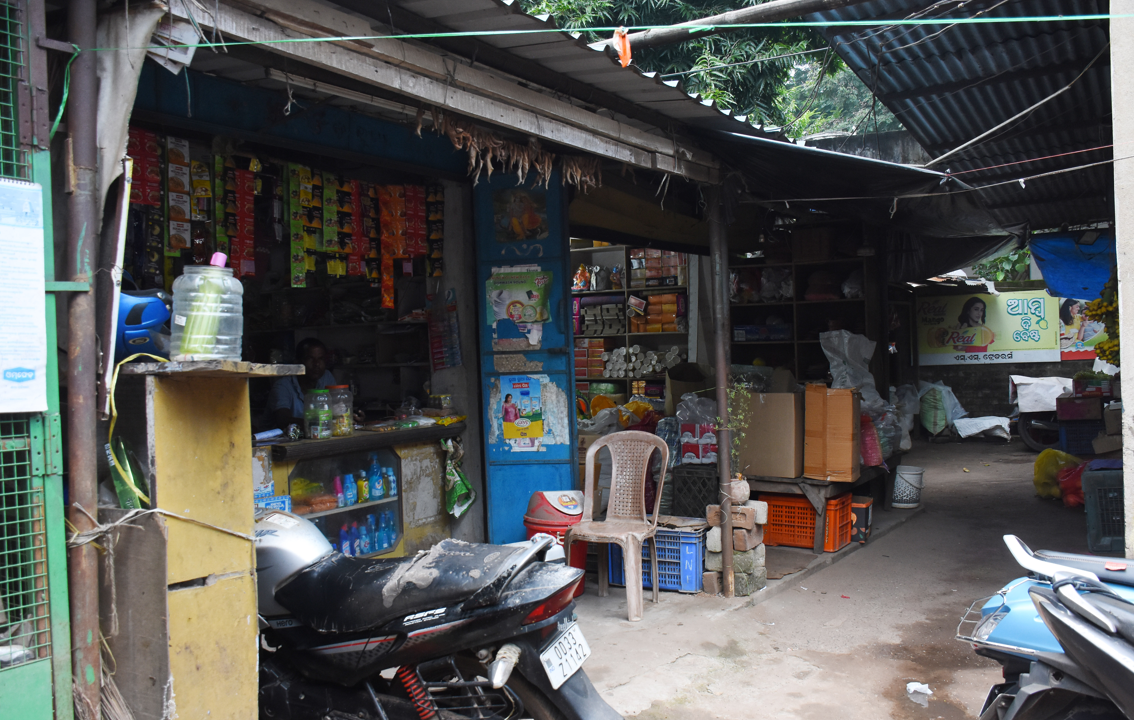
To sustain their livelihoods, displaced vendors set up a new market nearby. In December 2004, a core group of original traders, along with a few newer vendors, established the Saheed Nagar (Tinikonia) Haat opposite Saheed Nagar High School.
Named for its distinctive triangular shape—wider on the north and narrowing toward the south—the open-air market operates daily from 7 am to 11 pm, closing only on full moon afternoons.
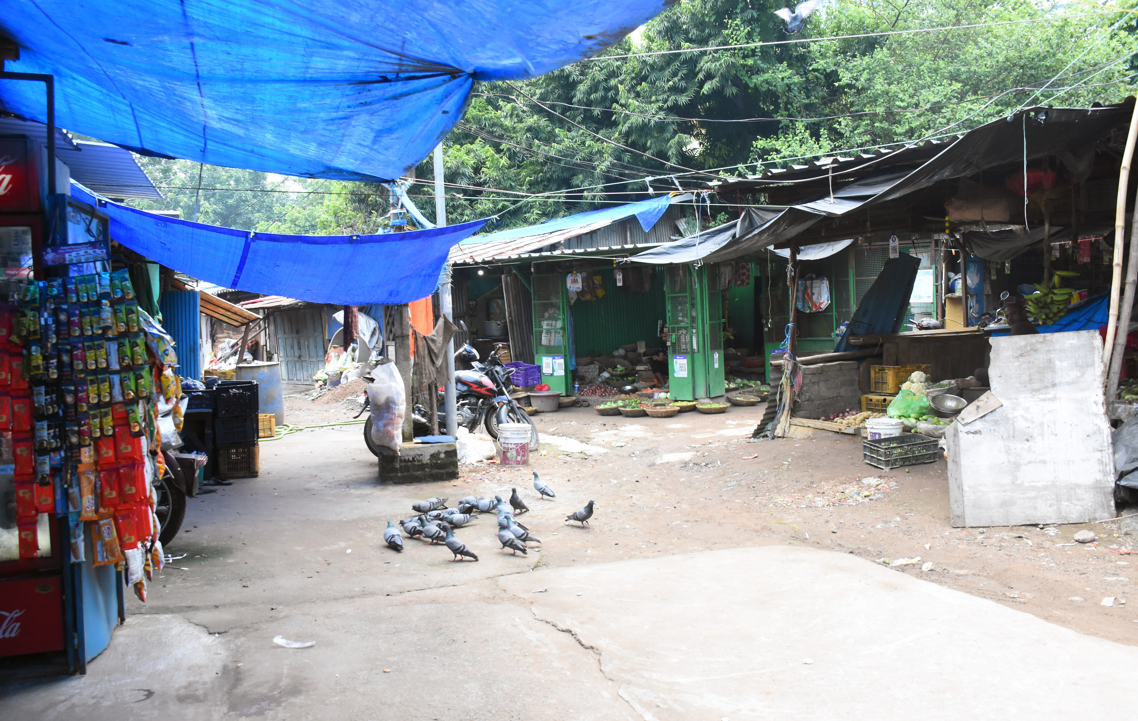
Today, the self-managed market houses 55 traders, including 12 vegetable vendors, six small eateries, and shops selling groceries, fruits, and religious items. Despite serving as a vital community lifeline, the market lacks basic infrastructure.
There are no public restrooms, drinking water fountains, or dedicated parking facilities, leaving customers to park on nearby streets at their own risk. Because the BMC collects no taxes from the site, municipal development has stalled.
Vendors handle daily cleanup themselves, gathering trash outside their shops for municipal garbage trucks to haul away. Managed entirely by the traders’ association – Saheed Nagar Haat Banik Sangha (Tinikonia), the compact market features four entry points and enough clearance for a fire engine in an emergency.
With a tight-knit community of vendors working side by side, Saheed Nagar (Tinikonia) Haat remains a resilient testament to a displaced mercantile community that refused to vanish.
Key festivals
Traders at the market enthusiastically celebrate Ganesh Puja, Saraswati Puja and Vishwakarma Puja, along with Republic Day and Independence Day, traditions maintained since the market’s establishment.
Voluntary contributions from local traders fund the events. Organisers first prepare an estimated budget for each celebration before collecting funds from the merchants.
Nabagraha temple
A Nabagraha temple sits at the right side of market entrance near Saheed Nagar High School, where the nine planetary deities are worshipped beneath a 65-year-old peepal tree.
Lord Shiva, Maa Tarini, Radha-Krishna, Lord Jagannath, Lord Balabhadra and Devi Subhadra are also worshipped at the site, which contributes to the market’s spiritual atmosphere.
An annual Nabagraha festival is celebrated with much fanfare every year May 20.
President chosen by consensus
Elections are held once every five years at the market, but due to its small number of traders, a president is typically chosen by consensus.
Local corporator Rajkishore Das has served as association president since 2022, joined by a secretary. Association leaders are chosen from individuals closely tied to the market.