
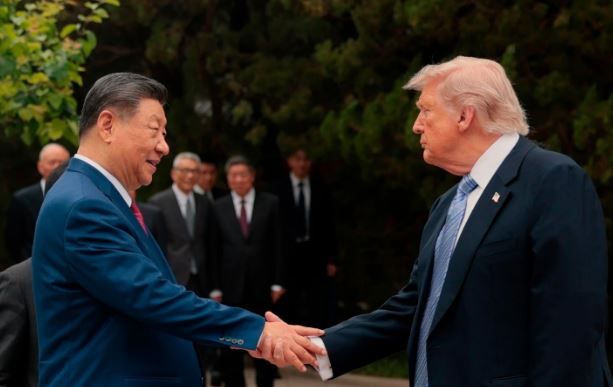
It may sound strange why Chinese President Xi Jinping during his recent meeting with US President Donald Trump in Beijing went back to ancient Greece to draw historical lessons that, he thinks, may help the two countries manage their relations efficiently to mutual benefits. He referred to a theory – Thucydides Trap – popularised by Harvard political scientist Graham Allison in the early 2010s. He used the writings of ancient Greek historian Thucydides who wrote his tome on the war between Athens and Sparta. In that account Thucydides demonstrated his great understanding of war by observing that it was the rise of Athens and the fear that it instilled in Sparta that made the war between the two inevitable. Allison built on this idea to contend that when a rising power threatens to supplant an existing dominant power, the resultant tension culminates into a war. However, Allison’s theory also states that war is avoidable too and he cited four cases where the US and the erstwhile Soviet Union stopped short of taking up arms against each other, including the Cold War rivalry, where there were high tensions, but these did not escalate into direct military confrontation.
Xi showed his astuteness by reminding Trump of the Thucydides Trap so that China and the US do not get caught in the vicious cycle of war, and instead find ways and means to manage their rivalry without firing any salvo against each other.
In fact, for some time Xi has been ruminating on this political-military theory. Ahead of their talks he had asked whether both the countries could get over the Thucydides Trap and create a new pattern of cooperation and collaboration for development benefitting the two countries and the rest of the world. At the same time, he warned against exacerbating tensions over Taiwan (which China looks upon as its integral part) through arms supply to it by the US.
Real politics is, however, far removed from theoretical propositions and a carefully crafted choreography is always played out during summits between the US and China allowing both sides to save face and claim success. The summit that concluded in Beijing on 15 May, was no exception. Trump, as is his wont, did not hesitate to showcase his commercial achievements, though most of them were just promises. These included a major contract favouring the aerospace giant Boeing and the opening of the Chinese market to American companies. On the other hand, Xi continued to position himself as the embodiment of stability in the face of the disorder fostered by the current US administration. He did not make any overt comment on China’s support to Iran though it is no secret how it is helping Iran take on the US. Xi seems to be in no hurry to end the war between the US and Iran. He is too happy to see how Trump extricates himself from the quagmire he has created for himself and the US.
Xi sought to stake his claims that he has made it clear to the US President that the inevitable reunification of Taiwan with mainland China is on the top of his agenda, even though Trump refrained from publicly changing the US position to suit Beijing’s interests. Trump claimed that apart from agreeing to buy 200 Boeing aircraft, China would step up purchases of soybean and relax restrictions on US beef exports. The US has also allowed 10 Chinese firms to resume purchases of advanced Nvidia chips. Both sides have discussed setting up a Board of Trade to manage trade issues, including reducing tariffs on some Chinese goods and a Board of Investment to green light Chinese investment in non-sensitive sectors.
These deals seem to be intended to send out the message across the globe that the Iran war has not worsened the US-China relations, despite Iran being a major ally of China. The major takeaway from the Beijing summit is, however, not trade deals, but a growing realization among the highest leaderships of the US and China that they cannot afford to be on the warpath when China is going all out to overtake the US in its bid for global domination in economic and strategic affairs.
The lesson for India, out of all of this is that if China can hold its head high before the US’ hegemonism, it should not meekly surrender to Trump’s browbeating as it has been doing. But then the Indian leadership, for weaknesses unknown to the average citizen of this country, is in no position to reclaim back the past glory that it has squandered away and lost in recent years due to constant denial of all historical achievements of this nation and its people.