
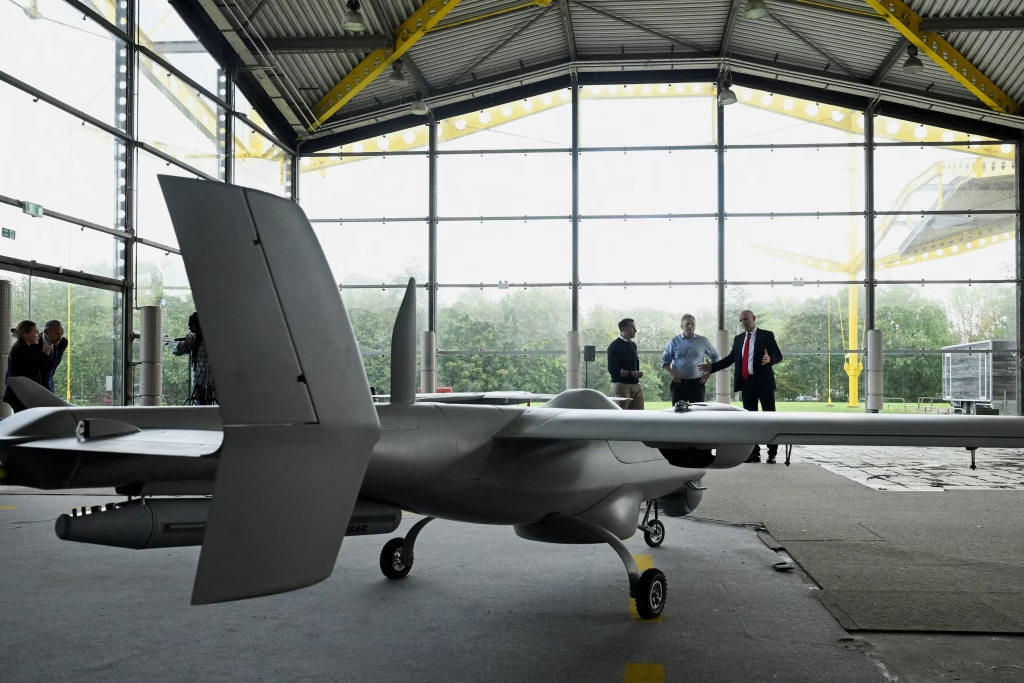
London: Self-flying fighter jets, uncrewed submarines and drones will be at the centre of Britain’s future military under a defence plan being announced Tuesday that reflects a world of conflicts transformed by technology.
The Defence Investment Plan has been repeatedly delayed as military leaders and Treasury officials wrangled over the cost of equipping the UK military for an increasingly dangerous world. Like other NATO countries, the UK is under pressure to increase defence spending to counter a more aggressive Russia and a less reliable United States.
John Healey resigned as defence secretary June 11, accusing the government of being unwilling to spend enough on the military at a time of rising threats.
Healey argued that UK defence spending must reach 3% of GDP by 2030, citing a British intelligence assessment that Russia could attack a NATO member country by then. He said that the plan put forward by the Treasury would see spending rise to just 2.68% in 2030, after hitting 2.6% next year.
The government says the spending plan has been refocused in the past few weeks under Healey’s successor, Defence Secretary Dan Jarvis. That includes a bit more money than the 13.5 billion pounds ($18 billion) Healey was offered, but likely far less than the 28 billion pounds ($37 billion) that defence officials called for.
Prime Minister Keir Starmer said the plan will ensure our servicemen and women have the cutting-edge capabilities they need to deter evolving threats and keep the British people safe. The full document is due to be published later Tuesday.
The plan is a road map for how the UK will increase military spending to NATO’s target of 3.5% of GDP by 2035. The UK military is seeking to reverse years of decline in the face of an increasingly assertive Russia, which invaded its neighbour Ukraine in 2022 and increasingly tests the defences of European nations with overt and covert activity.
The UK has watched how drones have transformed war in Ukraine, which uses 200,000 of them a month to defend against Russian forces. Britain plans to invest billions in drone systems across all branches of the military. Instead of a planned fleet of new destroyers, the Royal Navy will get hybrid vessels that will act as command hubs for drones.
Britain and other NATO member nations have faced pressure from US President Donald Trump to increase military spending. Trump has long questioned the value of the military alliance and complained that the United States provides security to European countries that don’t pull their weight.
The resignations of Healey and junior Defence Minister Al Carns were among a series of blows that prompted Starmer to announce last week that he will resign. He is likely to attend a NATO summit in Turkey July 7 and 8 in one of his last acts as prime minister.
His successor, likely the former Greater Manchester Mayor Andy Burnham, will be under pressure to stick to the commitments in the defence plan.
Opposition Conservative Party defence spokesperson James Cartlidge said the plan was too little, too late.
The plan is now almost a year overdue and is only being rushed through because Keir Starmer is desperate for a legacy, he said.