
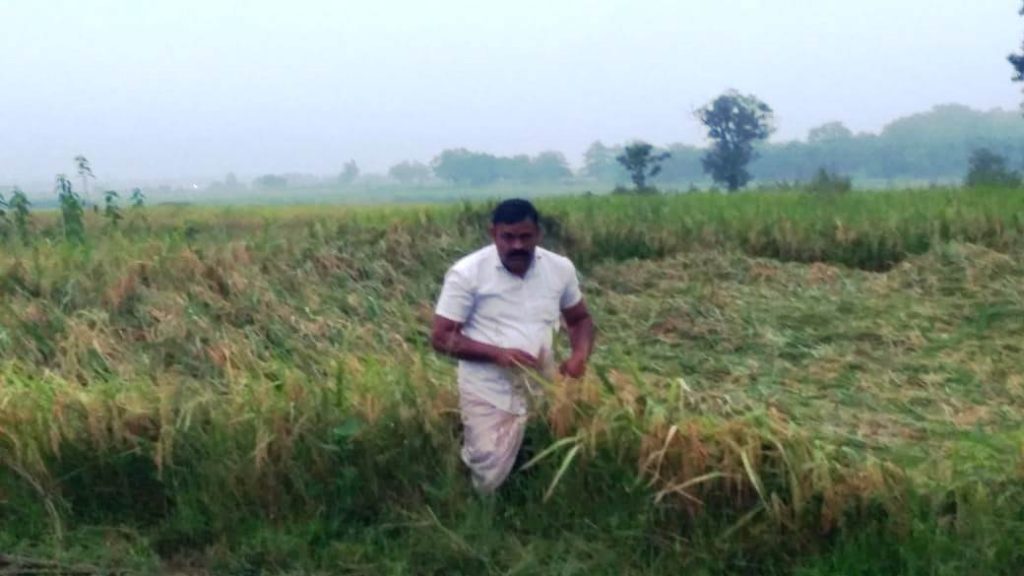
Bhopal: Agriculture Minister Shivraj Singh Chouhan Friday said unseasonal rains and hailstorms have damaged standing rabi crops across 2.49 lakh hectares so far across several states, with the wheat crop being the most affected.
Speaking to reporters ahead of the “Unnat Krishi Mela” launch in Raisen district of Madhya Pradesh, Chouhan said three departments are conducting the survey, and assessments are still underway.
The reported damage, till April 8, shows that the wheat crop was most affected, followed by horticulture crops like mango and litchi.
“The Modi government stands firmly with farmers in this crisis,” he assured.
On April 5, Chouhan had directed officials to review losses in affected states and coordinate with state governments. He has also consulted the agriculture ministers of impacted regions.
The India Meteorological Department (IMD) reported heavy rain in northeast, central, south and northwest India from April 2-8, affecting Arunachal Pradesh, sub-Himalayan West Bengal, Sikkim, Assam, Meghalaya, Madhya Pradesh, Maharashtra, Tamil Nadu, Karnataka, Odisha, coastal Andhra Pradesh, Himachal Pradesh and Jammu & Kashmir.
Hailstorms hit Madhya Pradesh, Rajasthan, Himachal Pradesh, Haryana, Uttar Pradesh, Uttarakhand, Punjab, Telangana, Jammu & Kashmir, Odisha, Jharkhand, West Bengal, Chhattisgarh and Assam-Meghalaya, accompanied by thunderstorms and gusty winds in central, north, east and northeast states.
IMD forecasts more rain from April 9-15 due to Western Disturbances over Jammu & Kashmir, cyclonic circulations over Uttar Pradesh, Bangladesh, Assam and Odisha, and associated troughs.
With farmers gearing up for Kharif sowing from June, Chouhan said the government is ensuring smooth nutrient supply to shield against global price swings from West Asia tensions.
The nutrient-based subsidy for phosphatic and potassic fertilisers has been hiked to Rs 41,534 crore for Kharif 2026. Efforts are being made to diversify import sources.
To prevent diversion for industrial use, a pilot in Haryana and Madhya Pradesh issues fertiliser against AgriStack-linked identity cards. The scheme will scale nationwide, with 9.29 crore Farmers’ IDs created against a 13-crore target.
State-specific agriculture roadmaps based on agro-climate zones are in the works, with five zonal conferences planned. Unnat Krishi Melas will expand to other states for wider farmer outreach on new technologies.
Chouhan stressed diversifying beyond foodgrains into allied activities to boost incomes and productivity, noting India’s challenge of 0.9-hectare average landholdings and import dependence on pulses and edible oils despite ample wheat and rice stocks.