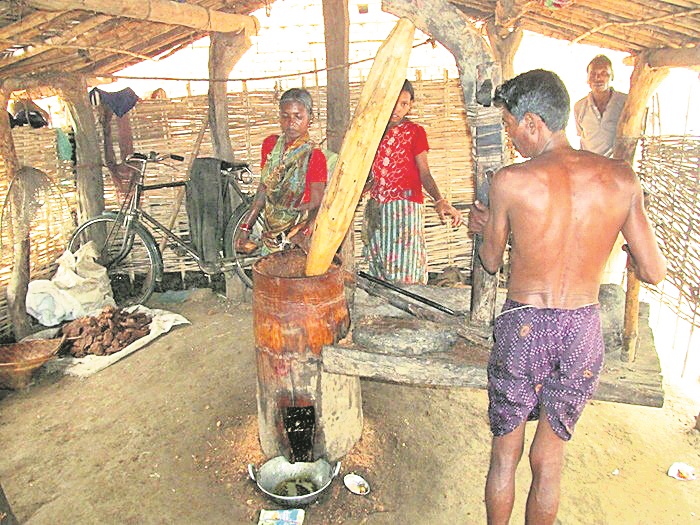
Bhawanipatna: The traditional oil extraction units in rural areas known as ghanis have been surviving the onslaught of packaged oil manufactured by so-called reputed companies in Kalahandi district.
The belief that ghani oil is pure is the reason why it has been the first choice for many rural families here.


The use of edible oil dates back to the beginning of human civilisation. The oil seeds were identified and then ghanis were developed to extract oil from them.
There was a time when every village had a ghani and ‘teli’ or oil pressing community that used to extract oil from different seeds and sell it.
Though there has been a decline in the number of ghanis in this district over the years, in some rural areas the traditional oil extraction units are still found functional and they are popular too. The reason being the oil obtained from these units still holds its ground against the branded companies’ oil packets flooding the market.
“There is a lot of difference between the ghani-pressed oil and the oil sold in the market. Different kinds of oil produced by different companies are available in markets. But when it comes to the inherent quality of oil, the ghani-pressed oil has no substitute,” says a homemaker here, adding, “We have heard of some companies that are using chemicals to give it an authentic smell.”
Even today, in many villages in this district the ghani-pressed oil is used in cooking food, massaging the body and preparing many Ayurvedic medicines.
Oil is extracted from different seeds like kusum, sunflower, castor, mustard, groundnut, sesame and tula at these traditional oil extracting units.
At least four persons are required to run a ghani. While one person’s job is to add seeds, another one’s job is to collect oil and residual cakes. The other two will run the ghani. Earlier, the oil pressing communities used to engage horses, donkeys or bullocks to run the ghani and it used to be easier to extract oil in those days.
“Food items cooked with ghani-pressed oils are tastier than those prepared with that oil in the market. These ghani oils have their own identifiable flavour that could not be found in other oils. Most importantly, they (ghani oils) do not have any harmful effects on our bodies,” observed Kalia Patra.
Even today in villages, ‘tula’ oil is widely used in houses to cook food or to prepare special dishes during festivals and family functions like marriages. The ‘tula’ cake is also used to cure many diseases. In case of toothache, villagers have no better medicine than ‘tula’ cake for relief.
According to some elderly persons, kusum oil is the best medicine to keep skin diseases at bay in rainy season which is why ‘tula’ and ‘kusum’ oil were seen being extracted at some villages even today.
“Due to ingression of modernisation, advertisements and many other co-related factors, the demand and use of these traditionally extracted oils is on the wane. On the other hand, the oil seeds like ‘tula’ and ‘kusum’ collected from jungles are getting rare day by day due to rapid deforestation. So, the government should take steps to preserve these traditional oil-pressing units,” observed another villager.
PNN