
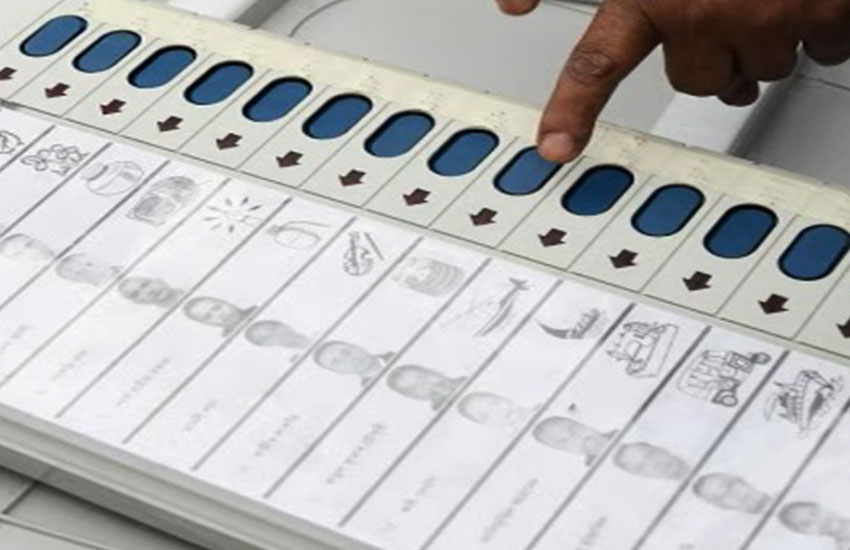
In the past, it was considered rather difficult to contest assembly elections without a recognisable chief ministerial candidate’s face as a backup — someone whose name and face were well known to the electorate. The question that was perpetually raised was, “Who is the alternative?” This notion was captured by the acronym TINA — There Is No Alternative.
However, Indian voters seem to be moving beyond such thinking. During the 2024 Lok Sabha elections, it was said that there was no alternative to then CM Naveen Patnaik in Orissa. The ordinary voter, while looking at the BJP, could not discern any known credible leader on the horizon to match Naveen.
Yet today, most Oriyas have come to accept Mohan Charan Majhi as a thoroughly welcome alternative. In much the same vein, few political pundits who watch the BJP closely would be willing to wager that Suvendu Adhikari will definitely emerge as the choice for Chief Minister candidate in West Bengal, or that Himanta Biswa Sarma would assuredly serve as Chief Minister of Assam for a second consecutive term. It is only Prime Minister Narendra Modi himself who will take the final call on these matters. Every successive election has demonstrated that the public warmly welcomes the administrative change brought about by setting aside the old guard and bringing in fresh faces — a good departure from the conventional, entrenched leadership of the past government. It was quite foreseeable that the public in West Bengal would grow weary under Mamata Banerjee’s third term — representing fifteen years of uninterrupted rule. The aspiration of Indian voters for change is entirely understandable and ought to be welcomed.
The Indian Constitution grants a five-year term to each elected House, and since state assembly elections are held at various intervals, the party in power must continuously submit itself to the scrutiny of the electorate. This arrangement serves to strengthen and sustain democratic governance. Such elections compel every political party to remain mindful not only of its internal organisational strength but also of its obligation to respect the will of the people. It is commonly said that a decade is quite sufficient to bring about meaningful change in a democracy. In several Indian states such as Tamil Nadu, Andhra Pradesh, Telangana, Karnataka, and Kerala, the ruling party tends to change roughly every five years, only occasionally granted two terms – that is ten years – by the voters. It is perhaps for this very reason that South India has forged considerably ahead in terms of economic progress, industrial growth, and commercial development.
Educated young men and women from Orissa often aspire to move to Hyderabad, Bengaluru, or Chennai. On the other hand, even unskilled Oriya workers are rarely seen migrating to Uttar Pradesh, Bihar, or Madhya Pradesh – Delhi being a notable exception. The reason is plain enough. States where political stability has been entrenched for prolonged periods tend to stagnate rather than flourish.
The people of Orissa experienced this phenomenon firsthand during the twenty-four years of Biju Janata Dal’s governance. One cannot deny the developmental work carried out by the Naveen government during its first decade in power. However, as successive electoral victories mounted, the Biju Janata Dal gradually began treating Oriya voters as little more than its own domesticated subjects. This illustrates a broader truth. When any party remains in power for more than ten years, self-preservation inevitably supersedes public interest as its principal objective. Indian voters are no longer content to allow razor-thin electoral contests to decide their fate. When support consolidates behind a particular party – as seen with the BJP in West Bengal, TVK in Tamil Nadu, and the UDF in Kerala – the electorate delivers resounding mandates. This ensures that the party assuming reins of governance faces no impediment in working earnestly towards the welfare of the people.
In such circumstances, it is only right that politicians, having been entrusted with considerable power, should demonstrate within their first five years how responsibly they have exercised it. Only then they ought to expect a second term to be granted by the voter. The recent assembly election results furnish compelling evidence that India does not merely require leaders.
Rather it is the voters themselves who must become true leaders of the nation. Should the Indian electorate strengthen this conviction and exercise its democratic authority with wisdom and discernment, the progress of the country shall be well and truly assured.