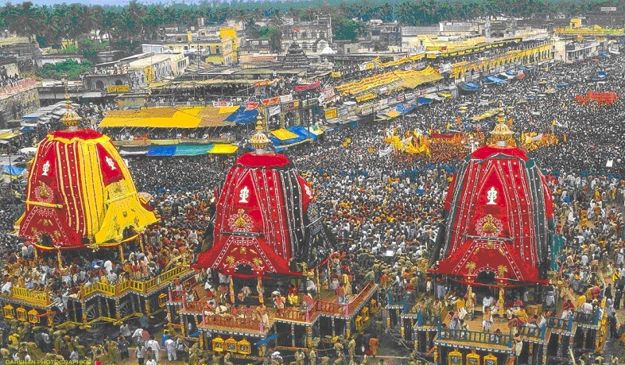
Rath Yatra is a unique religious-cultural event when the Lord of the universe comes out of the comfort of His abode to grace His devotees. The journey has many mystical undertones. The Kathopanishad says, “The human body is like a chariot where the soul is the master, intellect the charioteer and the mind the rein of the horse.”
The following words of Sri Aurobindo confirm the mysticism associated with the yatra… “But so long as the chariot of Jagannath is not built, the ideal society will not take shape. That is the ideal and ultimate image, the manifestation of the highest and profoundest truth.”

Body-soul binary
“The Rath (chariot) has been the most supreme mode of commuting in our culture right since the Vedic era. In the Vedas, there is a reference to Sun God’s chariot while the Puranas are replete with devas and asuras who travel on their chariots,” says scholar Tulasi Ojha.
“The Rath represents everything that is there in the universe,” she adds. The chariots – Nandighosha, Taladhwaja and Devadalana represent the body while the Brahman represents the soul. The structure of the chariots, the installations on them, the design and the decoration have a lot of significance.
“The 16 wheels of Nandighosha represent 16 arts (Sohala kalas) of the godhead; 14 wheels of Taladhawaja represent the 14 brahmandas (universes) and the 12 wheels of Devadalana signify change –12 months of a year,” says Ojha.
Likewise, the colours of the canopy on the chariots – red and yellow in Nandighosha; red and green in Taladhawaja; and red and black in Darapadalana – have symbolic meanings. Red denotes fire; black the colour of Krishna; green the colour of Haladhar (associated with agriculture); and yellow the colour of God.
Anatomy of chariots
Delving deep into the anatomy of the chariots, Ojha says each Rath has nine parswadevatas (subsidiary deities). Nandighosha has Hanuman, Rama, Laxmana, Raghaba, Krishna, Gobardhandhari, Chintamani Krishna, Narayan and Nrusingha.
The Taladhawaja has Pralambari, Nrutya Ganesha, Natambara, Seshadeva, Skanda, Gajantaka, Balarama, Hari Hara and Nrusingha. The Darpadalana has Barahi, Mangala, Kali, Katyayani, Chamundi, Bimala, Jaya Durga, Bhadrakali and Harachandi.
About the Rishis on the chariots, she says, Narada, Debala, Vyasa, Suka, Parasara, Vasistha, Viswamitra and Rudra accompany Jagannath. The sages on Taladhwaja are Angira, Pulastya, Pulaha, Agasti, Krushna, Mudgala, Kashyapa and Atri. Subhadra is accompanied by Bhrigu, Suprabha, Bajra, Srungi, Dhruva and Uluka.
The charioteers of Nandighosha, Taladhawaja and Darpadalana are Daruka, Matali and Arjuna respectively. The other elements of the chariots are Godhana Patta, a portrait of cows, Singhashana, Kapatali, Parabhadi, Olata Sua, snakes such as Basuki on Balabhadra’s chariot; Sankhachuda on Nandighosa and Swarnachuda on Darpadalana.
The construction of the chariots is a tough task meticulously executed by the servitors. “It begins on Akhaya Trutiya and ends on Gundicha,” says Bijaya Mahapatra, Viswakarma of the Nandighosha. He adds a host of servitors such as Maharana, Bhoi, Kumbhara, Rupakara and Darji are involved in the chariot making work.
Kumar Goutam Das