Odisha News, Odisha Latest news, Odisha Daily - OrissaPOST
  • Home
  • Trending
  • State
  • Metro
  • National
  • International
  • Business
  • Feature
  • Entertainment
  • Sports
  • More..
    • Odisha Special
    • Editorial
    • Opinion
    • Careers
    • Sci-Tech
    • Timeout
    • Horoscope
    • Today’s Pic
  • Video
  • Epaper
  • News in Odia
  • Home
  • Trending
  • State
  • Metro
  • National
  • International
  • Business
  • Feature
  • Entertainment
  • Sports
  • More..
    • Odisha Special
    • Editorial
    • Opinion
    • Careers
    • Sci-Tech
    • Timeout
    • Horoscope
    • Today’s Pic
  • Video
  • Epaper
  • News in Odia
No Result
View All Result
OrissaPOST - Odisha Latest news, English Daily -
No Result
View All Result

How South Korea became a model for coronavirus-hit countries despite being one of the worst-affected

AFP
Updated: March 11th, 2020, 12:44 IST
in Coronavirus, International
0
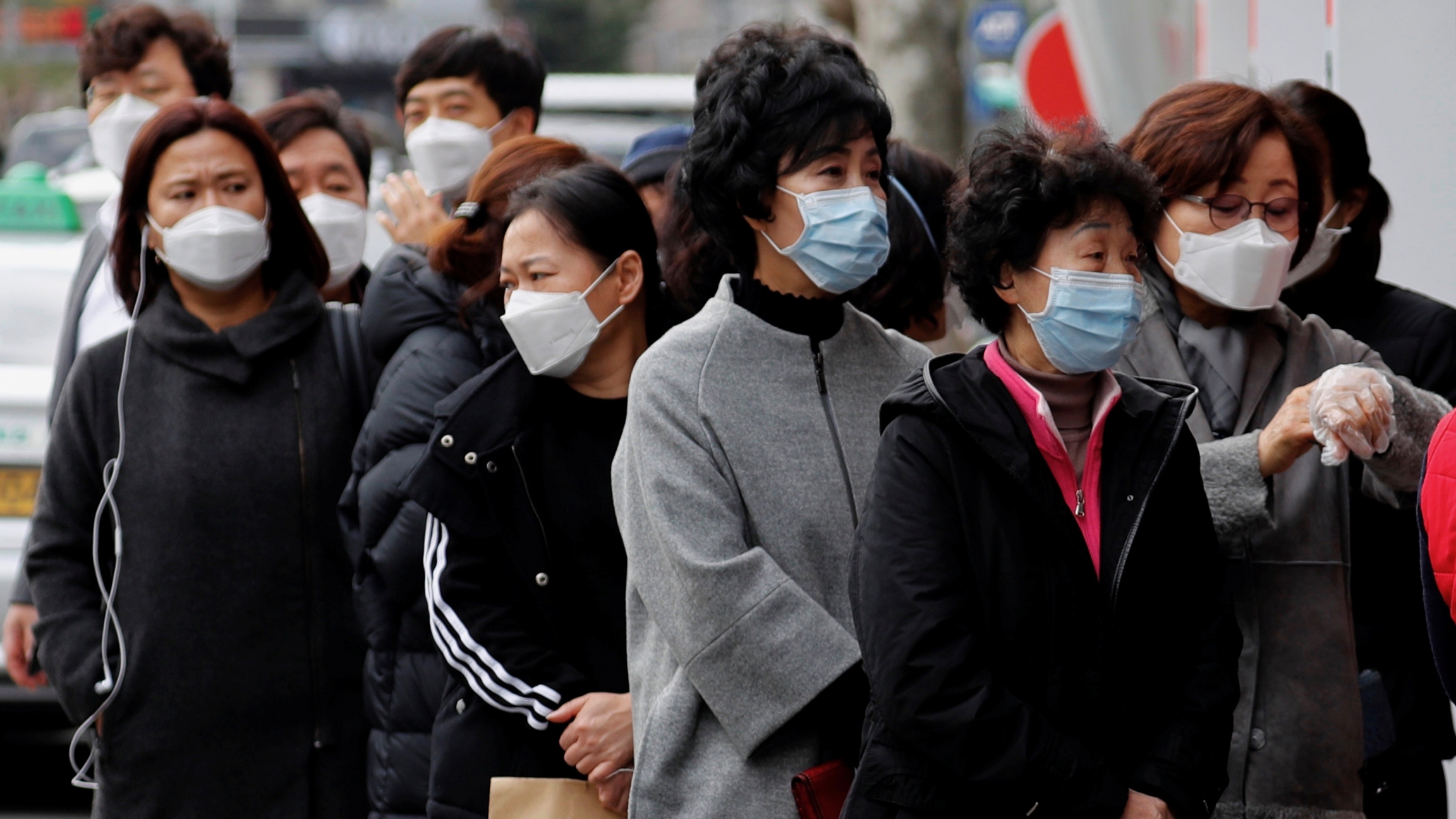
Representational image

Representational image

Share on FacebookShare on TwitterShare on WhatsAppShare on Linkedin

Seoul: A rapid surge in coronavirus cases saw South Korea become one of the world’s worst-affected countries outside China, but it has since cut infection rates significantly and has one of the lowest fatality rates anywhere.

As of Wednesday, it had 7,755 confirmed cases — the fourth-highest total in the world — but only 60 deaths, well below the World Health Organisation’s global average.


Also Read

Donald Trump

Trump voices frustration with allies as Iran war, strait closure push fuel prices higher

1 day ago
Representational Image

Iran strikes fully loaded oil tanker off Dubai coast as gas reaches USD 4 gallon in US

1 day ago

What has South Korea done and can it set an example? AFP takes a look.

How has South Korea handled the epidemic?

Instead of taking the Chinese approach of locking down affected cities, South Korea has embraced a model of open information, public participation and widespread testing.

Each confirmed coronavirus patient’s contacts are traced and offered tests.

The infected person’s movements over the preceeding 14 days — determined through credit card use, CCTV footage and mobile phone tracking — are also posted on government websites, with text message alerts sent to people when a new infection emerges in the area where they live or work.

The tactic has raised privacy concerns, but enables people to come forward for checks.

Testing fees are around 160,000 won (USD 134), but free for suspected patients — people linked to confirmed cases — or those who test positive, encouraging participation.

That helps with early detection and tackling the spread of infection.

South Korea has conducted more diagnostic tests faster than any other country — around 10,000 per day — which specialists say has helped the country with early detection of patients and tackling the infection’s epicentre.

How has it tested so many people?

South Korea can carry out more than 15,000 diagnostic tests a day, and had conducted 220,000 as of Wednesday. It has more than 500 designated testing clinics, including over 40 drive-through facilities that minimise contact between patients and medical workers.

The South has had the benefit of experience: it struggled with a lack of testing kits during the 2015 outbreak of Middle East Respiratory Syndrome (MERS), prompting it to create a system to expedite approvals.

Within weeks of the outbreak emerging in China, newly-developed COVID-19 testing kits which show results in just six hours received emergency government approval and were made available for clinics.

How have people reacted to government instructions?

Authorities have urged people to stay indoors, avoid meetings and minimise contact with others, in a so-called “social distancing” campaign, resulting in quiet streets and half-empty stores and restaurants, even in normally busy parts of Seoul.

Scores of events — from K-pop concerts and sports games — have been cancelled and most people wear masks, according to government recommendations.

The South is a democracy but also has a disciplined civil society, something analysts point to as a factor: “In democracies, we often are a little dismissive of whichever government is in power and take their advice with a grain of salt,” said Marylouise McLaws of the University of New South Wales, an epidemiologist and advisor to the World Health Organisation.

Why is the death rate so low?

Several factors are behind the South’s unusually low death rate — 0.77 per cent against a global average of 3.4 per cent. Early detection enables early treatment, and widespread testing means mild or asymptomatic cases are more likely to be identified, driving up the total number of cases so the proportion dying goes down.

In addition, the infected population in the South has a unique profile: most of the country’s infections are in women, and nearly half are in people aged below 40.

Officials say that is driven by the fact that more than 60 per cent of its cases are linked to the Shincheonji Church of Jesus, a secretive religious group often condemned as a cult.

Most of its members are women and many are in their 20s and 30s.

But global figures show the virus is most deadly among older generations, and men in particular.

Should South Korea be seen as an example?

Japan — where nearly 600 people have been infected, with 12 deaths — has not undertaken widespread testing and could learn from South Korea’s response, said Masahiro Kami, head of the Tokyo-based Medical Governance Research Institute.

“Testing is a crucial initial step to control the virus,” Kami said, adding: “It’s a good model for every country.” South Korea had “gone in hard and fast”, said McLaws of the University of New South Wales, contrasting its approach with that of Italy, where she said the outbreak could have taken a different course if containment measures had been imposed earlier. “It’s very hard for the authorities — the government — to take the plunge in doing that. So it’s often done late.”

AFP

Tags: CoronavirusCOVID-19SeoulSouth Korea
ShareTweetSendShare
Suggest A Correction

Enter your email to get our daily news in your inbox.


OrissaPOST epaper Sunday POST OrissaPOST epaper

Click Here: Plastic Free Odisha

#MyPaperBagChallenge

Rajashree Manasa Mohanty

December 12, 2019
#MyPaperBagChallenge

Debasis Mohanty

December 12, 2019
#MyPaperBagChallenge

Adyasha Priyadarsani Sendha

December 12, 2019
#MyPaperBagChallenge

Sarfraz Ahmad

December 12, 2019
#MyPaperBagChallenge

Diptiranjan Biswal

December 12, 2019
#MyPaperBagChallenge

Bijswajit Pradhan

December 12, 2019
#MyPaperBagChallenge

Tapaswini Mallick

December 12, 2019
#MyPaperBagChallenge

Amritansh Mishra

December 12, 2019
#MyPaperBagChallenge

Mrutyunjaya Behera

December 12, 2019
#MyPaperBagChallenge

Anasuya Sahoo

December 12, 2019
#MyPaperBagChallenge

Archit Mohapatra

December 12, 2019
#MyPaperBagChallenge

Sipra Mishra

December 12, 2019
#MyPaperBagChallenge

Arya Ayushman

December 12, 2019
#MyPaperBagChallenge

Pitabas Tripathy

December 12, 2019
#MyPaperBagChallenge

Archana Parida

December 12, 2019
#MyPaperBagChallenge

Subhajyoti Mohanty

December 12, 2019
#MyPaperBagChallenge

Chinmay Kumar Routray

December 12, 2019
#MyPaperBagChallenge

Geetanjali Patro

December 12, 2019
#MyPaperBagChallenge

Priyabrata Mohanty

December 12, 2019
#MyPaperBagChallenge

Kamana Singh

December 12, 2019
#MyPaperBagChallenge

Matrumangal Jena

December 12, 2019
#MyPaperBagChallenge

Ankita Balabantray

December 12, 2019
#MyPaperBagChallenge

Subhajyoti Mohanty

December 12, 2019
#MyPaperBagChallenge

Ramakanta Sahoo

December 12, 2019
#MyPaperBagChallenge

D Rama Rao

December 12, 2019
#MyPaperBagChallenge

Pratik Kumar Ghibela

December 12, 2019
#MyPaperBagChallenge

Sisirkumar Maharana

December 12, 2019
#MyPaperBagChallenge

Smitarani Sahoo

December 12, 2019
#MyPaperBagChallenge

Praptimayee Biswal

December 12, 2019
#MyPaperBagChallenge

Sibarama Khotei

December 12, 2019

Archives

Editorial

Trump Trapped

Donald Trump
April 1, 2026

It is the fifth week running since US President Donald Trump and Israeli Prime Minister Benjamin Netanyahu launched the war...

Read moreDetails

Not Forgetting Myanmar

March 31, 2026

While a big war is being waged in the Middle East, global attention has moved away from another theatre of...

Read moreDetails

Fuel Politics

Fuel Politics
March 30, 2026

Fuel has been a long-time great economic and political tool in the hands of the government in India. It enables...

Read moreDetails

Selective Outrage

Aakar Patel
March 29, 2026

Consider this thought experiment. Imagine that two large missiles struck the White House. The first hit the residential quarters at...

Read moreDetails
  • Home
  • State
  • Metro
  • National
  • International
  • Business
  • Editorial
  • Opinion
  • Sports
  • About Us
  • Advertise
  • Contact Us
  • Jobs
Developed By Ratna Technology

© 2025 All rights Reserved by OrissaPOST

  • News in Odia
  • Orissa POST Epaper
  • Video
  • Home
  • Trending
  • Metro
  • State
  • Odisha Special
  • National
  • International
  • Sports
  • Business
  • Editorial
  • Entertainment
  • Horoscope
  • Careers
  • Feature
  • Today’s Pic
  • Opinion
  • Sci-Tech
  • About Us
  • Contact Us
  • Jobs

© 2025 All rights Reserved by OrissaPOST

    • News in Odia
    • Orissa POST Epaper
    • Video
    • Home
    • Trending
    • Metro
    • State
    • Odisha Special
    • National
    • International
    • Sports
    • Business
    • Editorial
    • Entertainment
    • Horoscope
    • Careers
    • Feature
    • Today’s Pic
    • Opinion
    • Sci-Tech
    • About Us
    • Contact Us
    • Jobs

    © 2025 All rights Reserved by OrissaPOST