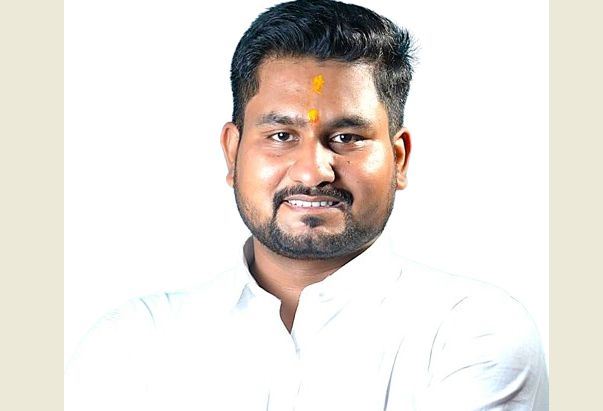
By Suryabanshi Suraj
On a crisp January morning, patriotism found a powerful voice across Odisha. At exactly 11am, lakhs of students rose in unison in schools, colleges and universities to sing Vande Mataram, transforming classrooms and campuses into spaces of collective pride, purpose and national unity. The occasion marked Swami Vivekananda Jayanti and National Youth Day, while also commemorating the 150th anniversary of our National Song.

Penned by Bankim Chandra Chatterjee in 1875 and later immortalised through Rabindranath Tagore’s stirring rendition in 1896, Vande Mataram has since become more than a song. It’s a clarion call, one that inspired generations of freedom fighters and continues to unite Bharat in its diversity. This milestone year offered an opportunity to reconnect with that legacy.
Responding to the Prime Minister Narendra Modi’s call to collectively celebrate the 150th anniversary of Vande Mataram and imbibe its spirit of a secure, self-reliant and progressive India, the Odisha government took the initiative forward with remarkable scale and sensitivity. Under the leadership of Chief Minister Mohan Charan Majhi, the Odia Language, Literature and Culture department spearheaded an effort to turn the celebration into a people’s movement, anchored firmly in educational institutions.
The response was overwhelming. Over 21 lakh students from over 16,000 educational institutions across the state participated, lending their voices to the national song. Government and private institutions alike joined the programme, creating a moment of synergy that transcended language, geography and discipline. From urban parts of the state to rural areas, Odisha sang as one.
The statewide programme was jointly organised by the Odia Language, Literature and Culture department, the Higher Education department, the School and Mass Education department, and the Sports and Youth Services department. Teachers, students and staff members came together, not as participants in a formal event, but as citizens sharing a common emotion — a deep sense of dedication to the nation.
What made this initiative a truly distinctive one was the meticulous groundwork that preceded the event. A comprehensive “Vande Mataram Training workshop” was rolled out across the state to ensure uniformity, participation and inclusivity. District Collectors selected three teachers per block or urban local body — two from schools and one from colleges, giving priority to those having interest towards music and arts.
Odisha was divided into five Mandals (Zones) — Jeypore, Brahmapur, Balasore, Sambalpur and Bhubaneswar, covering all districts of the state. Between December 15 and 30, Mandal (Zone) level training workshops were conducted by experts from the Odia Language, Literature and Culture department. This was followed by block and urban local body level training from January 1 to 10, 2026, led by trained mandal trainers, ensuring that the initiative reached the grassroots.
On January 12, educational institutions not only sang Vande Mataram collectively but also organised competitions, recited the Atmanirbhar Bharat Swadeshi Sankalp, and selected one student as the Atmanirbhar Bharat Ambassador. Between January 15 and 31, the celebration will be extended further with statewide collective singing and recognition of outstanding participation.
Institutions under the Skill Development and Technical Education department also actively joined the programme, reflecting its truly cross sectoral nature. Notably, the Odisha Legislative Assembly had earlier unanimously adopted a resolution to celebrate the 150th anniversary of Vande Mataram across the state, lending legislative backing to the initiative.
Summing up the spirit of the moment, it can be said, “One time, many places; One vibe, the Song of the Nation!”
As lakhs of young voices echoed the words that once stirred a nation into freedom, Odisha offered a quiet yet powerful reminder: patriotism, when nurtured through culture and education, becomes not just an emotion, but a shared responsibility.
The writer is the Minister of State (Independent Charge) for Higher Education, Sports & Youth Services, and Odia Language, Literature & Culture departments