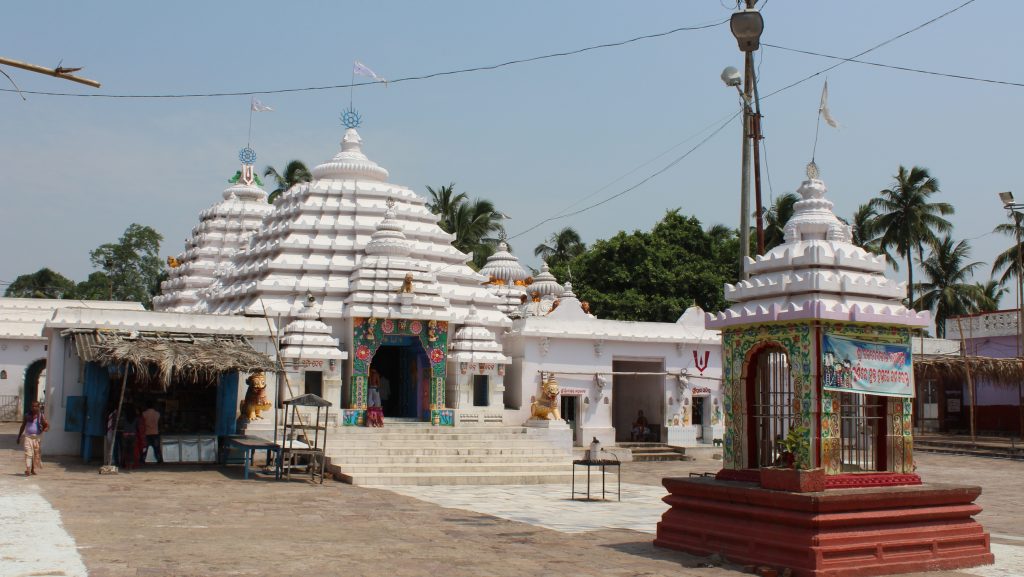
Kendrapada: has recommended a series of engineering interventions to address recurring operational problems faced by the ceremonial chariot of Lord Baladevjew during the annual Rath Yatra in Odisha’s Kendrapada district.
The recommendations come after years of steering and manoeuvrability issues with the 65-foot-tall Brahma Taladhwaja, the ceremonial chariot of Lord Baladevjew, during its procession along the Ratha Danda (Grand Road).


IIT Bhubaneswar’s expertise sought for construction of 65 ft high chariot in Kendrapada
The Shri Baladevjew Temple Administration had engaged IIT Bhubaneswar after the massive wooden chariot repeatedly developed operational problems during the festival over the past three to four years.
A team led by Dr Manas Ranjan Pattnayak, assistant professor at the School of Mechanical Sciences, carried out a comprehensive study of the chariot’s structural condition, operational performance and long-term conservation needs.
Describing the Brahma Taladhwaja as one of Odisha’s finest examples of living cultural heritage, the report said the chariot embodies centuries-old expertise in timber construction and traditional craftsmanship.
Also Read : Temple land grab hits revenue, may harm Rath Yatra
Built afresh every year by hereditary artisans using traditional techniques, the chariot has never been comprehensively documented using modern engineering tools, it said.
The assessment found localised deterioration of wood, ageing structural components, deficiencies in joints and increasing maintenance challenges caused by the annual assembly and dismantling of the chariot.
Constructed entirely from sal timber, the chariot comprises seven axles, 14 wooden wheels and an intricate framework of beams, columns and platforms.
According to the IIT team, the chariot has consistently shown a tendency to veer off its intended path during movement.
The study concluded that the steering instability stems not from a single defect but from the combined effect of multiple factors, including roadway geometry, drainage, braking efficiency, wheel-axle interaction, lubrication practices, structural alignment, load distribution and assembly techniques.
The institute said the problem cannot be resolved through routine repairs or replacement of individual components alone.
Instead, it has recommended a comprehensive engineering approach, along with the creation of a permanent digital archive of the chariot using Computer-Aided Design (CAD) modelling and detailed engineering documentation to aid future conservation.
Among the immediate measures suggested are improvements to roadside drainage, better wheel-axle lubrication, optimisation of braking with auxiliary aids such as sandbags and wooden stoppers, and modification of rope anchorage to ensure more balanced pulling forces.
For the long term, IIT-Bhubaneswar has proposed improvements to the geometry of the Grand Road, development of an upgraded braking system, strengthening of the connection between the chariot’s base frame and superstructure, precision machining of wheel hubs and axles, and tighter assembly tolerances to improve load transfer and stability.
The institute said the recommendations aim to combine Odisha’s centuries-old chariot-building traditions with modern engineering practices to ensure safer movement and long-term preservation of one of the state’s most revered ritual structures.