Beijing: President Xi Jinping and Prime Minister Narendra Modi have reached “most important consensus” during their meeting on the margins of the BRICS summit that China and India should be partners, the top Chinese diplomat said Monday.
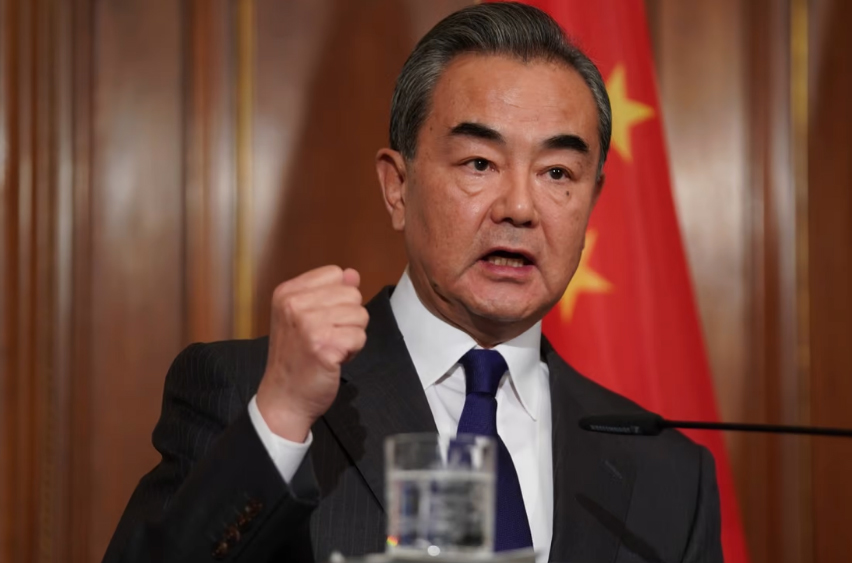
Summing up Xi’s two-day visit to New Delhi September 12-13 to attend the 18th BRICS Summit and his meeting with PM Modi, Foreign Minister Wang Yi said the two leaders held a candid and in-depth exchange of views on strategic, long-term and directional issues concerning China-India relations.


The most important consensus they reached was that China and India should be partners, Wang told Chinese official media on Sunday.
President Xi said that China and India can draw on each other’s strengths, support one another, help each other succeed and pursue common development, according to Wang, who is also a member of the Political Bureau of the Communist Party of China Central Committee.
The leaders of the two countries agreed to jointly maintain peace and tranquility in border areas, while the two countries will support each other as rotating chair of the BRICS, Wang said.
The Modi-Xi meeting drew widespread international attention, he said.
Under the strategic guidance of the two countries’ leaders, China-India relations have gradually emerged from a low point, progressing from a “restart” to a “renewed elevation,” a readout posted on the Chinese Foreign Ministry website said.
Areas of cooperation between the two countries keep expanding, trade volume has hit record highs, and people-to-people exchanges are growing more dynamic.
The improvement and development of China-India relations are not only welcomed by the over 2.8 billion people of both nations, but also represent an essential pillar of strengthening cooperation across the Global South, Wang said.
He said that both sides pledged to further nurture political mutual trust, manage differences and contradictions appropriately, and jointly uphold peace and tranquility along the border areas.
Wang said that the development trajectories of China and India represent shared opportunity for one another, and that the impact of China-India cooperation extends far beyond bilateral ties — carrying profound significance for the Global South and the wider world.
He noted that the normalisation and improvement of China-India relations has been hard-earned, and this progress deserves to be cherished.
Expressing hope that India will join China in translating the leaders’ shared consensus into action, he reaffirmed that both nations should remain partners rather than rivals, and advance bilateral relations steadily forward without stagnation or backsliding.
He also emphasised that the border issue should be viewed in proper perspective within the broader context of the bilateral relationship; that dialogue and cooperation should remain the prevailing trend; and that both nations should accelerate their respective development and national renewal, working side by side to contribute their due share toward regional and global peace and shared prosperity.
In his meeting with Modi, Xi called on China and India to draw on political wisdom of mutual respect and understanding to overcome disruptions, urging both sides to pursue parallel progress in bilateral ties and border issues with the two tracks reinforcing each other, so as to maintain peace and tranquility in border areas.
Wang said PM Modi offered a positive response, affirming that India has always approached India-China relations from a strategic and long-term standpoint.
PM Modi stated that India stands ready to be a partner, not an adversary, to China, and regards each other’s development as an opportunity rather than a challenge, according to the Chinese foreign minister.
India’s approach to its relationship with China is independent of third-party influence, and it will not allow any forces to conduct anti-China activities on its territory, Wang said, quoting PM Modi.
India remains committed to maintaining high-level exchanges with China, deepening strategic communication, and broadening people-to-people ties on the foundation of mutual respect and trust all to drive further progress in bilateral relations, he added.
The two leaders agreed to prioritise development as the bedrock of shared interest, deepen friendly ties and mutually beneficial collaboration, and expand cooperation in areas including cultural and people-to-people exchanges and direct air connectivity, to foster greater mutual understanding between the Chinese and Indian public and build stronger public support for bilateral relations, Wang said.
They also agreed to support each other’s BRICS chairmanship, strengthen coordination within multilateral frameworks including the United Nations, the Shanghai Cooperation Organisation, and the G20, advance cooperation across the Global South, promote a more multipolar world order, and together serve as a stabilising, progressive force in an era of global uncertainty, he said.
Elaborating on Wang’s comments, Chinese Foreign Ministry spokesman Guo Jiakun told a media briefing here on Monday “as the two leaders have charted the course for the future development of the bilateral ties, China will work with India to implement the important common understandings reached between the two leaders.”
Guo said China will make the cooperation list longer, deepen people-to-people exchanges, have closer collaboration on multilateral occasions, make continued efforts to improve and grow our ties, and render firm support to each other’s development and revitalization, so that we can contribution to the peace and prosperity in the region and beyond.
Orissa POST – Odisha’s No.1 English Daily