One of the infirmities that democratically elected governments the world over suffer from is the extra-constitutional powers that captains of industry and business exert on them from behind the curtain. It is an open secret that political parties get liberal funds from big companies and the payback, once they capture power, is by allowing those business interests to dictate government policies to suit their profit-making goals.
The interests of the voters, in the process, go for a compromised toss. The political-private industrial nexus is too familiar and it is accepted as an axiomatic truth in political-economic life. The Opposition in India has, for the past 12 years, been tirelessly targeting the BJP-led NDA government, accusing it of favouring select tycoons to plunder the country’s economic and natural resources. But it elicited no response from the government nor from the public.
Also Read


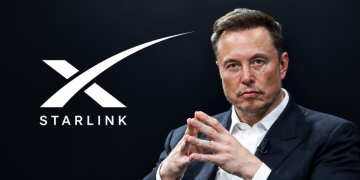
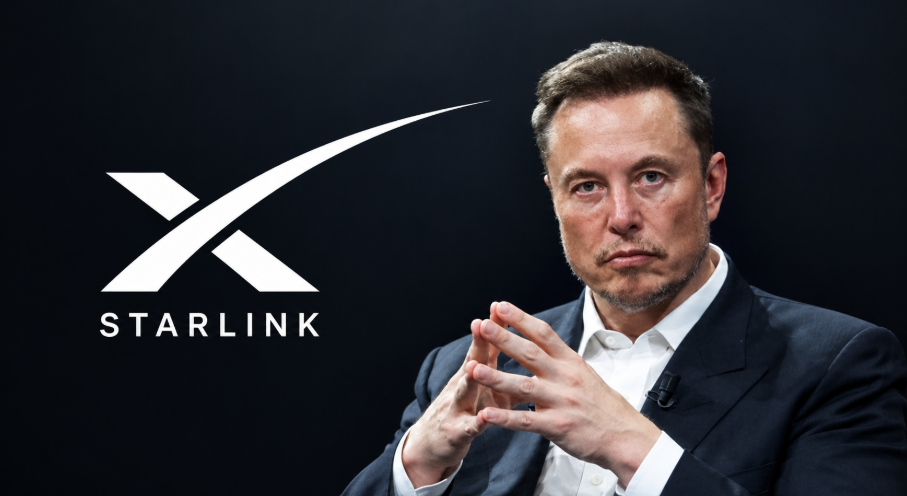
However, when the world’s richest man, Elon Musk, points an accusing finger at the government for the same reason, it becomes an altogether different game. Musk started with a veiled jibe at Indian “oligarchs” for allegedly blocking his Starlink, a satellite based internet network operated by SpaceX, to enter into this country has now taken the form of a full blown corporate war after Musk took a direct swipe at Reliance Industries chairman Mukesh Ambani.
In his first salvo through a post on 8 October Musk had asked if “Ambani is the real boss of India.” Within 24 hours he launched a frontal attack on Mukesh Ambani, dipped in bitter sarcasm. In his fresh post he addressed Ambani as “Dear Prime Minister” and offered his “humble apologies for not realising that you are the real boss of India.”
He went on accusing the Indian tycoon of maintaining what he called monopolistic exploitation of the people of India. He asked whether Ambani would “nonetheless consider allowing” his Starlink to compete. Musk complained that his company had been spending money for the past five years to set up shop in India “following every government rule,” but till date he has not got the green light to begin operations.
He said there are many areas of India, like other countries, with no internet access, which denies children the opportunity for education and small businesses the opportunity to sell their goods to a global market. His company, he claims, can change their lives for the better. Musk further canvassed for his company stating that it has a proven record also of helping save lives during natural disasters throughout the world, when all other communication systems have failed.
India, according to him, can benefit from his network to save men, women and children throughout the country. Musk is surely not trying to enter into the Indian market to help save us poor natives. Profit-driven, Starlink would also become a huge competitor to local companies like Jio and Airtel.
Leader of the Opposition in the Lok Sabha Rahul Gandhi immediately seized the opportunity to iterate the charge he had been making and posted on his WhatsApp channel that the Congress was committed to breaking the cycle of crony capitalism.
He shared a video montage that included his exchange with Musk on X, in which he told Musk that he should be ready to encounter “the other” oligarch close to the Prime Minister, obviously meaning Adani. Rahul, however, made it clear that he was not anti-business, but anti-monopoly.
Musk thanked Rahul for his post and said his Starlink was licensed in more than 165 countries and had spent five years complying with the Indian government’s laws and requirements. But it is yet to get the clearance that led him to ask whether Mukesh Ambani is “the real boss of India.”
The Indian government immediately responded to Musk’s charges denying domestic business interests obstructing Starlink’s entry into the country.
First, the Communications Ministry reacted and then Minister Jyotiraditya Scindia asserted that India does not allow monopolies in any sector adding that satellite communications operators must meet the stipulated security and regulatory requirements.
Starlink, Reliance Jio’s satellite venture Jio Satcom and Bharti-backed Eutelsat OneWeb have all received satellite communications licences. However, they cannot begin commercial services until they fulfil the necessary security conditions and receive spectrum allocation, the Minister pointed out. Indians citizens, on the other hand, are directly suffering due to the monopoly or at best duopoly encouraging Gov’t of the day.
One example is air travel where passengers have no choice except IndiGo and an incapacitated Air India to fly anywhere in the country. Second example is the way this Gov’t has throttled BSNL and MTNL and broken the legs and arms of both state owned telecom companies.
This list of discouraging and destroying competition for the select few is pretty long. This duel may be the beginning of a bargaining ploy, but when a global giant like Elon Musk openly challenges an industrial giant of India, undiscovered murky sides of a massive corporate war and government-industry nexus may become visible to the Indian public.