Odisha News, Odisha Latest news, Odisha Daily - OrissaPOST
  • Home
  • Trending
  • State
  • Metro
  • National
  • International
  • Business
  • Feature
  • Entertainment
  • Sports
  • More..
    • Odisha Special
    • Editorial
    • Opinion
    • Careers
    • Sci-Tech
    • Timeout
    • Horoscope
    • Today’s Pic
  • Video
  • Epaper
  • News in Odia
No Result
View All Result
OrissaPOST - Odisha Latest news, English Daily -
No Result
View All Result

A SHARE FOR ALL

Updated: November 20th, 2026, 08:10 IST
in Opinion
0
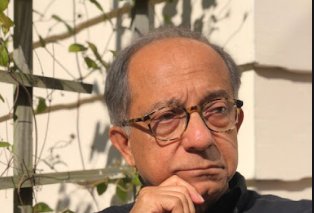
Pic - KaushikBasu.Net

Pic - KaushikBasu.Net

Share on FacebookShare on TwitterShare on WhatsAppShare on Linkedin

Kaushik Basu

I have just returned from two global summits, the Bund Summit in Shanghai and the Mumbai Lit Fest. The Shanghai meeting was a gathering of economists and policymakers from China, the United States, Europe, and elsewhere to discuss some of the most urgent economic concerns of our time. The Mumbai festival brought together writers, poets, artists—and, yes, one or two economists—from different parts of India and several other countries.

Also Read

Shivaji Sarkar

The silent pay cut

1 day ago
Peter N. Miller

Why Research Matters

1 day ago

In today’s world, balkanized by hyper-nationalism, such global conversations are refreshing. Despite their vastly different themes, one question kept coming up at both conferences: How will AI change ordinary people’s lives, from factory workers to artists and musicians? We cannot rule out the pos sibility that AI, with its potential for recursive self-improvement (RSI), will trigger the evolution of a new species of intelligent beings that is vastly superior to humans. This would mean that, after dominating Earth for 300,000 years, we may soon have to learn what apes learned long ago: the art of cohabiting with a superior species. But that is not what I talked about at the summits. Instead, I pointed out that the march of digital technology is reopening an old debate in economics about whether we should be more concerned about inequality or poverty. Most mainstream economists argue that we should try to eliminate poverty without worrying about inequality per se. That stance is no longer tenable. With the arrival of AI, extreme inequality—the gap in income or wealth between the super-rich and the average person—could become a threat to human society.

As Cecilia Rikap observes in her recent book The Rulers, the rise of Big Tech has led to an extreme concentration of economic power. Economists have traditionally measured income and wealth concentrations by looking at the richest 10% of a country’s population. But the World Inequality Report 2026 shows that the richest 0.001% now hold three times as much wealth as the poorest half of humanity, and their wealth is growing faster than everyone else’s. As factories become cavernous spaces populated by AI-powered robots and few human workers, wealth is poised to become even more concentrated. And with social media and news outlets increasingly under the sway of a handful of billionaires, a few Big Tech tycoons are gaining unprecedented political influence, fuelling the rise of authoritarianism. Curbing extreme inequality is thus not merely a means of ending poverty but essential to the survival of democracy.

To this end, I proposed going beyond the idea of a universal basic income (UBI) to a universal basic share (UBS). My proposal struck a chord with audiences at both conferences. Lifting people above a certain minimum income threshold, as UBI aims to do, is not enough. To narrow the astronomical and growing gap between the richest 0.001% and the average person, ordinary people need a share of the profits generated by the global economy.

Of course, many details would need to be worked out. As an economist, I am well aware that the profit motive plays an important role in driving prosperity. Fortunately, it is possible to design wealth taxes that will raise the living standards of billions of people who stand to lose their jobs to AI or be forced to work for abysmally low wages, but that will not weaken people’s incentive to work hard and be creative. One obstacle to establishing an effective UBS system is that if a single country adopted it, the resulting capital flight could devastate its economy.

UBS would therefore require an international agreement, implemented by multilateral organisations. That will not be easy, but there are already precedents in global trade agreements enforced by the World Trade Organisation and labour conventions supervised by the International Labour Organisation. Such arrangements would have seemed impossible 100 years ago. The world’s population now stands at roughly 8.3 billion. With global wealth concentrating in fewer and fewer hands, the UBS system I propose would benefit a vast majority of humanity. If governments fail to act, the recent wave of youth protests against economic inequality and insecurity offers hope that ordinary citizens will take matters into their own hands.


The writer, a former chief economist of the World Bank and chief economic adviser to the Government of India, is Professor of Economics at Cornell University.




Orissa POST – Odisha’s No.1 English Daily
ShareTweetSendShare
Suggest A Correction

Enter your email to get our daily news in your inbox.


OrissaPOST epaper Sunday POST OrissaPOST epaper

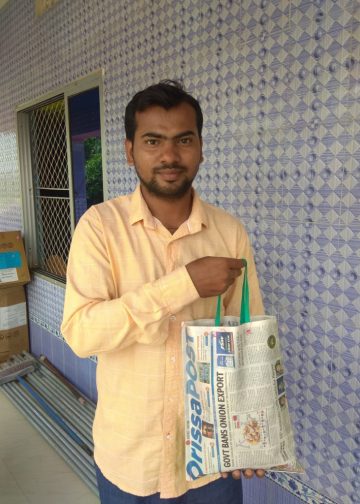
Click Here: Plastic Free Odisha

#MyPaperBagChallenge

Debasis Mohanty

December 12, 2019
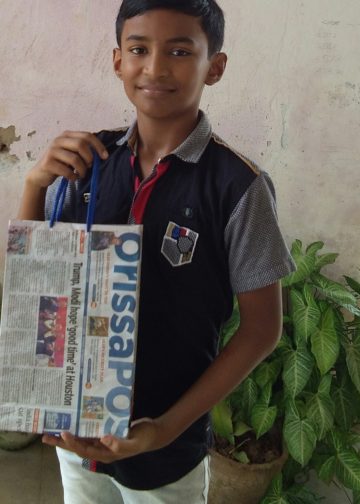
#MyPaperBagChallenge

Chinmay Kumar Routray

December 12, 2019
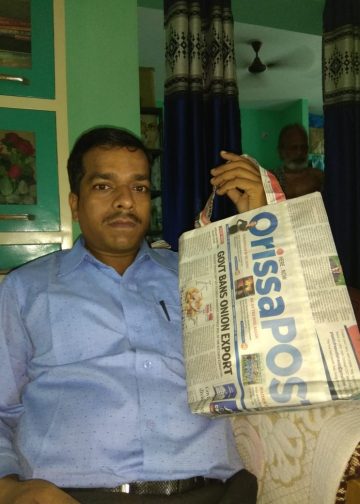
#MyPaperBagChallenge

Shreyanshu Bal

December 12, 2019
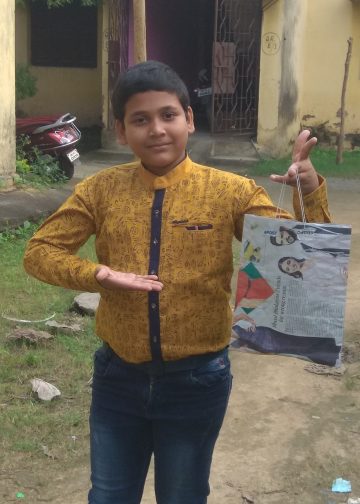
#MyPaperBagChallenge

Akriti Negi

December 12, 2019
#MyPaperBagChallenge

Faiza Firdous

December 12, 2019
#MyPaperBagChallenge

Ramakanta Sahoo

December 12, 2019
#MyPaperBagChallenge

Sitakanta Mohanty

December 12, 2019
#MyPaperBagChallenge

Adweeti Bhattacharya

December 12, 2019
#MyPaperBagChallenge

Anasuya Sahoo

December 12, 2019
#MyPaperBagChallenge

Jhili Jena

December 12, 2019
#MyPaperBagChallenge

Matrumangal Jena

December 12, 2019
#MyPaperBagChallenge

Mrutyunjaya Behera

December 12, 2019
?????????????????????????????????????????????????????????????????????????????????????????????????????????????????????????????????
#MyPaperBagChallenge

Dibya Ranjan Das

December 12, 2019
#MyPaperBagChallenge

Tabish Maaz

December 12, 2019
#MyPaperBagChallenge

Spinoj Pattnaik

December 12, 2019
#MyPaperBagChallenge

Akshaya Kumar Dash

December 12, 2019
#MyPaperBagChallenge

Pratik Kumar

December 12, 2019
#MyPaperBagChallenge

Sipra Mishra

December 12, 2019
#MyPaperBagChallenge

Adyasha Priyadarsani Sendha

December 12, 2019
#MyPaperBagChallenge

Subhajyoti Mohanty

December 12, 2019
#MyPaperBagChallenge

Priyabrata Mohanty

December 12, 2019
#MyPaperBagChallenge

Nishikant Rout

December 12, 2019
#MyPaperBagChallenge

Sisirkumar Maharana

December 12, 2019
#MyPaperBagChallenge

Saishree Satyarupa

December 12, 2019
#MyPaperBagChallenge

Manas Samanta

December 12, 2019
#MyPaperBagChallenge

Rajashree Pravati Mohanty

December 12, 2019
#MyPaperBagChallenge

Ipsita

December 12, 2019
#MyPaperBagChallenge

Rajashree Manasa Mohanty

December 12, 2019
#MyPaperBagChallenge

Parbati Mohanty

December 12, 2019
#MyPaperBagChallenge

Amritansh Mishra

December 12, 2019

Archives

Editorial

Tech Terror

November 18, 2026

It cannot be a coincidence that when the world was still trying to come to terms with the prospect of...

Read moreDetails

More Miseries Ahead

Inflation in India
November 17, 2026

Life is getting difficult by the day for Indians with all us citizens reeling under the dual shocks of rising...

Read moreDetails

Tough Times

Press
November 16, 2026

Press freedom has, for years, been under attack almost everywhere across the globe, but the situation has never been as...

Read moreDetails

Democracy Strikes Back

Rights & Restrictions: AAKAR PATEL
November 15, 2026

By Aakar Patel Democracies correct themselves through elections. The leadership of every nation is imperfect, and the problems become especially...

Read moreDetails
  • Home
  • State
  • Metro
  • National
  • International
  • Business
  • Editorial
  • Opinion
  • Sports
  • About Us
  • Advertise
  • Contact Us
  • Jobs
Developed By Ratna Technology

© 2025 All rights Reserved by OrissaPOST

  • News in Odia
  • Orissa POST Epaper
  • Video
  • Home
  • Trending
  • Metro
  • State
  • Odisha Special
  • National
  • International
  • Sports
  • Business
  • Editorial
  • Entertainment
  • Horoscope
  • Careers
  • Feature
  • Today’s Pic
  • Opinion
  • Sci-Tech
  • About Us
  • Contact Us
  • Jobs

© 2025 All rights Reserved by OrissaPOST

    • News in Odia
    • Orissa POST Epaper
    • Video
    • Home
    • Trending
    • Metro
    • State
    • Odisha Special
    • National
    • International
    • Sports
    • Business
    • Editorial
    • Entertainment
    • Horoscope
    • Careers
    • Feature
    • Today’s Pic
    • Opinion
    • Sci-Tech
    • About Us
    • Contact Us
    • Jobs

    © 2025 All rights Reserved by OrissaPOST