Bhubaneswar: Breast cancer is the most common malignancy among Indian women, and as per the projections, by the end of 2026, it will make up 15 per cent of the nation’s total cancer burden. The surgical procedure was historically a mastectomy (removal of the total breast).
However, with improvements in the understanding of the biology of breast cancer and advancements in radiation therapy and chemotherapy, it has gradually evolved into breast-conserving surgery.

Q. How early can breast cancer be detected?
A. Usually, the earliest symptom of breast cancer is a painless lump in the breast. With advanced imaging modalities like digital mammogram, CT scan and MRI and increased awareness among people who undergo screening for breast cancer, new lesions are being detected even before one can feel them.
Also Read: Witchcraft suspicion claims elderly man’s life
Q. How to treat these early lesions?
A. After detecting these lesions, an initial evaluation is done to see for any other sites of spread. Surgical removal is the first therapeutic modality for these lesions. Identifying these early lesions during surgery is a challenge. The use of intraoperative ultrasonography and localisation of the lesion in the breast tissue is done using a wire. The specimen is sent to the pathologist for immediate confirmation of malignancy and determination of cancer-free margin status. This, along with surgical assessment of the axilla itself, is the curative therapy.
Q. Do all early lesions require chemotherapy and radiation therapy?
A. The requirement of chemotherapy depends on the hormone receptor status and other pathological characteristics of the tumour. For low-risk patients, chemotherapy can be omitted. However, radiation therapy is mandatory for all breast-conserving surgery patients as it reduces the chances of recurrence.
Q. Does this lead to a cure?
A. The earlier the stage of cancer, the better the cure. Studies have shown that for localised breast cancer, 5 year survival chance is around 99 per cent.
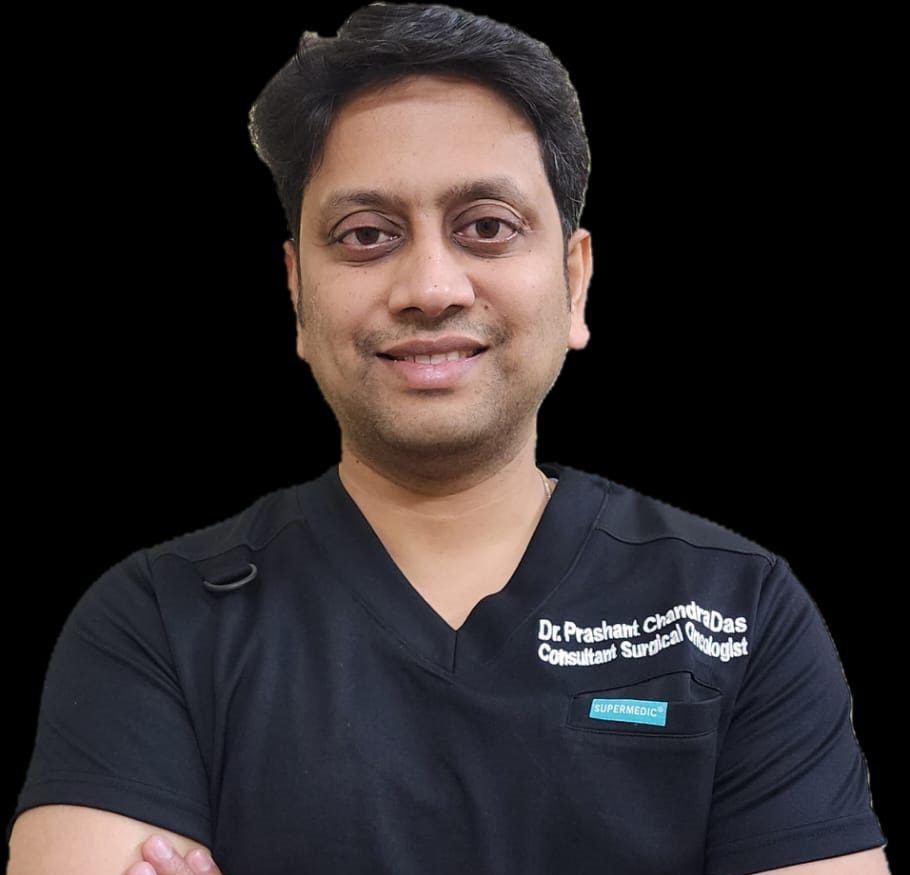
The writer is a surgical oncologist at Apollo Cancer Centre, Bhubaneswar. He holds an MBBS from MKCG Medical College, an MS in General Surgery from BHU, Varanasi, and an MCh in Surgical Oncology from Kidwai Memorial Institute of Oncology, Bangalore. He has also completed a Fellowship in Minimal Access Surgery (FMAS)