By Ajit Ranade
27 June marked National MSME Day, bringing a wave of lavish tributes canonising small businesses as the “backbone” of employment, industrial production, and exports. A few days later on 1 July, the nation marked GST Day, commemorating the ninth anniversary of the historic tax rollout. Yet a sobering operational reality remains. India’s small entrepreneurs still do not see a smooth, viable pathway to formalisation. They are trapped in a policy-induced pincer movement. Large corporate customers weaponise time, and a rigid, accrual-based tax architecture weaponises compliance. This structural contradiction has created a devastating “double whammy.”


On one side, small enterprises are forced to act as involuntary, interest-free credit lines for big corporate buyers and PSUs who delay payments for months. On the other side, the GST demands immediate, non-negotiable tax payments on money that the MSME has not yet received. This can potentially choke small businesses to death.
Under Section 15 of the MSMED Act, 2006, buyers are legally obligated to settle vendor bills within 45 days if a written contract exists, or 15 days in its absence. The statute even mandates a fierce penalty, and a compound interest liability.
Yet these timelines are unreal. Large private entities and government bodies routinely stretch payment cycles to 90, 120, or 180 days. Even institutional interventions designed to bridge this gap have crashed into corporate non-cooperation. Take the Trade Receivables Discounting System (TReDS). This RBI-regulated electronic platform meant to let MSMEs auction invoices to banks for instant liquidity. It is called bill discounting on an electronic platform. But large corporates and CPSEs actively refuse to onboard or approve invoices. Because TReDS binds buyers to an inflexible auto-debit system on maturity, any failure auto-reports them to credit bureaus. Rather than clean up their cash management to protect their credit scores, corporate giants simply block the platform entirely, leaving vendors out in the cold.
This chronic payment delay is made worse by the GST framework, which delivers a second blow. GST operates strictly on an accrual basis, not a cash-flow basis. The moment an invoice is generated, the tax must be paid by the 20th of the next month. It is completely decoupled from when the payment is actually received. An 18% payment is due soon, but corporate buyers can blithely blow past the 45-day statutory limit without paying a rupee.
This creates a terrifying cash-flow inversion. Small vendors are forced to default on employee payroll or secure high-interest market loans. Compounding this cash crunch is the reality of low digital literacy, lack of access to modern tech, and complex portal architectures. This is further crippled by frequent internet connectivity problems in semi-urban industrial clusters.
Data from the National Sample Survey Office’s (NSSO) Annual Survey of Unincorporated Sector Enterprises (ASUSE) reveals that India has an estimated 77 million non-agricultural, non-construction unincorporated establishments. Yet, the data demonstrate that these enterprises are actively avoiding the state’s formal mechanisms because the systems are mutually hostile. Just about 1 million micro-enterprises are actually registered under the GST net.
Furthermore, while total GSTN records indicate that roughly 7 million taxpayers report an annual topline below Rs 1 crore, the actual ground survey by ASUSE can find fewer than 1.2 million such GST-registered establishments functioning out in the real economy. This massive shortfall is not a sign of widespread tax evasion but is a desperate survival strategy. Small businesses realise that stepping into the GST system may lead to suffocation.
This double whammy means a profound existential paradox. Rather than face cash outlays for unpaid invoices, most small businesses choose to stay outside the GST ambit. But non-registration is commercial exile. Large corporate supply chains are explicitly built around Input Tax Credit (ITC) maximisation. If an MSME is not registered under GST, big corporates flatly refuse to do business with them.
For those who do register to survive, the legal remedies provided are useless by the sheer power dynamic of asymmetric capitalism. Policymakers point to the MSME Samadhaan portal to “name and shame” errant buyers. This betrays a total lack of empathy for how small supply-chains function.
Most specialised MSMEs operate under intense buyer concentration. They often rely on a single, big corporate customer for 80% to 100% of their revenue. An MSME vendor cannot “name and shame” their customer because that customer is their entire livelihood. To aggressively demand the 45-day rule, enforce Section 43B(h) of the Income Tax Act, or file a Samadhaan case is to invite immediate, quiet de-panelment. Corporate buyers will seamlessly move contracts to a different vendor.
Even the 180-day ITC reversal rule under GST exposes the state’s self-interest. If a buyer defaults for 180 days, the law forces them to return the claimed tax credit to the government with an 18% interest penalty. The state successfully collects its penalty from the large corporate, but the suffering MSME receives no tax refund and no capital relief. The government secures its revenue twice over, while the small business is left holding a toxic bad debt.
The state must align its tax laws with commercial reality through three structural interventions:
(1) Cash-Based GST for Micro-Enterprises: Businesses up to a specific turnover threshold must be legally allowed to deposit GST only when the invoice amount hits their bank account. Tax collection should trace actual capital, not paper invoices.
(2) Low-Bandwidth Portal Architectures: The government must introduce a radically simplified, lightweight version of the tax portal specifically optimised for micro-enterprises. It must function seamlessly over poor internet connectivity and cut the monthly filing burden down to a bare minimum.
(3) There should be a mandatory GSTN-TReDS Digital Bridge. Large corporate buyers must not have veto power over invoice approval. The moment an e-invoice involving a large corporate (above the Rs 250 crore threshold) is generated on the GST portal, the system must automatically create an unalterable, pre-approved trade receivable on TReDS. This would allow banks to instantly fund the vendor, cutting the uncooperative buyer completely out of the financing loop.
MSMEs can truly be the backbone of the economy and can have a pathway to formalisation. But they must be rescued from the double whammy.
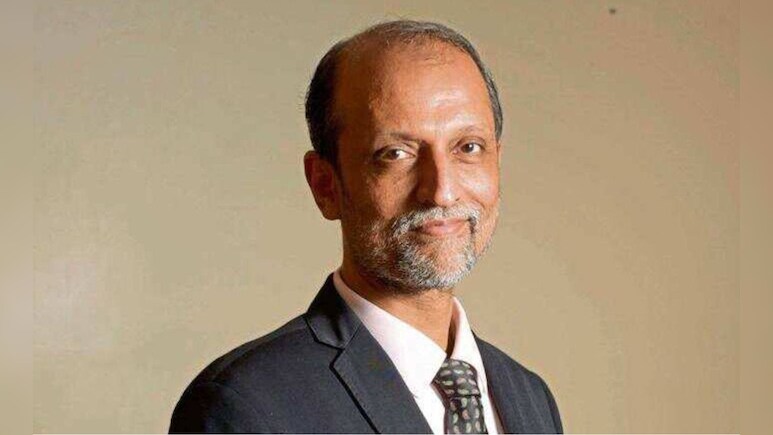
The writer is a noted economist.