Koraput: A medicinal plant garden featuring more than 300 varieties was inaugurated at the Central University of Odisha (CUO) campus in Sunabeda Thursday to conserve indigenous bio-resources and promote traditional tribal healing practices.
Named ‘Parashar Tribal Medicinal Plant Garden’, it was inaugurated during the launch of a two-day project titled ‘Integrated Conservation, Agro-technology & Bioresource Enterprise Development for Sustainable Tribal Livelihoods’.
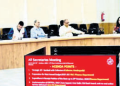
Supported by the Union Ministry of Tribal Affairs, the project is being implemented by the CSIR-National Botanical Research Institute (NBRI), Lucknow.
An exhibition showcasing rare medicinal plants and traditional healing practices of Koraput was also organised, with local tribal healers demonstrating their knowledge and expertise.
Manish Thakur, Additional Secretary in the Ministry of Tribal Affairs, who attended the event as chief guest, said 16 tribal hotspots had been identified across the country, including three in Odisha — Koraput, Kandhamala and Balangir.
“The project focuses on conserving rare medicinal plants, documenting traditional healing practices and creating sustainable livelihood opportunities. We hope tribal communities will gradually develop into self-sustaining institutions,” he said.
CUO Vice-Chancellor Ajit Kumar Shasany stressed the need to scientifically document the knowledge of tribal healers and conserve endangered medicinal plants for future generations.
He also called for institutional, technical and financial support to promote medicinal plant nurseries and large-scale cultivation.
CSIR-NBRI principal investigator Sharad Srivastava said media could play an important role in taking the project’s objectives to potential beneficiaries.
The programme was organised as part of the Janajatiya Gaurav Divas Pakhwada, commemorating tribal icon Bhagwan Birsa Munda’s birth anniversary.
Officials said around 25 tribal healers from Koraput district attended the programme and were felicitated.
The two-day event will also include awareness sessions, field visits to medicinal plant sites and interactions with tribal communities.