SANGEETA JENA, OP
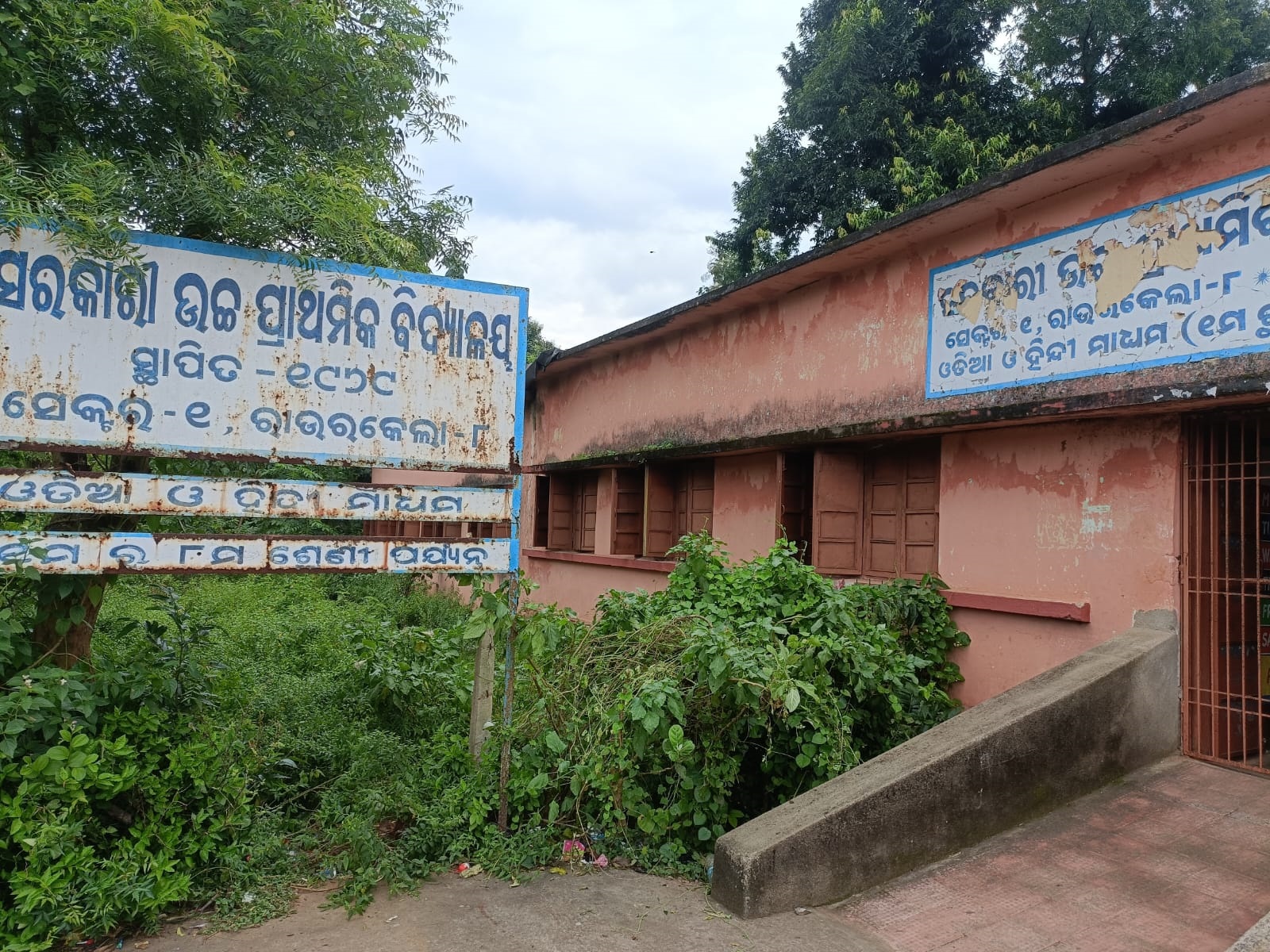
Raurkela: Students at Government Upper Primary School, Sector 1 in the Raurkela Steel Township are facing difficulties due to unsafe classrooms, inadequate drinking water and non-functional water facilities, raising concerns over their safety and basic needs.


Established in 1969, the school caters to students from Shishu Vatika to Class VIII. Initially managed by the steel plant, it was later brought under the state government’s School and Mass Education department.
The school has 166 students and five teachers, including the headmistress.
Although separate rooms are available for all classes, the ageing building has fallen into disrepair.
Plaster has peeled off walls and ceilings in classrooms, the office and corridors, while several sections are damaged and potentially dangerous.
Even light rain causes water to accumulate in classrooms, and heavy rainfall forces the school to declare a holiday.
The drainage system on the premises is also clogged. GOVT UP SCHOOL, SECTOR 1, RAURKELA. The school faces a persistent drinking water shortage.
Students depend on tap water supplied for only two to three hours a day, while the old water tank and water adequate sports equipment and a physical education teacher.
Of the five teachers, only four are regularly available for teaching as Headmistress Snehalata Dalei also holds charge; coolers are unusable.
The borewell on the campus is non-functional, leaving the toilets without a regular water supply.
The school has three toilets for girls, three for boys and one for teachers. However, water shortage has rendered the facilities diffi cult to use.
The school also lacks smart boards, as an Assistant Block Education Officer (ABEO) in Bisra block and is unable to take classes for much of the time. The four teachers manage instruction for eight classes.
School management committee president Babita Chaudhury said drinking water shortage and deteriorating classrooms were affecting students’ education.
She said that rainwater entered classrooms even during light showers, sometimes forcing the school to close, while the toilets had become unusable due to the water shortage.
She added that the local MLA would be approached for a permanent solution.
Headmistress Dalei said that the ageing building required repairs and the school lacked modern facilities.
The borewell had failed, and after the water pump was stolen, water could no longer be supplied to the overhead tanks. As a result, the tanks remained unused, while limited tap water was collected in tubs and containers.
The school had received only Rs30,000 under the Mo School Abhiyan for repairs, she said, adding that the District Education Officer (DEO) had also been informed in writing about the water shortage.
Cluster Resource Centre Coordinator (CRCC) Sipra Sahu echoed the concerns over the school’s infrastructure and basic facilities.