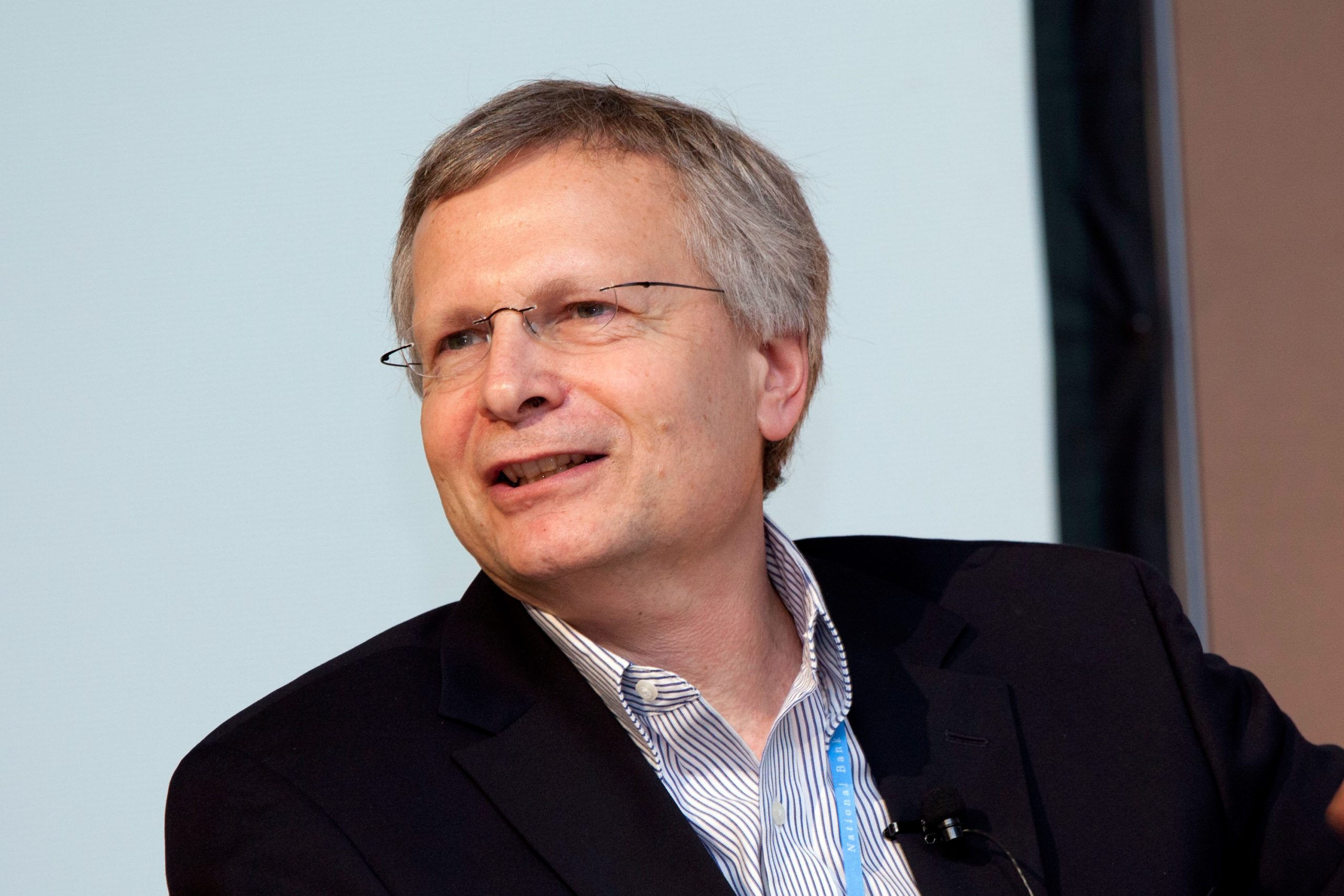
Dani Rodrik
People facing a diagnosis of terminal illness, the Swiss-American psychiatrist Elisabeth Kübler-Ross famously wrote, experience five stages of grief: denial, anger, bargaining, depression, and acceptance. The same could also be said of our response to AI’s rapidly expanding capabilities. At first, it seemed as if AI would not amount to more than a glorified search engine or a chatbot that does a decent job of simulating a human being. That made it easy enough to deny that the technology would have much impact on our lives or professions. Then AI started cropping up everywhere, and in the most infuriating ways. Its influence appeared in lawyers’ briefs with hallucinated case references; in software code with mistakes and security vulnerabilities; in customer-service bots that went off script; and (a particular source of irritation for academics like me) in student essays and assignments. These were all good reasons for getting mad. But then AI got better.


The fabrications, hallucinations, and mistakes grew rarer. As it became obvious that AI use by students was unstoppable, many started to see an upside in the technology’s potential to enhance learning. It was time to negotiate. We would need to make all kinds of adjustments in how we worked, but we told ourselves that there were still inherent limits to what AI could do. It could undertake a vast amount of cognitive and analytical work, and much faster than any human; but questions of judgment, taste, values, and preferences were still, and would remain, matters for the human mind. AI could execute, but we humans would imagine. It was just a matter of getting the division of labour right. I clung to this view for quite some time, and I confess that it gave me much comfort. Alas, AI was not playing ball. Each time I asked my chatbot a question, it came back not only with answers, but with much more. It told me what else I should be looking for, suggested a different way of framing my approach, and offered a parallel or contrast with some other project on which I had worked (regardless of whether I had consulted AI on it or not). It was sort of annoying, but I could not deny that I was receiving valuable insights. I’d like to think that I would have arrived at similar thoughts on my own in due time, but my chatbot regularly preempted me.
Worse still, it clearly could be very imaginative. Inspired by my colleague Jason Furman’s claim that AI tools would do a better job today than professionally trained economists in staff roles at the White House Council of Economic Advisers, I tested my chatbot with a difficult question: “It is 2027, and the country is faced with a crisis in care. There is a shortage of home care aides, accidents and deaths are rising among elderly and disabled people left without help, and workers are dropping out of the labour market to look after loved ones. The CEA Chair needs options to present to the President.” I hit enter, and the AI promptly prepared a technical memo with detailed recommendations covering federal matching grants, adjustments to Medicaid pay, and a caregiver visa programme, complete with a fiscal accounting.
Exceeding its authority (and, characteristically, the prompt itself), it also outlined a political strategy for selling the program. Hmm, I thought, my chatbot is clearly very good at operating within the prevailing economic and institutional context. But could it move beyond it? To answer that question, I asked it to develop some out-of-the-box policy alternatives, disregarding political realities. It came back with some interesting possibilities, including a National Care Corps that would draft young people to take care of the old, and converting underutilised office and mall space to “care districts” that would benefit from scale and agglomeration economies. Then, on a whim, I asked AI to turn one of my manuscripts into a stand-up comedy routine. What came back made me laugh so hard that I worried about passersby fearing for my mental health. Insight, imagination, humour! This was not part of our bargain, was it? That is when the depression began to set in. I started to feel sadness about a world in which human thought would no longer be distinct from machine work—and would be needed less day by day. Like the mathematicians who signed a joint letter on the impact of AI on their field, I became alarmed about the loss of “conceptual understanding and insight” that would follow from letting AI take over our work. It was frightening and disorienting.
The next stage, the manual tells us, is acceptance. Here we do have a choice. Unlike a terminal illness, AI and its uses are not outside our control. From the Silicon Valley firms developing the technology and the businesses deploying it to the professional communities that set the norms of appropriate use and the governments that must one day (better sooner than later) regulate it, decisions are being made each day about our relationship to AI. The worst mistake we can make is to accept a world in which we cede too much to it. Ultimately, we will have to figure out how we restrain the use of AI for the good of humanity. The appropriate analogy here is to performance-enhancing drugs, which temporarily increase human capabilities but eventually harm users.
AI is similar, except that it is much more powerful, and its commensurately disastrous side effects will show up much later. The temptation to indulge in it freely is, and will remain, very strong. Homer’s Odysseus knew that the Sirens promised knowledge but delivered disaster. He had himself tied to the mast of his ship so that he would not succumb to their beautiful song and steer toward them and the cliffs that had claimed so many mariners. The challenge we face with AI is similar: to restrain ourselves from losing our humanity.
The writer is Professor of International Political Economy at Harvard Kennedy School.
Orissa POST – Odisha’s No.1 English Daily