
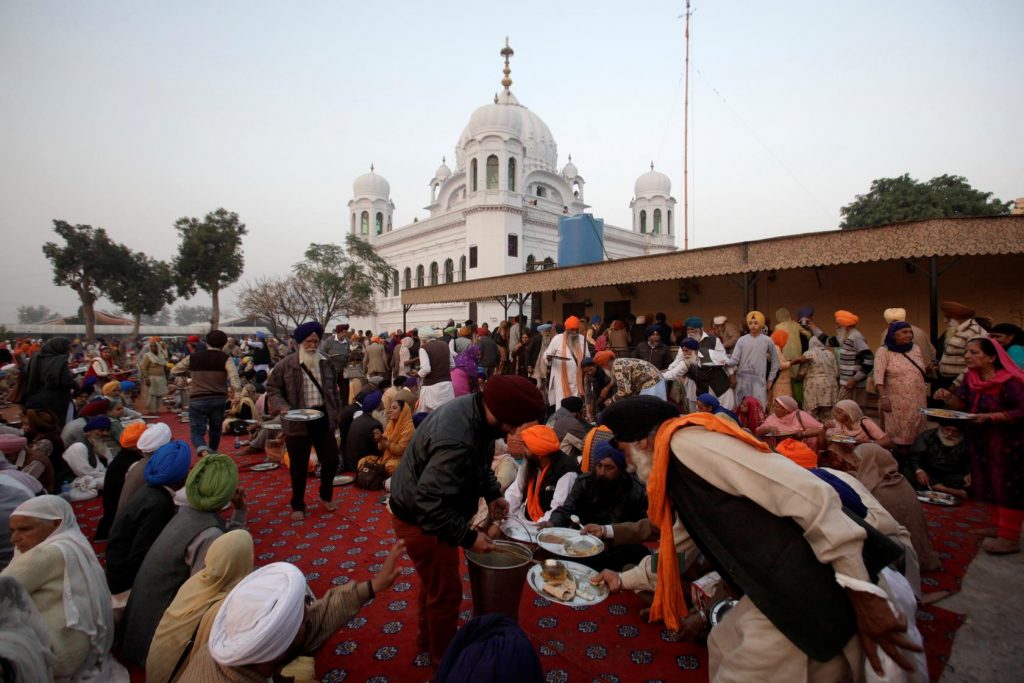
NEW DELHI: India and Pakistan agreed Thursday to go forward with a new border crossing and route for Sikh pilgrims to visit a holy temple in Pakistan, a rare glimmer of cooperation after tension flared over the neighbours’ decades-old Kashmir dispute.
The meeting was the first between the nuclear-armed foes since a dogfight between their warplanes over the Himalayan region last month led to the downing of an Indian aircraft and the capture of its pilot, since returned home.
“Both sides held detailed and constructive discussions,” the two countries said in a joint statement, after their officials met Thursday at the Wagah checkpoint on their border to work out details of the crossing and the route.
The talks were cordial and another meeting of technical experts is planned for next week, they said, adding that both sides had agreed to work towards soon making the route operational.
The Sikh minority community in India’s Punjab and elsewhere has long sought easier access to the temple in Kartarpur, a village just over the border in Muslim-majority Pakistan.
Many Sikhs see Pakistan as the place where their religion began: its founder, Guru Nanak, was born in 1469 in a small village near the eastern Pakistani city of Lahore.
But to get there, travellers must first secure hard-to-get visas, travel to Lahore or some other major Pakistani city and then drive to the village, which is just 4 km (2-1/2 miles) distant from the Indian border.
This week’s talks follow an agreement the neighbours struck last year to open a new route, the Kartarpur corridor, giving the pilgrims direct and visa-free access to the holy site that will be fenced off.
The arch rivals have said they shot down each other’s fighter jets late last month, after tension escalated following a claim of responsibility by a Pakistan-based militant group for the deadliest attack in Kashmir’s 30-year-long insurgency that killed at least 40 Indian paramilitary troops.
REUTERS