United Nations: India has warned that people’s view of the UN is sinking as it fails to reform the Security Council to make it capable of ending conflicts and human suffering.
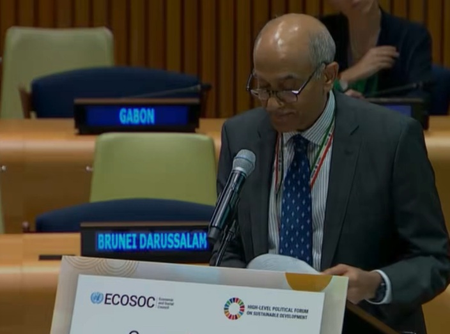
“Public perception about the UN has changed adversely in the recent past primarily due to the Security Council’s inability to meaningfully intervene in raging conflicts across different parts of the globe”, India’s Permanent Representative P Harish said Tuesday.


“The Security Council has been ineffective in putting an end to human suffering among the affected populations”, he said, and this calls into question its ability to uphold the foundational principle of maintaining international peace and security.
He was speaking at a ministerial roundtable on “Making Multilateralism Fit for the Future”, one of the goals of Pact for the Future at the 2024 world leaders’ summit.
The 80-year-old UN architecture created after World War II is inadequate for contemporary global challenges, but “as a collective, the UN has not been able to move the needle on reforming the Security Council”, Harish said.
The Intergovernmental Negotiations (IGN) for Council reform “have been limited to an endless cycle of prepared statements”, he lamented.
Therefore, the Pact’s Action Points on 39 to 42 (that include a call for ending violence, racism and xenophobia; promoting gender equality, and having the Council create effective peacekeeping strategies) “have largely remained on paper”, he said.
“This is untenable and must change”, he declared.
Harish noted that “India had significant reservations with regard to these action points”.
“However”, he added, “it was India’s constructive spirit that encouraged us to go along broadly with the Pact”.
Besides reforming the Council, “the revitalisation of the General Assembly, and the stronger role for ECOSOC (Economic and Social Council of the UN) in advancing sustainable development in its three dimensions – economic, social and environmental” were essential, he said.
On fostering economic development of the Global South, he said, “Our commitment is unwavering to leave no one behind, to mobilise resources where they matter most, and to lead by example”.
Turning to the international financial institutions, Harish said they “too must also evolve” and “become more representative, responsive and development-oriented, while preserving their mandates”.
“Adequate, affordable and predictable financing remains indispensable for achieving the Sustainable Development Goals”, he pointed out.
“India carries this paradigm forward, grounded in our civilizational ethos of Vasudhaiva Kutumbakam, or the whole world is a family”, he said.