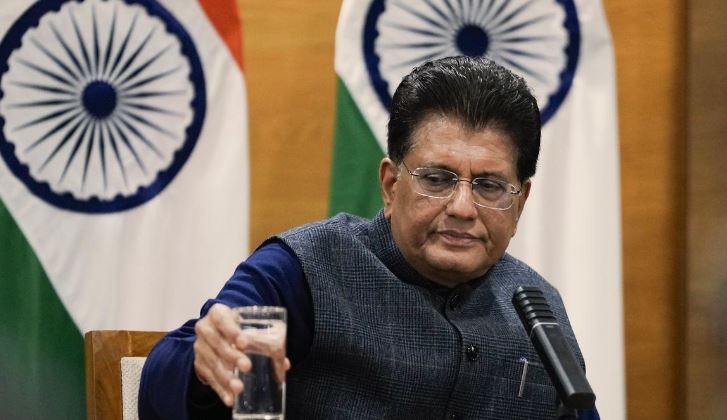
New Delhi: India’s exports worth about USD 44 billion to the US will enter the American market at zero reciprocal tariffs under the first phase of the bilateral trade agreement, which is expected to be signed by mid-March, Commerce and Industry Minister Piyush Goyal said Saturday.
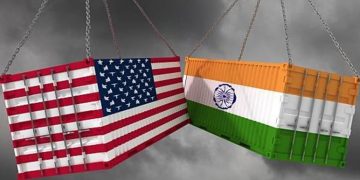
The two countries have announced that they have reached a framework for an interim trade agreement under which both sides will reduce import duties on a number of goods to boost two-way trade.

While the US will reduce tariffs on Indian goods to 18 per cent from the present 50 per cent, India will eliminate or cut down import duties on all US industrial goods and a wide range of American food and agricultural products, including dried distillers’ grains, red sorghum for animal feed, tree nuts, fresh and processed fruit, soybean oil, wine and spirits.
“About USD 44 billion worth of Indian exports will go to zero reciprocal duty (to the US),” Goyal told reporters.
While Indian goods worth about USD 30 billion will continue to attract an 18 per cent tariff (which includes goods from the labour-intensive sectors), there will be no change in duties on goods worth USD 12 billion (including steel, copper and certain auto parts).
These tariffs on steel, aluminium, copper, and auto parts apply to all countries equally, so they do not impact only India’s competitiveness. These products face a 50 per cent tariff in the US.
In 2024-25, the bilateral trade in goods touched USD 186 billion (USD 86.5 billion exports and USD 45.3 billion imports).
With America, India had a trade surplus (difference between imports and exports) of USD 41 billion in 2024-25. It was USD 35.32 billion in 2023-24 and USD 27.7 billion in 2022-23.
The reduction of tariffs will immediately boost exports of labour-intensive sectors such as textiles, apparel, leather and footwear, Goyal said.
“The interim agreement which has been finalized will soon be converted into the first tranche of our potential bilateral trade agreement (BTA),” he said, adding the pact will help achieve USD 500 billion bilateral trade target by 2030.
The two countries, he said, have come to a “very fair, equitable, and balanced” agreement which will slash US reciprocal tariffs on Indian goods to 18 per cent.
Through an executive order, the 25 per cent reciprocal tariffs will be reduced to 18 per cent by the US. The order may come soon.
“Additionally, zero per cent tariffs will be given on several Indian products like generic pharma, aircraft components, auto parts, etc,” he added.
Massive potential will be opened up for Indian exports in the world’s largest economy, the USD 30 trillion market, Goyal said, adding the pact would provide opportunities for MSMEs, farmers, fishermen, youth, women, and the talented people of India.
It would also help farmers and fishermen to get better price for their produce in the US market and “going forward, there will be a huge growth in sectors like textile and apparel, gem and jewellery, machinery parts, toys, leather and footwear, home decor, smart phones, and several areas in agriculture”.
He added that India has safeguarded sensitive sectors and has not extended any duty concessions in those segments. These include agricultural goods, meat, poultry, all dairy products, GM (genetically modified) food products, soy meal, maize, cereals, millets like jowar, bajra, ragi, kodo, amaranth, fruits like banana, strawberries, cherries, and citrus fruits.
Other products are green peas, kabuli chana, moong, oilseeds, certain animal feeds, groundnuts, honey, malt and its extracts, non-alcoholic beverages, flour and meals, starch, essential oils, ethanol for fuel, and tobacco.
“It’s truly an agreement that will give huge advantages both to farmers, fishermen and industry in India,” he said.
The agreement will open up significant opportunities for India in emerging areas such as data centres, artificial intelligence and quantum computing, as the country will gain access to equipment, high-quality chips, ICT goods, machinery, pharmaceuticals and medical devices.
For these products, the US is “very well known,” Goyal said.
PTI