
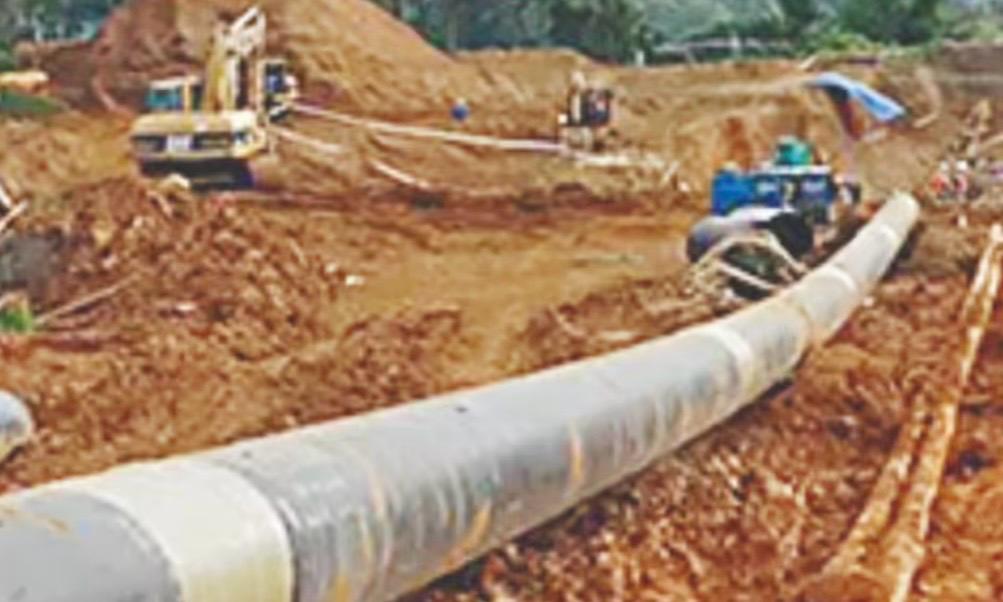
Jajpur: JSW Utkal Steel Ltd. (formerly JSW Steel Ltd.) received permission from the state Water Resources department in 2019 to lay a slurry pipeline transporting iron ore from Joda in Keonjhar district to its steel plant in Paradip.
Recently, the company extended the pipeline route from Joda to Kalamang in Sundargarh district. This extension has been approved by the department, with Under Secretary Sasmita Mishra directing the chief engineer to take necessary action December 5. The expanded pipeline route will cross 150 waterbodies, exacerbating concerns about the region’s declining groundwater levels.
Mining and industrial activities, particularly unregulated blasting in quarries, have already contaminated groundwater. A report submitted by the Central Ground Water Board (CGWB) to the National Green Tribunal (NGT) in June found chromium levels in the Sukinda mining belt 14 times higher than the permissible limit.
Also Read: SC upholds JSW Steel’s resolution plan for debt-ridden Bhushan Power and Steel Ltd
Environmentalists warn that the loss of wetlands and ponds poses serious ecological risks, with many traditional waterbodies being filled instead of restored. Despite the risk to waterbodies, approvals for the slurry pipeline continue to move forward, raising concerns that industrial interests are being prioritised over environmental protection. JSW’s steel plant in Paradip has increased its annual production capacity from 10 million to 12 million metric tonnes, requiring the construction of a 350 km slurry pipeline. Previously, the company received approval for a pipeline from Joda to Paradip, crossing 136 waterbodies. The new proposal, extending the pipeline in the opposite direction from Gobardhanpur, will cross 14 additional waterbodies.
The Water Resources department has imposed 30 conditions, including immediate repairs and compensation in case of pipeline bursts, and ensuring that farmland and waterbodies are not damaged.
However, local residents fear the pipeline will damage forests, farmland, and waterbodies in Keonjhar, Jajpur, Kendrapara, and Jagatsinghpur districts. The pipeline is set to pass through 70 km of reserve forests, 30 km of protected forests, and 20 km of other forestlands. The project will also draw over 10,000 cubic meters of water daily from the Baitarani River.
Despite a 2018 High Court directive to protect waterbodies, critics argue that authorities have ignored conservation measures, pushing the pipeline project forward at the expense of the environment.
Orissa POST – Odisha’s No.1 English Daily