Bolangir: Education has been brought under the ambit of fundamental rights through the Right to Education Act, which mandates free and compulsory schooling for children aged 6 to 14. However, a starkly opposite picture has emerged from the Lower Suktel submergence area in Bolangir district.
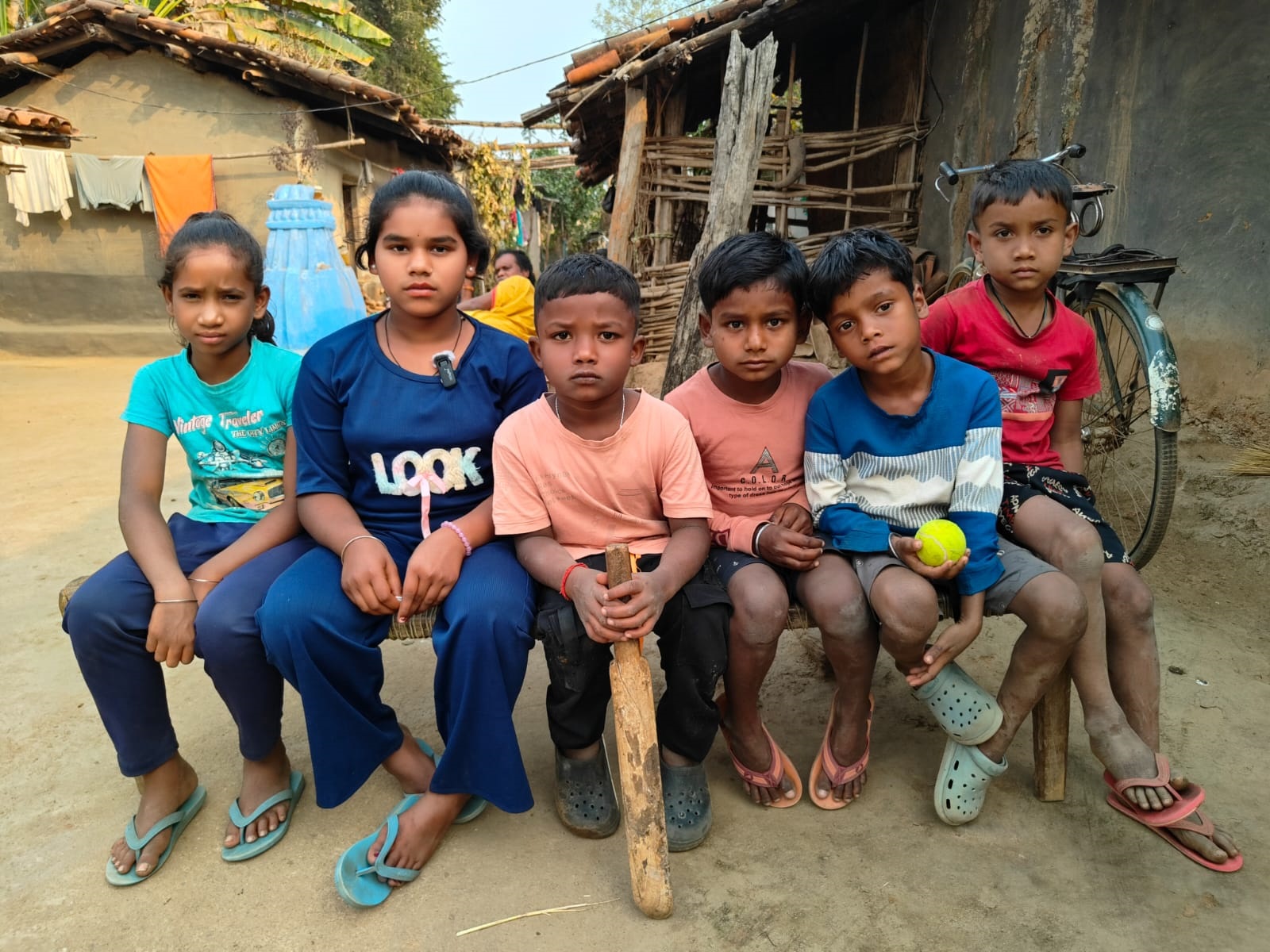
In the tribal-dominated Kumiapali village affected by the Lower Suktel project, the children’s right to education is being openly violated. Due to displacement-related issues, the village primary school has remained closed for nearly three years. As a result, more than 35 children from the village have been deprived of both primary and secondary education.

Despite children being out of school for such a long period, neither the district administration nor the district education department has made any alternative arrangement. In the absence of government intervention, a retired school peon, Gandharba Bariha, has stepped in to fill the gap. He is voluntarily providing tuition to children who have been denied formal education.
Also Read: Lower Suktel displaced left in lurch
After the failure of the official system, the effort of a retired high school peon to ensure learning for village children has become a matter of public discussion. Ahead of the 2024 general election, the then chief minister Naveen Patnaik hurriedly inaugurated the unfinished Lower Suktel Major Irrigation Project.
In 2023, residents of villages in the project’s submergence zone were forcibly displaced. While some families from Kumiapali village were relocated, more than 70 families launched protests and refused to leave until their pending demands were met. Following the agitation, the district administration did not evict them. However, the Project Upper Primary School in the village, established in 1961, was shut down. As a result, schooling for the village’s children has effectively been halted for nearly three years.
Some of the students have enrolled at a school in nearby Kapilbahal village, but poor road connectivity and other constraints have prevented regular attendance. The village Anganwadi centre has also been closed.
Ankita Bariha, 10, said she has not attended school since it was shut in the village and now studies through private tuition. Sagar Bariha, 11, said the school has been closed for about three years. Though he and his friends want to study, they spend most of their time playing because there is no school.
Concerned by the situation, Gandharba Bariha, a retired peon of Rengali High School, has been providing tuition to about 18 children at his home. He has become a key support for them. Gandharba said many children in the village have talent, but without a school and proper opportunities, their future looks bleak. Reopening a school in the village at the earliest would benefit everyone, he said.
Parents Nepur Bariha and Labanga Bariha demanded that a new colony be developed with immediate facilities including a school, an Anganwadi centre and drinking water facilities. They also urged authorities to make interim arrangements for children’s education in the village.