By Janaki Ballav Dash
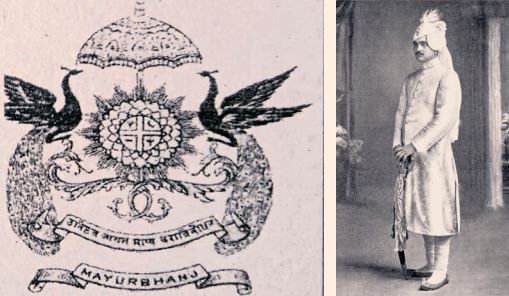
From 598 AD, when Maharaja Jai Singh founded the realm, until 1949, Mayurbhanj stood as one of India’s best-administered princely states. That year Maharaja Sir Pratap Chandra Bhanj Deo signed the Instrument of Merger with Union Home Secretary MK Vellodi, and the kingdom was reduced to a mere district of Orissa (now Odisha). Overnight, tehsils such as Behragora, Chinchda, Gopiballavpur, Mankidia, Raibania, Ulmara, Khuad, Khandamauda, Dhalbhumgarh, Seraikela and Kharswan were excised for “administrative convenience” and appended to Bihar (today’s Jharkhand) and West Bengal, and Balasore district of Odisha. In a single stroke, a coherent state was carved into fragments.


The amputation was not only territorial. The state’s High Court, medical services, Mayurbhanj State Bank and thousands of acres of debottar (temple-endowed) land were removed from local control. Yet the Maharaja secured one safeguard: the merger agreement explicitly stated that once the High Court was absorbed into Odisha, it would be the “prime duty” of the state government to establish a circuit bench in Mayurbhanj. Seventy-five years later, the clause remains unfulfilled. Similar demands from other regions have diluted Mayurbhanj’s original claim, laments senior lawyer Bijan Das.
Infrastructure arrived at colonial speed. A railway line took a century to materialise; a medical college, decades more. A university—built on land donated by Maharani Takatkumari—still lacks a centre dedicated to Mayurbhanj’s unique Chau and Jhumar arts, Similipal biodiversity, or the culture of Particularly Vulnerable Tribal Groups such as the Mankidia, Khadia, Bhumij, Kohl and Bathudi.
Also Read: Teacher held for molestation of 10-year-old girl in Mayurbhanj
Today the largest district in Odisha hears its name invoked only at election time. “Development has been confined to slogans,” says Maharani Rashmi Rajyalaxmi Devi. The latest flash-point is the administration’s plan to cut thousands of fruit-bearing trees on the historic Hamilton Trust orchard—land bequeathed by the Maharajas for cooperative cultivation—to make room for a new bus stand. Public outcry has temporarily stayed the axes, but the stand-off epitomises a deeper malaise: leaders come and go; Mayurbhanj’s core issues remain in the back seat.
Determined to hold the state to account, a new cohort of activists has gone hunting for the 1949 merger agreement. State archives had no copy; repeated RTI applications finally traced fragments to the National Archives of India. This writer and the sitting MP are now piecing together the full text, searching for an overlooked exit clause that allows the region to “withdraw” if promises are broken. Whether dusty parchment can still compel Bhubaneswar—and Delhi—to deliver overdue justice is the question the district has waited three generations to answer.