Odisha News, Odisha Latest news, Odisha Daily - OrissaPOST
  • Home
  • Trending
  • State
  • Metro
  • National
  • International
  • Business
  • Feature
  • Entertainment
  • Sports
  • More..
    • Odisha Special
    • Editorial
    • Opinion
    • Careers
    • Sci-Tech
    • Timeout
    • Horoscope
    • Today’s Pic
  • Video
  • Epaper
  • News in Odia
  • Home
  • Trending
  • State
  • Metro
  • National
  • International
  • Business
  • Feature
  • Entertainment
  • Sports
  • More..
    • Odisha Special
    • Editorial
    • Opinion
    • Careers
    • Sci-Tech
    • Timeout
    • Horoscope
    • Today’s Pic
  • Video
  • Epaper
  • News in Odia
No Result
View All Result
OrissaPOST - Odisha Latest news, English Daily -
No Result
View All Result

New AI tool that can detect cardiac arrest during sleep

PTI
Updated: June 22nd, 2019, 16:59 IST
in Feature
0
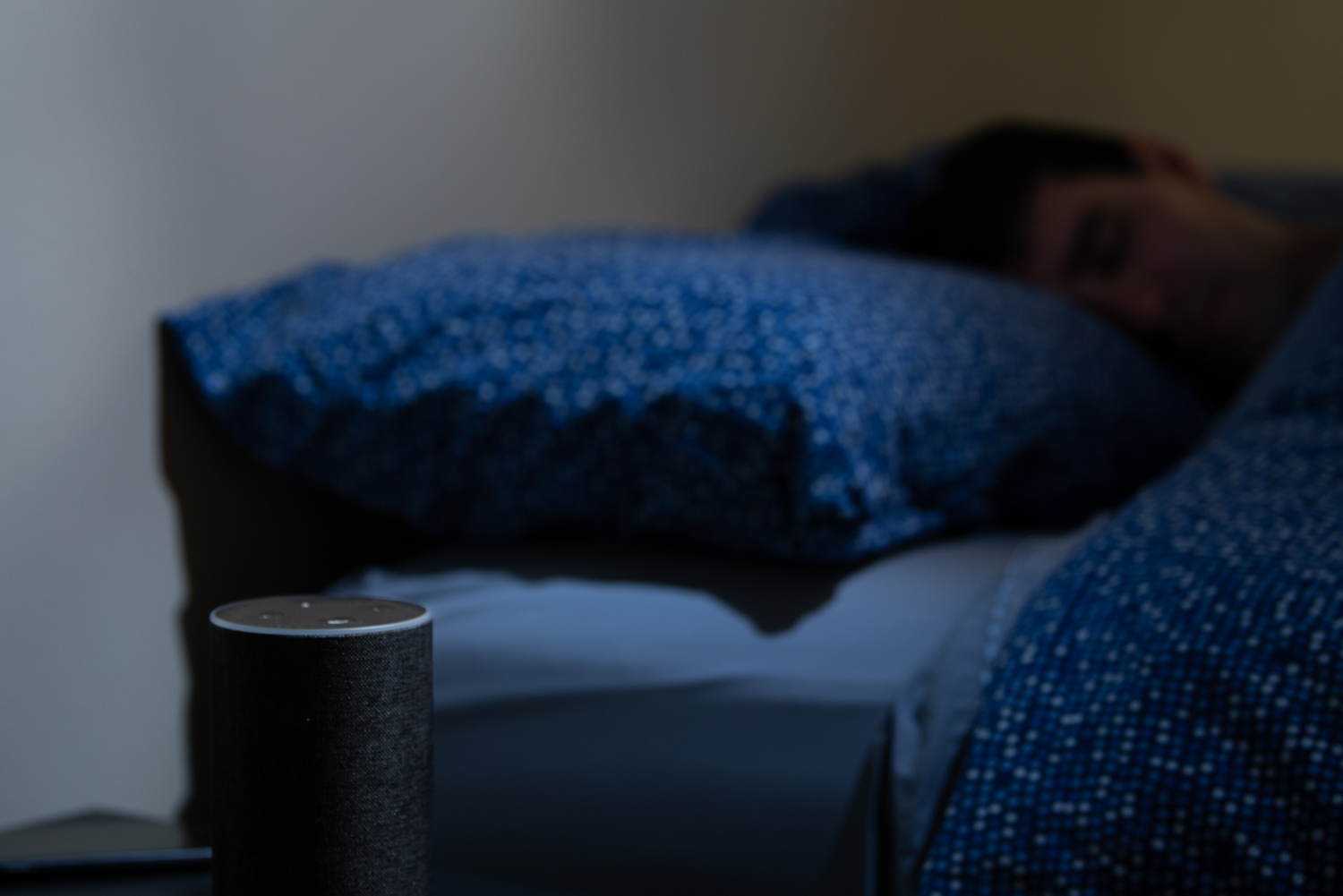
AI to detect cardiac arrest during sleeping

AI to detect cardiac arrest during sleeping

Share on FacebookShare on TwitterShare on WhatsAppShare on Linkedin

Washington:  Scientists have developed a new artificial intelligence system to monitor people for cardiac arrest while they are asleep without touching them.

People experiencing cardiac arrest will suddenly become unresponsive and either stop breathing or gasp for air, a sign known as agonal breathing, said researchers at the University of Washington in the US.


Also Read

Ultrasound, kidney stones

Want healthy kidneys for life? Follow these five simple habits

3 days ago
Viral video of Delhi Police

Viral video shows Delhi Police urging CJP organisers to make crowd-control arrangements

3 days ago

A new skill for a smart speaker — like Google Home and Amazon Alexa — or smartphone lets the device detect the gasping sound of agonal breathing and call for help.

Immediate Cardiopulmonary resuscitation can double or triple someone’s chance of survival, but that requires a bystander to be present.

CPR is an emergency procedure that combines chest compressions often with artificial ventilation in an effort to manually preserve intact brain function.

Recent research suggests that one of the most common locations for an out-of-hospital cardiac arrest is in a patient’s bedroom, where no one is likely around or awake to respond and provide care.

The new proof-of-concept tool, developed using real agonal breathing instances captured from 911 calls, detected agonal breathing events 97 per cent of the time from up to six meters away.

“A lot of people have smart speakers in their homes, and these devices have amazing capabilities that we can take advantage of,” said Shyam Gollakota, an associate professor at UW.

“We envision a contactless system that works by continuously and passively monitoring the bedroom for an agonal breathing event, and alerts anyone nearby to come provide CPR. And then if there’s no response, the device can automatically call 911,” said Gollakota.

Agonal breathing is present for about 50 per cent of people who experience cardiac arrests, and patients who take agonal breaths often have a better chance of surviving.

“This kind of breathing happens when a patient experiences really low oxygen levels,” said Jacob Sunshine, an assistant professor at the UW School of Medicine.

“It’s sort of a guttural gasping noise, and its uniqueness makes it a good audio biomarker to use to identify if someone is experiencing a cardiac arrest,” Gollakota said.

The researchers gathered sounds of agonal breathing from real 911 calls to Seattle’s Emergency Medical Services.

Since cardiac arrest patients are often unconscious, bystanders recorded the agonal breathing sounds by putting their phones up to the patient’s mouth so that the dispatcher could determine whether the patient needed immediate CPR.

The researchers collected 162 calls between 2009 and 2017 and extracted 2.5 seconds of audio at the start of each agonal breath to come up with a total of 236 clips.

They captured the recordings on different smart devices and used various machine learning techniques to boost the dataset to 7,316 positive clips.

“We played these examples at different distances to simulate what it would sound like if the patient was at different places in the bedroom,” said Justin Chan, a doctoral student at UW.

“We also added different interfering sounds such as sounds of cats and dogs, cars honking, air conditioning, things that you might normally hear in a home,” said Chan.

For the negative dataset, the team used 83 hours of audio data collected during sleep studies, yielding 7,305 sound samples.

These clips contained typical sounds that people make in their sleep, such as snoring or obstructive sleep apnea.

From these datasets, the team used machine learning to create a tool that could detect agonal breathing 97 per cent of the time when the smart device was placed up to six metres away from a speaker generating the sounds.

Next, the team tested the algorithm to make sure that it wouldn’t accidentally classify a different type of breathing, like snoring, as agonal breathing.

“We don’t want to alert either emergency services or loved ones unnecessarily, so it’s important that we reduce our false positive rate,” Chan said.

For the sleep lab data, the algorithm incorrectly categorized a breathing sound as agonal breathing 0.14 per cent of the time.

The false positive rate was about 0.22 per cent for separate audio clips, in which volunteers had recorded themselves while sleeping in their own homes.

However, when the team had the tool classify something as agonal breathing only when it detected two distinct events at least 10 seconds apart, the false positive rate fell to 0 per cent for both tests.

The team envisions this algorithm could function like an app or a skill for Alexa that runs passively on a smart speaker or Smartphone while people sleep.

“This could run locally on the processors contained in the Alexa. It’s running in real time, so you don’t need to store anything or send anything to the cloud,” Gollakota added.

 PTI

 

Tags: AlexaCardiac-arrestGoogle HomeUniversity of Washington
ShareTweetSendShare
Suggest A Correction

Enter your email to get our daily news in your inbox.


Mettle Meet 2026
OrissaPOST epaper Sunday POST OrissaPOST epaper

Click Here: Plastic Free Odisha

?????????????????????????????????????????????????????????????????????????????????????????????????????????????????????????????????
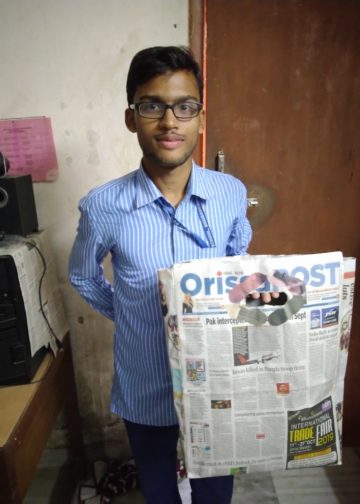
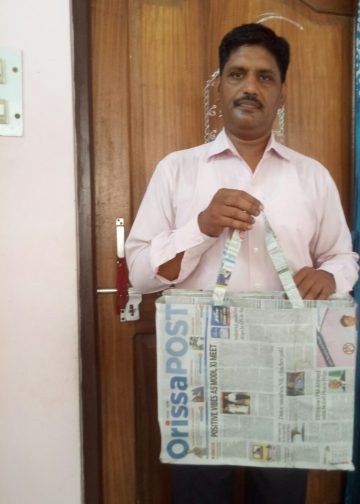
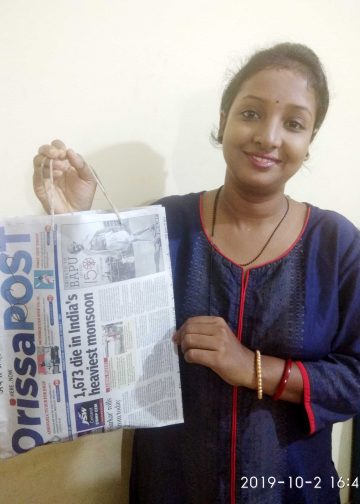
#MyPaperBagChallenge

Dibya Ranjan Das

December 12, 2019
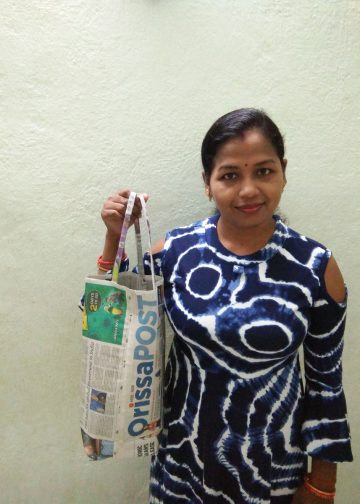
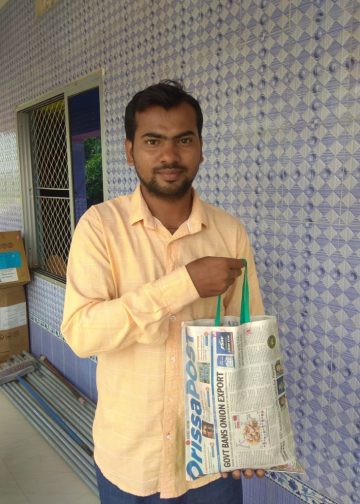
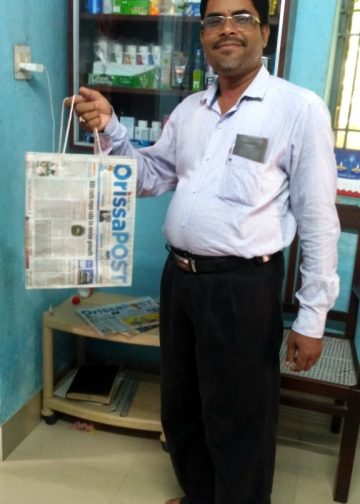
#MyPaperBagChallenge

Rajashree Pravati Mohanty

December 12, 2019
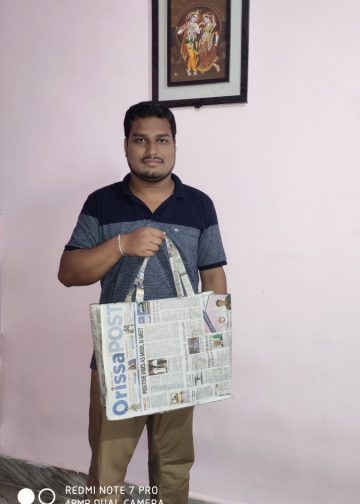
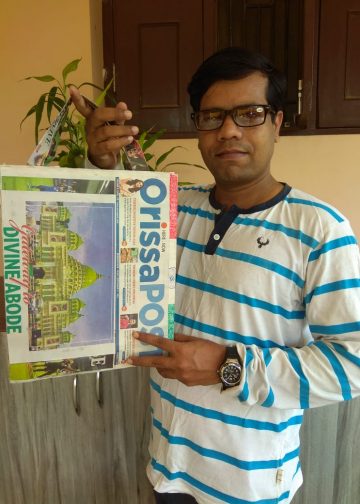
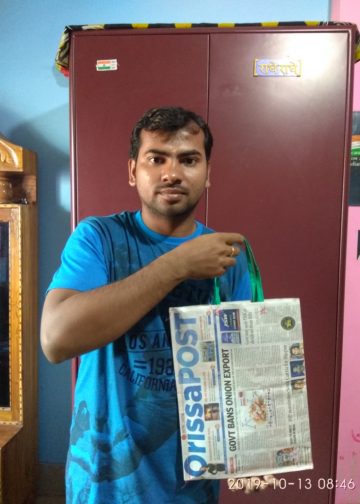
#MyPaperBagChallenge

Rajashree Manasa Mohanty

December 12, 2019
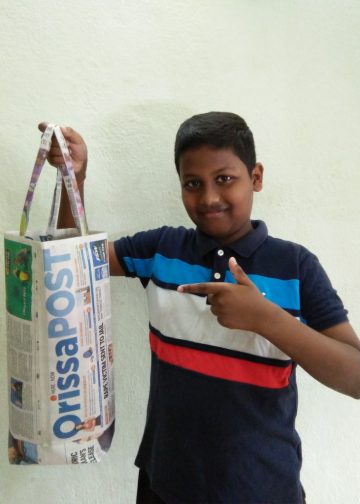
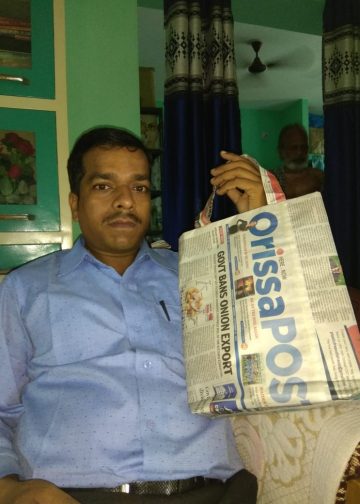
#MyPaperBagChallenge

Adyasha Priyadarsani Sendha

December 12, 2019
#MyPaperBagChallenge

Adrita Bhattacharya

December 12, 2019
#MyPaperBagChallenge

Jyotshna Mayee Pattnaik

December 12, 2019
#MyPaperBagChallenge

Lopali Pattnaik

December 12, 2019
#MyPaperBagChallenge

Pratyasharani Ghibela

December 12, 2019
#MyPaperBagChallenge

Tapaswini Mallick

December 12, 2019
#MyPaperBagChallenge

Manas Samanta

December 12, 2019
#MyPaperBagChallenge

Bijswajit Pradhan

December 12, 2019
#MyPaperBagChallenge

Surya Sidhant Rath

December 12, 2019
#MyPaperBagChallenge

Archana Parida

December 12, 2019
#MyPaperBagChallenge

Archit Mohapatra

December 12, 2019
#MyPaperBagChallenge

Arya Ayushman

December 12, 2019
#MyPaperBagChallenge

Sarfraz Ahmad

December 12, 2019
#MyPaperBagChallenge

Vandana Singh

December 12, 2019
#MyPaperBagChallenge

Chinmay Kumar Routray

December 12, 2019
#MyPaperBagChallenge

Tabish Maaz

December 12, 2019
#MyPaperBagChallenge

Ramakanta Sahoo

December 12, 2019
#MyPaperBagChallenge

Pratik Kumar Ghibela

December 12, 2019
#MyPaperBagChallenge

Shreyanshu Bal

December 12, 2019
#MyPaperBagChallenge

Nishikant Rout

December 12, 2019
#MyPaperBagChallenge

Anshuman Sahoo

December 12, 2019
#MyPaperBagChallenge

Anup Mahapatra

December 12, 2019
#MyPaperBagChallenge

Kamana Singh

December 12, 2019
#MyPaperBagChallenge

Aishwarya Ranjan Mohanty

December 12, 2019
#MyPaperBagChallenge

Jhili Jena

December 12, 2019
#MyPaperBagChallenge

Sitakanta Mohanty

December 12, 2019
#MyPaperBagChallenge

Pratik Kumar

December 12, 2019

Archives

Editorial

ISI After NEET

August 5, 2026

The Centre is courting yet another controversy by introducing a Bill in the Lok Sabha that seeks to fundamentally alter...

Read moreDetails

A Quiet Shift

Prashant Kishor
August 4, 2026

Change rarely arrives announced. But when a popular movement stirs, transformation can sweep in like a tide. The recent by-election...

Read moreDetails

Desperate Measures

Indian currency
August 3, 2026

The Reserve Bank of India (RBI) selling about $7 billion in a single trading session to arrest the rupee’s slide...

Read moreDetails

Selling Global Dreams

Aakar Patel
August 2, 2026

By Aakar Patel Mother of Democracy is standing for a non-permanent elected seat at the United Nations Security Council. Non-permanent...

Read moreDetails
  • Home
  • State
  • Metro
  • National
  • International
  • Business
  • Editorial
  • Opinion
  • Sports
  • About Us
  • Advertise
  • Contact Us
  • Jobs
Developed By Ratna Technology

© 2025 All rights Reserved by OrissaPOST

  • News in Odia
  • Orissa POST Epaper
  • Video
  • Home
  • Trending
  • Metro
  • State
  • Odisha Special
  • National
  • International
  • Sports
  • Business
  • Editorial
  • Entertainment
  • Horoscope
  • Careers
  • Feature
  • Today’s Pic
  • Opinion
  • Sci-Tech
  • About Us
  • Contact Us
  • Jobs

© 2025 All rights Reserved by OrissaPOST

    • News in Odia
    • Orissa POST Epaper
    • Video
    • Home
    • Trending
    • Metro
    • State
    • Odisha Special
    • National
    • International
    • Sports
    • Business
    • Editorial
    • Entertainment
    • Horoscope
    • Careers
    • Feature
    • Today’s Pic
    • Opinion
    • Sci-Tech
    • About Us
    • Contact Us
    • Jobs

    © 2025 All rights Reserved by OrissaPOST